
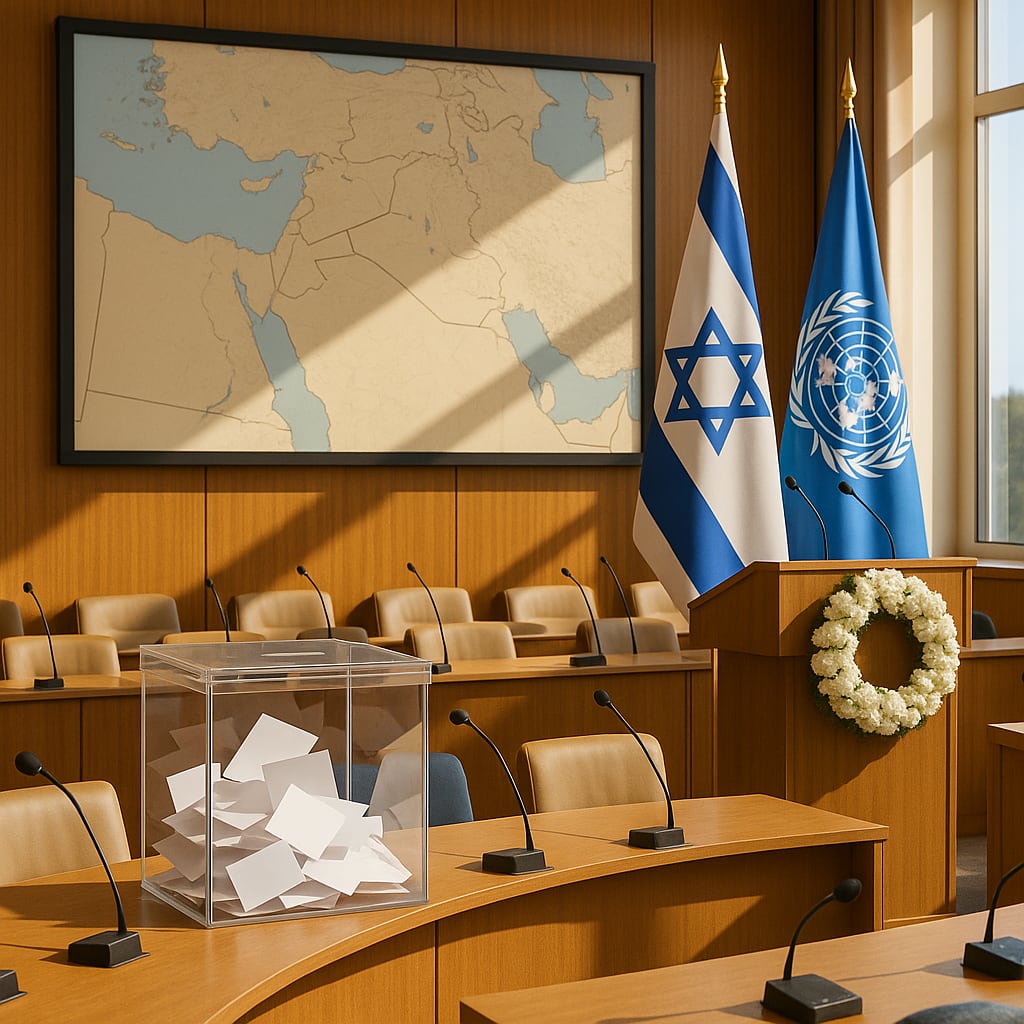
At Oct. 7’s third anniversary, Israel holds memorials and conducts Gaza strikes as elections loom
Narrative Snapshot
International coverage converges on the simultaneity of remembrance in Israel and renewed violence in Gaza, but outlets weight those elements differently. Broadcasters such as the BBC and NBC emphasise ceremonies marking three years since the Hamas-led attacks, while France24 pairs those tributes with reports of fresh Israeli strikes and an intensifying election debate. The Hindu situates families at the Nova festival site within earshot of explosions from Gaza, underscoring how commemoration and conflict remained intertwined on the day. Diaspora observances also surface, including an Argentine memorial focused on the Bibas family with participation by Israel’s ambassador to Buenos Aires.
Regional and advocacy-oriented outlets concentrate on the ongoing toll in Gaza and the persistence of Israeli operations despite claims of a ceasefire. Al Jazeera English, the Japan Times, IRNA, and Middle East Eye cite cumulative Palestinian fatalities surpassing 74,000, with MEE documenting additional deaths since what it calls a “so-called” ceasefire and France24 referring to a “year-old ceasefire agreement” even as strikes continue. Day-of casualty tallies varied across outlets, reflecting the fluidity of battlefield reporting.
Competing interpretive frames are explicit in commentary and analysis. Folha de S.Paulo highlights findings from an Israeli commission on systematic sexual violence during the 2023 attacks, foregrounding atrocity documentation tied to Oct. 7. Middle East Eye and Telesur characterize Israel’s campaign as genocidal and embed the war in a longer history of dispossession and siege, while the UN secretary-general’s pre-anniversary call for a ceasefire avoided citing specific tolls. In the U.S. political arena, Fox News spotlights both a bereaved family’s testimony and a clash over “genocide” framing between Israel’s UN ambassador and New York City’s mayor, illustrating how memory and language remain contested among allies.
Election dynamics are integral to how Israeli outlets and international correspondents frame the moment. Al Jazeera English reports Prime Minister Benjamin Netanyahu’s ultimatum to voters days earlier, and the Toronto Star and France24 detail how Oct. 7 has become the organizing theme of rival campaigns as Israelis prepare to vote for the first time since the 2023 attacks.
What Happened
On October 7, 2026, Israel marked three years since the Hamas-led attacks with national memorials while carrying out air operations in Gaza. Families gathered at sites such as the Nova music festival and Kfar Aza (BBC; France24; The Hindu), where explosions from Gaza were audible from the Nova grounds (The Hindu). Gaza authorities and reporters documented strikes that left between three and five people dead that day, including at Khan Younis and Gaza City, with counts updated over the course of the day (The Hindu; France24; Middle East Eye). Cumulative fatalities in Gaza since October 2023 were reported at more than 74,000 by Al Jazeera English and the Japan Times, with IRNA citing 74,243 and Middle East Eye offering closely similar figures. The UN secretary-general urged a ceasefire on the eve of the anniversary (The Hindu). Israeli campaigning placed Oct. 7 at the center, including a stark ultimatum by Prime Minister Netanyahu (Al Jazeera English; Toronto Star; France24).
Why It Matters
The anniversary crystallizes how memory, security doctrine, and political accountability intersect in Israel’s first election since the 2023 attacks. Coverage describes an electoral arena in which Oct. 7’s failures and their aftermath are central to the contest for leadership (Toronto Star; France24), shaping prospective mandates on Gaza policy, hostage issues, and civil-military relations. Internationally, reported fatality figures in Gaza and continued strikes “despite” a ceasefire referenced by multiple outlets test the credibility of cessation arrangements and the capacity of multilateral actors, as the UN chief again calls for a ceasefire (France24; Middle East Eye; The Hindu). Documentation of sexual violence by an Israeli commission (Folha de S.Paulo) and competing genocide framings (Middle East Eye; Telesur; Fox News’ coverage of U.S. discourse) feed into legal, diplomatic, and reputational debates that matter for state policy, alliance management, and humanitarian access. For practitioners, the information environment itself—divergent tallies and timelines—has become a structural factor in crisis assessment.
Diverging Narratives
Day-of reports on casualties from Israeli strikes in Gaza ranged from three deaths (The Hindu) to four and then five as the day progressed (Middle East Eye; France24), illustrating real-time variance in conflict reporting. Longer-term tolls also differ slightly by outlet: Al Jazeera English and the Japan Times cite “more than 74,000,” IRNA reports 74,243, and Middle East Eye lists 74,229, while stressing additional deaths after a purported ceasefire (Al Jazeera English; Japan Times; IRNA; Middle East Eye). Accounts of Israeli fatalities on Oct. 7, 2023, similarly vary—1,139 (Middle East Eye), 1,195 (France24), and approximately 1,200 (Clarín)—reflecting source choice and rounding conventions.
There is no single agreed chronology on ceasefire milestones. France24 references a “year-old ceasefire agreement,” while Middle East Eye cites ceasefires taking effect in October 2024 or October 2025 when tallying post-ceasefire casualties in separate reports, contributing to ambiguity about the scope and durability of arrangements (France24; Middle East Eye). Interpretive frames diverge markedly: Middle East Eye and Telesur repeatedly describe Israel’s campaign as genocidal and embed it in a history of occupation and siege, whereas Folha de S.Paulo spotlights an Israeli commission’s findings on sexual violence during the 2023 attacks. The UN secretary-general calls for a ceasefire without citing a death toll (The Hindu), and Fox News highlights contention in U.S. public discourse over the term “genocide,” including a rebuke by Israel’s UN ambassador of New York City’s mayor. Coverage also splits focus between Israeli hostage bereavement and Palestinian disappearances, with Fox News detailing a family’s loss of an IDF soldier and Middle East Eye chronicling families searching for missing relatives in Gaza.
What Happens Next
Two decision points dominate. First, Israel’s imminent elections: reporting indicates all major campaigns are organizing around Oct. 7 (Toronto Star; France24), and the prime minister has framed the vote in stark terms (Al Jazeera English). Analysts should track whether parties translate commemorative narratives into concrete security and Gaza policy proposals and whether accountability claims reshape coalition math. Second, operational posture in Gaza amid references to a ceasefire: multiple outlets document continued Israeli strikes and updated death tolls (France24; Middle East Eye; The Hindu). Monitoring patterns of cross-border fire, casualty reporting from Gaza health authorities, and Israeli statements about rules of engagement will indicate whether the current tempo persists or changes.
Internationally, the UN secretary-general’s renewed ceasefire call sets a benchmark for subsequent diplomatic messaging (The Hindu). Outside Israel, diaspora memorials and public rhetoric—illustrated in Argentina’s ceremonies and U.S. debates covered by Fox News and Clarín—signal how allies frame the conflict, a factor to watch for potential shifts in political and humanitarian positioning.