
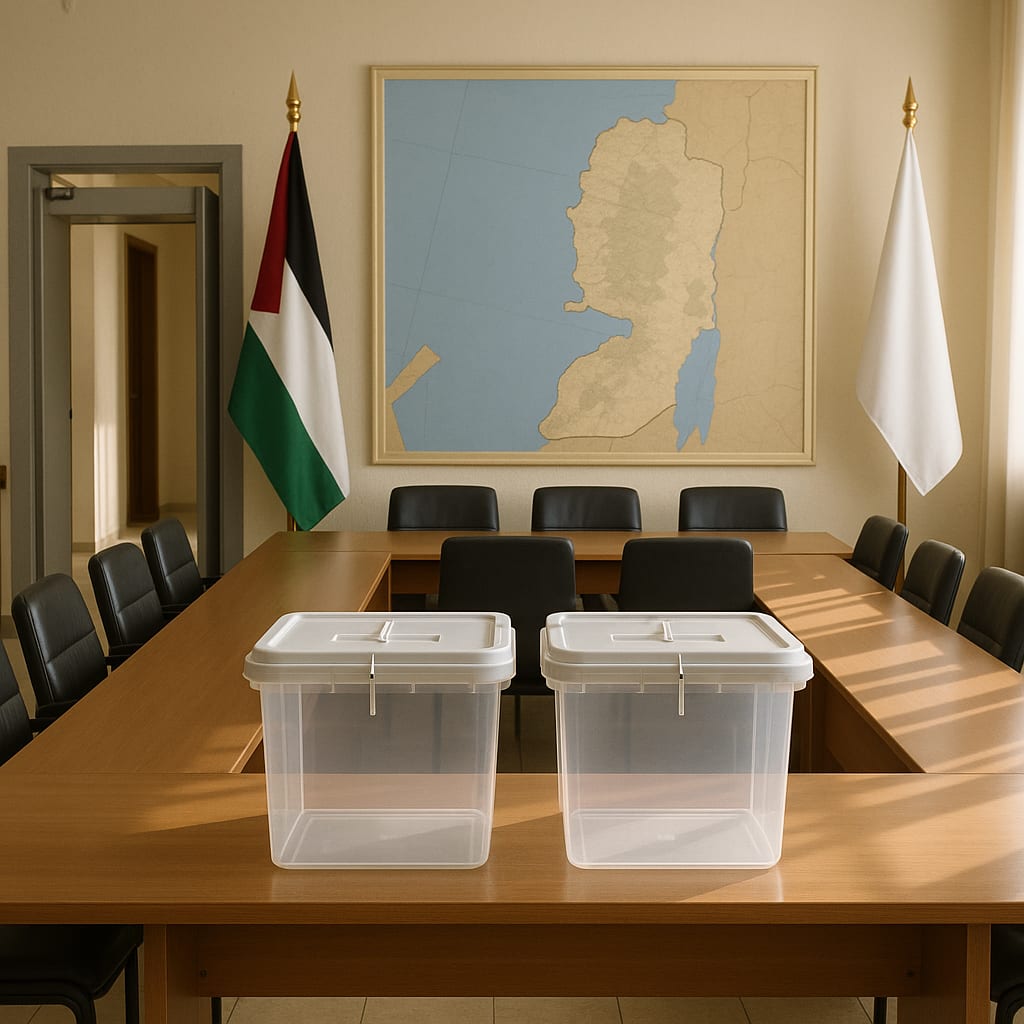
Palestinian Authority postpones November vote; presidential and legislative elections set for September 11, 2027
Narrative Snapshot
Across outlets, there is broad agreement on the core facts: Mahmoud Abbas issued a decree moving the Palestinian Legislative Council elections from late November 2026 to September 11, 2027 and aligning them with a presidential vote on the same date, with the official rationale centered on “obstacles posed by Israeli measures” and security conditions, as relayed via WAFA and reflected in Middle East Eye, Al Jazeera English, Deutsche Welle, South China Morning Post, CGTN, France24, and others. Several international and regional reports foreground the extraordinary length of the electoral hiatus since 2006 and Abbas’s uninterrupted tenure since 2005, positioning the decision in a long pattern of postponements (Haaretz, The Hindu, Toronto Star/AP, Bangkok Post).
Coverage diverges on responsibility and credibility. Israeli political framing rejects Abbas’s explanation; The Times of Israel highlights Foreign Minister Gideon Sa’ar’s dismissal of the claim of Israeli obstruction. By contrast, Palestinian official and pro-government narratives emphasize process integrity and feasibility, with Haaretz citing Hussein al-Sheikh’s warning that proceeding now would endanger the electoral process’s integrity. Some Western outlets stress legitimacy costs: Fox News underscores criticism of PA governance and the risk of further credibility damage, while Le Monde notes the international community had expected the 2026 ballot and reports France’s call for Palestinian leaders to reverse the decision.
Reporting from Palestinian and Arab sources adds intra-Palestinian dynamics. Al-Quds News details factional positions supporting synchronized presidential-legislative polls in September/October 2027, alongside calls for national dialogue, legal renewal, and agreed rules to manage results—Hamas urging a binding understanding to reorganize the “Palestinian house.” Al Jazeera English captures public reactions centered on representation and accountability. European coverage introduces a diplomatic layer: Folha de S.Paulo reports that the PA signaled a suspension to France days before the decree, and Le Monde records Paris’s subsequent appeal for a rethink.
What Happened
Mahmoud Abbas issued a decree canceling the November 28, 2026 legislative elections and setting simultaneous presidential and legislative polls for September 11, 2027, citing obstacles created by Israeli measures and the need for appropriate political, security, and on-the-ground conditions for a free, fair, and inclusive vote, as reported by WAFA and carried by Middle East Eye, SCMP, Deutsche Welle, CGTN, and Al Jazeera English. Haaretz quoted senior official Hussein al-Sheikh as saying that holding elections now would imperil the electoral process’s integrity. Israel’s foreign minister rejected Abbas’s explanation, according to The Times of Israel. Nearly three million Palestinians had been called to vote under the original timetable for what would have been the first general election since 2006, Le Monde noted. Folha de S.Paulo reported the PA informed France in advance of a suspension; Le Monde later reported that France urged the PA to reverse the postponement. Palestinian factions publicly advocated synchronized polls and a renewed legal framework (Al-Quds News).
Why It Matters
The move extends a near two-decade electoral gap that multiple outlets identify as central to Palestinian political legitimacy and governance. The Palestinian Authority administers parts of the West Bank under agreements from the 1990s (Fox News), and Le Monde reports the 2026 vote had been anticipated by the international community, making the reversal a live diplomatic issue. The decision is now embedded in competing narratives about feasibility and accountability: Palestinian official channels frame delay as necessary to ensure credible conditions (Middle East Eye/WAFA; Haaretz), while Israeli officials dispute that Israel is the impediment (The Times of Israel). Domestic actors are positioning around procedural rules and unity: factions call for national dialogue, legal renewal, and agreed enforcement of results (Al-Quds News). For governments and multilateral institutions calibrating engagement with Palestinian institutions, the timing and credibility of any renewed mandate affect interlocutor legitimacy and the design of political or governance initiatives premised on inclusive representation.
Diverging Narratives
Abbas’s decree, echoed by WAFA and cited across international outlets, attributes the delay to Israeli measures and security conditions that would preclude free and inclusive elections. Senior Palestinian official Hussein al-Sheikh frames the risk as one of safeguarding electoral integrity (Haaretz). Israeli leadership pushes back; The Times of Israel reports the foreign minister’s categorical rejection of the claim, casting the move as politically motivated. Domestic critiques surface in international coverage: Fox News emphasizes that repeated postponements enable leaders to remain in power and highlights existing criticism of corruption and security cooperation with Israel. Public sentiment captured by Al Jazeera English centers on representation and accountability in the absence of a vote.
French reporting adds process and diplomacy: Le Monde says nearly three million voters had been mobilized for the November ballot, and that the postponement followed negotiations among major Palestinian factions. Folha de S.Paulo’s account that the PA notified France of the suspension earlier in the week underscores the decision’s premeditated diplomatic management. At the same time, Al-Quds News documents factional support for synchronized presidential-legislative polls in late 2027, contingent on national dialogue and legal updates, with Hamas calling for binding agreements on how results will be implemented—signaling that intra-Palestinian rules of the game remain unsettled.
What Happens Next
Two decision tracks emerge. First is whether the PA adjusts course under external pressure: Le Monde reports France urged leaders to reverse the postponement, so observers should watch for any follow-on statements from Ramallah or the PLO Executive Committee reaffirming or revising the decree. Second is whether the cited constraints shift. Since Abbas’s rationale hinges on Israeli measures and security conditions (Middle East Eye/WAFA; SCMP; DW), analysts should monitor Israeli governmental statements and administrative practices that would materially affect election logistics, alongside changes in the security environment.
In parallel, intra-Palestinian coordination will shape feasibility. Al-Quds News indicates factions want synchronized polls, renewed laws, and agreed enforcement of outcomes; movement on national dialogue, legal reforms, or formal understandings about accepting results would signal momentum toward the 2027 timetable. Public reactions tracked by Al Jazeera English will remain an indicator of domestic legitimacy as the date approaches.