
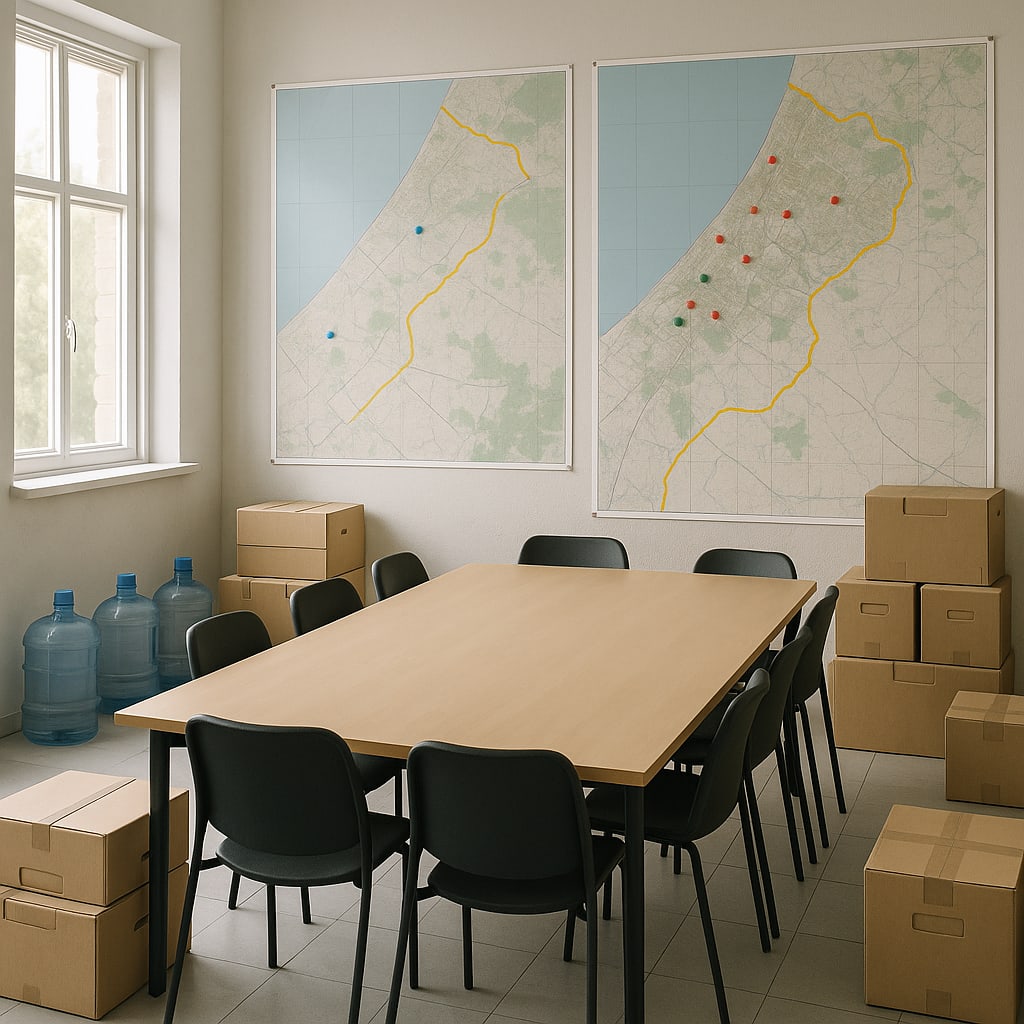
One year after Gaza ceasefire, Israeli strikes, restrictions, and humanitarian crisis persist across contested narratives
Narrative Snapshot
Across outlets, there is broad agreement that hostilities and civilian suffering in Gaza have continued despite an October 2025 ceasefire. International and regional media foreground ongoing Israeli strikes, civilian casualties, hunger, and stalled reconstruction, while Israeli outlets emphasize targeted killings of militants and operational gains. Several sources document deep physical devastation and prolonged movement restrictions.
The most consequential divergence is over how to characterize post-ceasefire violence. Israeli sources present recent strikes as precision operations against identified Hamas and Palestinian Islamic Jihad operatives, naming specific figures. Other outlets document civilians among the dead, including a child and a journalist whose status is disputed, and cite aid groups and UN agencies to frame the truce as ineffective at protecting civilians or enabling recovery. A second fault line concerns the institutional trajectory: reports of an expanding “Yellow Line,” long-dated movement restrictions, and persistent aid shortfalls suggest entrenchment rather than transition to governance and reconstruction, a point echoed across non-Israeli coverage.
What Happened
Multiple outlets report continued Israeli military action in Gaza roughly a year after a U.S.-brokered ceasefire took effect on October 10, 2025. Israeli media detail targeted killings: Haaretz reported three militants killed in Gaza City, and the Times of Israel said the weekly toll of Hamas and PIJ operatives rose to 17; TASS cited the elimination of a Hamas elite commander. Other outlets highlighted civilian harm: RT reported at least eight Palestinians killed over two days and covered the killing of journalist Muhammad Abdel Aziz al-Najjar, whose family disputes the IDF’s claim he was a Hamas operative; Middle East Eye reported a seven-year-old died from Israeli gunfire in Jabalia. Al Jazeera said Israeli attacks persist and reported Israel pushing its “Yellow Line” deeper into Gaza. The Hindu cited Oregon State University researchers finding about 75% of buildings damaged or destroyed. UN Women data, reported by Telesur, counted nearly 50,000 women and girls killed or severely injured since 2023.
Why It Matters
The record depicted across these reports points to a ceasefire framework that has neither stabilized civilian protection nor unlocked the institutional conditions for recovery. Outlets describe continued Israeli kinetic activity alongside structural measures—such as a deeper “Yellow Line” and, per Al-Quds News, multi-year movement restrictions near Jabalia and Erez to January 2028—that risk normalizing a security regime rather than transitioning to postwar governance. This aligns with coverage of stalled reconstruction and a funding shortfall (CGTN), persistent hunger a year after supposed aid scaling (France24), and widespread destruction (The Hindu).
For policymakers and multilateral actors, this raises questions about ceasefire design, monitoring, and enforcement; the compatibility of ongoing strikes with humanitarian access; and whether buffer zones and long-dated restrictions foreclose return and reconstruction. UN Women’s casualty accounting and a UN Special Rapporteur’s assessment of explosive force (Telesur) add legal and normative pressure points likely to inform future diplomatic and accountability debates.
Diverging Narratives
Israeli outlets emphasize operational intent and outcomes. Haaretz and the Times of Israel report named Hamas and PIJ operatives killed in recent strikes, while TASS relays IDF claims about eliminating a Nukhba commander tied to the October 7, 2023 attacks. Haaretz also publishes accounts from intelligence and drone personnel alleging loosened targeting rules and tolerance for high civilian casualty estimates—claims the IDF denies, underscoring an internal dispute over approval policy rather than its strategic aims.
Regional and global outlets center civilians and the humanitarian landscape. Al Jazeera states Palestinians continue to be killed and reports Israel pushing its “Yellow Line” deeper into Gaza. RT details fatalities over two days and spotlights the journalist’s killing, juxtaposing the family’s account with the IDF’s allegation of Hamas membership. Middle East Eye cites Wafa on a child’s death and on cumulative casualty figures, using the term “genocide” in its presentation. Aid-focused reporting by NBC and France24 portrays the ceasefire as existing “in name only,” with hunger and near-daily strikes impeding recovery. Tehran Times cites Islamic Relief’s estimate of a Palestinian killed or wounded every 90 minutes since the ceasefire declaration. Structural context from CGTN, Le Monde, and the Bangkok Post highlights a U.S.-brokered agreement that halted major operations but left core issues unresolved, with reconstruction and governance stalled.
What Happens Next
Three decision points emerge from the reporting. First, the scope and permanence of Israeli security measures: Al Jazeera’s “Yellow Line” and Al-Quds News’ cited restrictions through January 2028 suggest a consolidating buffer and constrained movement. Analysts should watch for formal Israeli orders, map changes on the ground, and any easing or codification of restrictions.
Second, the trajectory of military activity under the ceasefire: Israeli communications naming operatives and tallying militant deaths (Haaretz, Times of Israel, TASS) indicate ongoing targeted strikes; concurrent reports of civilian fatalities (RT, Middle East Eye, NBC, Al Jazeera) point to persistent protection risks. Monitor IDF policy statements, strike patterns, and any follow-up to the targeting-policy dispute reported by Haaretz.
Third, the humanitarian and reconstruction track: CGTN notes a major funding shortfall; France24 describes enduring hunger; The Hindu documents scale of destruction; UN Women data reported by Telesur underscores gendered impacts. Key indicators are donor commitments, aid access and distribution metrics, and any shifts in movement restrictions that would enable large-scale rebuilding.