
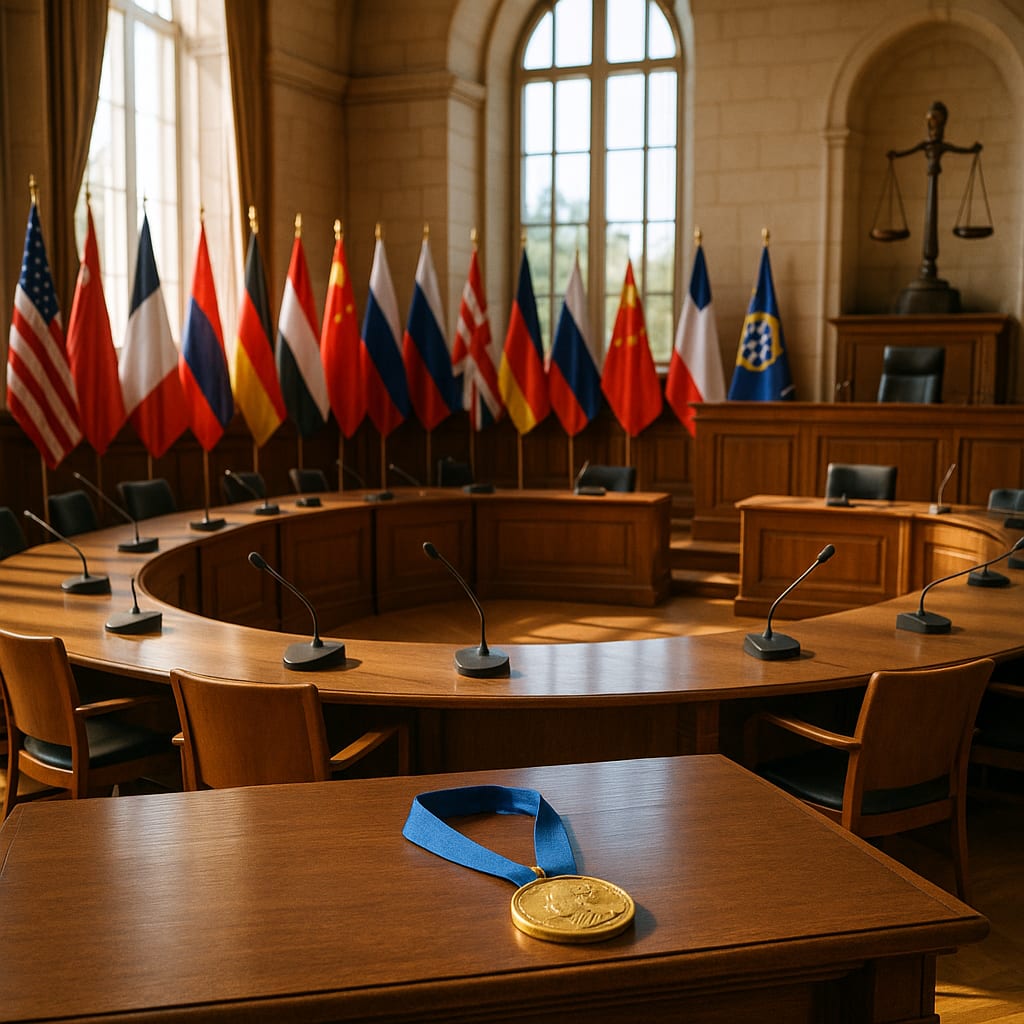
Navi Pillay awarded 2026 Nobel Peace Prize
Narrative Snapshot
Across outlets, the core through-line is consistent: the Norwegian Nobel Committee recognized South African jurist Navanethem “Navi” Pillay for her efforts to promote peace and international law, with reporting emphasizing her roles at the International Criminal Court and the International Criminal Tribunal for Rwanda, as well as her tenure as UN human rights chief (Telesur English; The Hindu; Sky News; TASS; BBC; Mail & Guardian). African-focused coverage highlights celebration by media, legal, and civil society actors and explicitly links the moment to defending media freedom and the right to report safely (AllAfrica/Bird) and to a broader vote of confidence in a “global legal order under fire” (AllAfrica/The Conversation Africa).
A different emphasis appears in UK- and France-based discussions. Middle East Eye foregrounds Pillay’s role chairing a UN inquiry that accused Israel of genocide in Gaza and notes her current status as an ad hoc judge at the International Court of Justice. France24 elevates a debate over political impartiality and whether the prize is honoring individual merit or operating as political messaging, urging scrutiny of institutional shortcomings without undermining the principles of international law.
Political reaction also enters the framing. Middle East Eye reports US President Donald Trump deriding Pillay as a “mystery person,” castigating Norway, and reprising grievances about his own non-selection. European coverage includes lighter process notes, with Corriere della Sera relaying the committee’s difficulty reaching Pillay and its wry appeal for her to answer Norwegian calls.
What Happened
The Norwegian Nobel Committee awarded the 2026 Nobel Peace Prize to South African jurist Navi Pillay “for her efforts to promote peace and international law,” citing her role in ensuring prosecution of war crimes, crimes against humanity, and genocide (Telesur English; TASS; Sky News). Pillay was among the first judges of the ICC and headed the Rwanda genocide tribunal, and she previously served as UN high commissioner for human rights (Telesur English; AllAfrica/RFI). Middle East Eye reports she chaired a UN inquiry that accused Israel of genocide in Gaza and is currently an ad hoc judge at the ICJ. The Mail & Guardian notes she is the fifth South African to receive the Peace Prize. The ICC’s president congratulated her, framing the award as recognition of the court’s role (Telesur English). Corriere della Sera adds the committee initially struggled to reach Pillay, publicly urging her to pick up a Norwegian number.
Why It Matters
Several outlets interpret the award as signaling support for international law at a moment of strain. The Conversation Africa, carried by AllAfrica, describes it as a vote of confidence in a global legal order “under fire,” while The Hindu’s editorial frames it as recognition of Pillay’s lifelong work for the oppressed and a rebuke to the notion that might makes right. France24’s discussion underscores that international law and multilateral bodies face mounting pressure and serious threats, with the challenge being to scrutinize their limits without weakening the principles they uphold. Telesur English’s note that the ICC president cast the prize as recognition of the court’s role points to institutional implications: courts and UN mechanisms engaged in accountability efforts may perceive strengthened normative backing. AllAfrica/Bird’s emphasis on media freedom suggests policy salience beyond courts, linking the award to protections for journalists and safe reporting environments.
Diverging Narratives
Outlets converge on Pillay’s stature and the committee’s stated rationale, but they differ in which facets they emphasize. Telesur English, Sky News, TASS, BBC, and The Hindu’s fact file focus on her institutional legacy and on accountability for core international crimes. Middle East Eye and AllAfrica/RFI place her leadership of a UN commission on Israel and Gaza at the center of their framing, explicitly recalling the commission’s accusation of genocide. France24 surfaces a broader normative question: whether awarding Pillay at this moment appropriately celebrates her achievements or risks positioning the prize as political messaging, and stresses the need to separate the laureate’s record from debates about timing and geopolitics. Political pushback features in Middle East Eye’s reporting of Trump’s remarks disparaging both the choice and Norway, contrasting with African coverage that concentrates on regional pride, human rights work, and media freedom without foregrounding controversy (AllAfrica/Bird; AllAfrica/The Conversation Africa). These emphases delineate a spectrum from institutional recognition to geopolitical contention.
What Happens Next
Two decision points emerge from the sources. First, how international legal institutions and UN mechanisms reference the award: Telesur English relays the ICC president’s characterization of the prize as recognition of the court’s role, suggesting analysts should watch for subsequent institutional statements or positioning that cite Pillay’s laureateship in defense of accountability mandates. Second, how governments and political actors respond: Middle East Eye documents immediate criticism from Trump, and France24 outlines a live debate on impartiality and political messaging; monitoring official statements that invoke Pillay’s Gaza-related inquiries will indicate whether the award becomes a proxy battleground over UN investigative mechanisms.
Regionally, AllAfrica/Bird notes the award is drawing attention to media freedom and journalist safety; tracking whether African media, legal, and civil society actors invoke the laureateship in campaigns or advocacy will show how the moment is operationalized. The Nobel Committee’s further public communications, beyond its stated rationale and outreach anecdote reported by Corriere della Sera, will also signal how it addresses critiques and frames intent.