
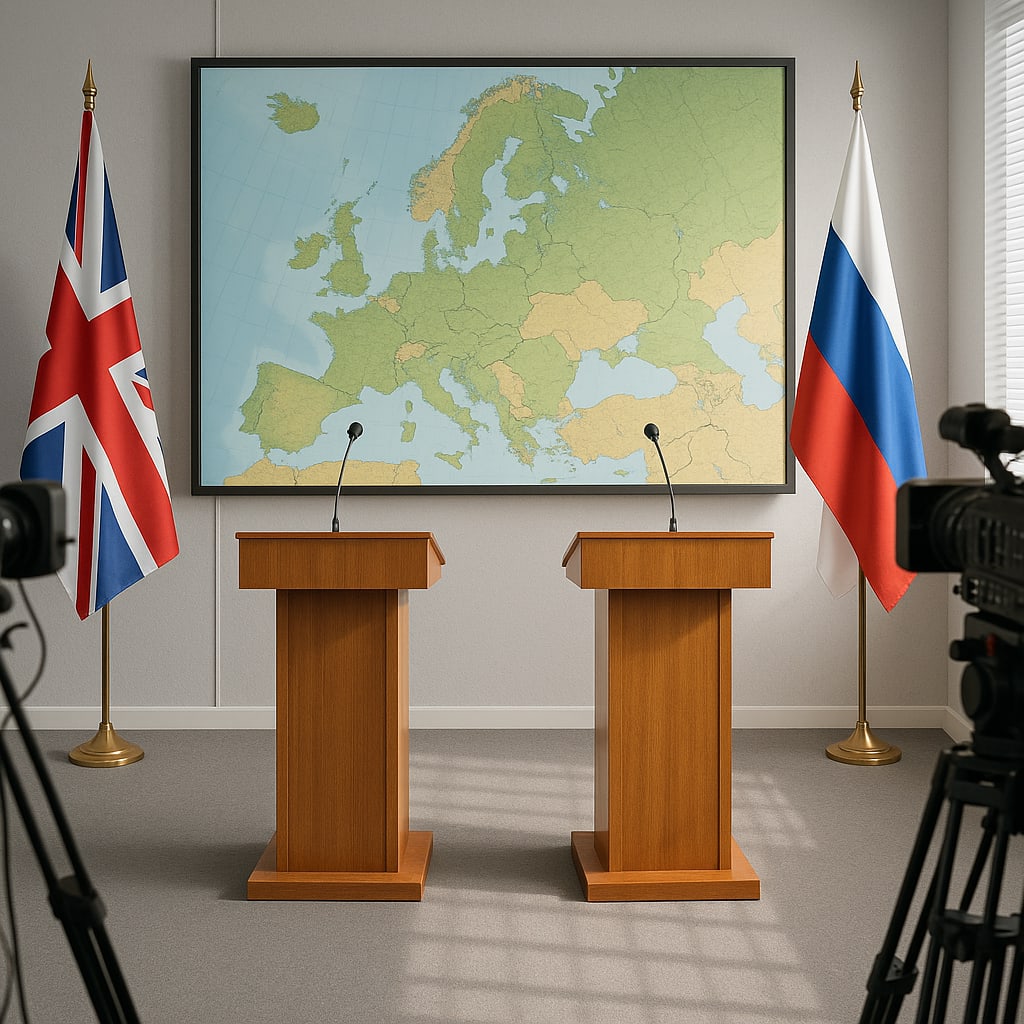
UK’s Burnham makes first public prime‑ministerial acknowledgment of Russian interference in 2016 Brexit vote
Narrative Snapshot
Across European and international outlets, coverage converges on the same core development: Andy Burnham’s on‑record statement that the UK has a “clear” answer affirming Russian interference, delivered after he sought clarity upon entering Downing Street. Several outlets underscore novelty and precedent. Italian and Qatari reports characterize it as the first time a British prime minister has publicly acknowledged such interference, while Ukrainian coverage frames Burnham’s comments as a warning aimed at voters in other major European democracies.
Where outlets diverge is in what they foreground. British reporting highlights process and proof standards, noting Burnham did not disclose who briefed him. French coverage situates the claim against prior official denials, both from Moscow and from Boris Johnson’s 2020 assertion of “no evidence.” German and Hong Kong reports emphasize Burnham’s call to inform European electorates before imminent votes. Two Russia-based pieces take the conversation sideways, portraying EU “disinformation” work as politically selective. Meanwhile, a US report shows Washington officials attributing domestic opinion-shaping campaigns around AI infrastructure to foreign adversaries, placing Burnham’s statement within a broader Western discourse that ties democratic decision-making to adversary information operations.
What Happened
Andy Burnham said the UK is “clear” there was Russian interference in the 2016 Brexit referendum, describing this as the answer he received when he asked about Moscow’s role after entering No 10. He made the remarks in an interview released on The Rest is Politics podcast. British reporting notes he did not reveal who provided the confirmation. Several outlets frame this as the first public acknowledgment by a UK prime minister of Russian interference in the Brexit vote. Burnham said putting the matter “clearly on the record” is important to help voters in Germany and France understand that some current politics are instigated by adversaries, specifically Russia, with European broadcasters noting upcoming elections. France-based coverage recalls that Russia has denied meddling and that Boris Johnson said in 2020 there was no evidence of interference. German reporting summarizes Burnham’s call to ensure European voters are fully aware of such attempts.
Why It Matters
Burnham’s on‑record attribution intersects with Europe’s pre‑election environment and with institutional approaches to “foreign information manipulation and interference.” It publicly departs from the UK’s earlier prime‑ministerial line cited in 2020 and aligns with ongoing efforts to prepare electorates for adversary influence, as highlighted in German and French coverage. The statement functions as upstream voter communication rather than a legal indictment, but it nonetheless sets a political precedent for senior‑level acknowledgment and may inform how allied governments frame threat briefings to the public.
This also lands amid contested information‑governance agendas. A Russia-based outlet’s account of turmoil at an EU “disinfo” conference over a panel naming the United States as a FIMI threat illustrates how threat taxonomies can become politically fraught. In parallel, a senior US official’s warning about adversary psyops shaping domestic debates on AI infrastructure shows Western authorities linking national policy disputes to foreign interference. Together, these strands show how attribution, public messaging, and institutional credibility are now central to managing electoral integrity.
Diverging Narratives
British and international outlets present Burnham’s statement as a clear, affirmative acknowledgment; several stress its first‑of‑its‑kind nature at the prime‑ministerial level. The Guardian adds a caveat on evidentiary transparency, noting Burnham did not disclose his source, which leaves open questions about what underpins the “clear answer” and whether further detail will follow. France24 juxtaposes the new statement against two points of contention: Russia’s prior denials and Boris Johnson’s 2020 claim that there was no evidence of interference, underscoring how official positions have varied over time.
Coverage from Germany and Hong Kong highlights the functional aim of the message—alerting European voters ahead of imminent ballots—rather than the domestic UK implications. Kyiv Independent similarly emphasizes the cross‑border warning to German and French audiences. By contrast, Russia-based RT does not engage with the Brexit claim; instead, it attacks EU anti‑disinformation initiatives as performative and power‑driven, describing a conference that unraveled when a panel proposed treating the United States as a FIMI threat. That portrayal places skepticism on the neutrality of European information‑security frameworks. In the United States, Fox News reports a senior official’s separate claim that foreign adversaries are conducting psyops around AI and data centers, reinforcing a broader Western narrative that adversary information operations shape democratic and policy outcomes.
What Happens Next
The immediate decision point is whether the UK government supplements Burnham’s on‑record claim with specifics. Given The Guardian’s note that he did not identify who briefed him, analysts should watch for any public attribution products, official statements, or parliamentary-facing explanations that clarify process and evidence. In Europe, France24 and Deutsche Welle highlight voter‑awareness goals ahead of French and German elections; signals to monitor include coordinated messaging by European governments or EU bodies that references the Brexit experience when advising electorates on interference risks.
Moscow’s stance, per France24, has been to deny meddling; any Russian official or state‑media responses will shape the cross‑narrative environment. RT’s reporting on discord at an EU disinformation conference indicates a separate decision point for European forums: whether to broaden or recalibrate their FIMI framing. In the United States, Fox News’ interview suggests continued emphasis on foreign psyops in domestic policy debates; watch for whether allied messaging on interference becomes more synchronized across electoral and non‑electoral domains.