
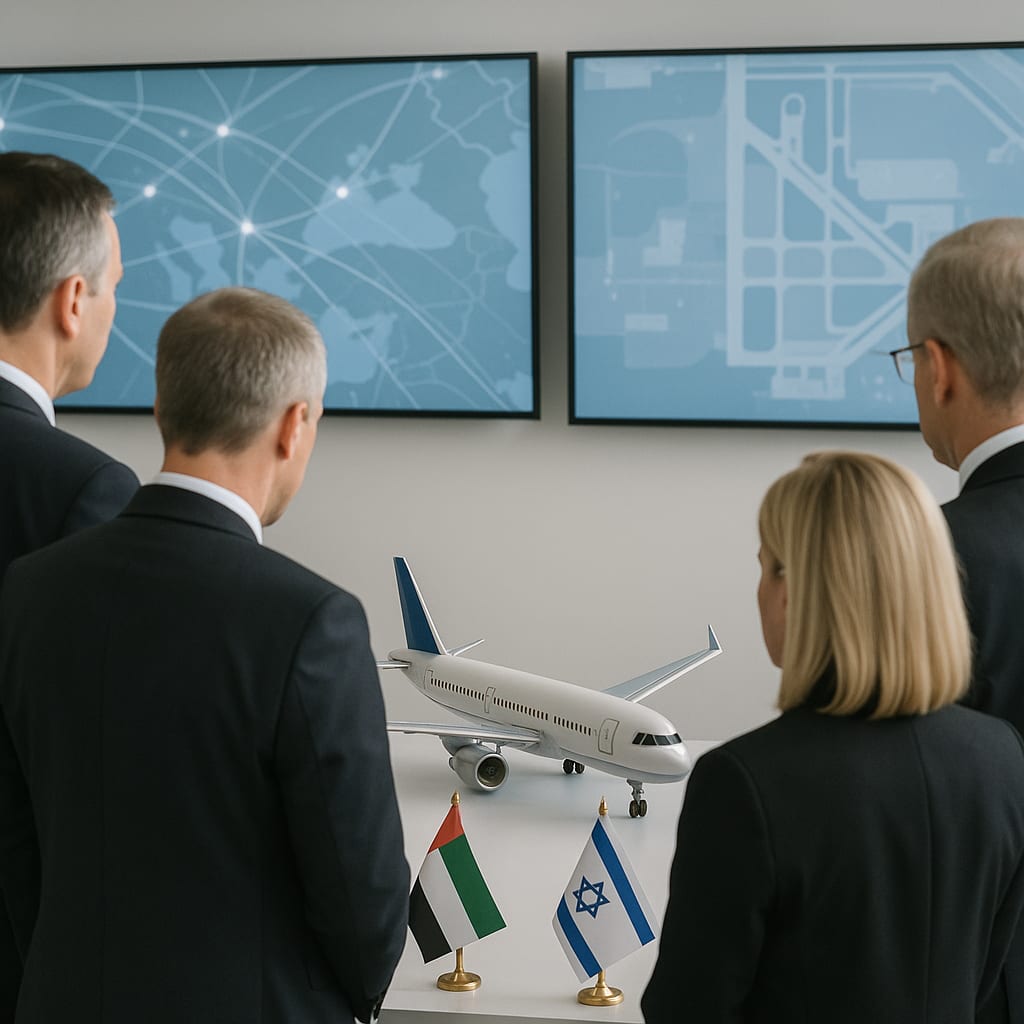
UAE says flydubai co-pilot planned 9/11-inspired suicide crash into Israel’s Ben Gurion Airport
Narrative Snapshot
Across outlets, the core throughline comes from the UAE attorney general’s account: prosecutors say an Omani co-pilot on a Dubai–Tel Aviv flight intended a suicide attack against Ben Gurion Airport’s passenger terminal, drawing inspiration from the September 11 attacks and using prior rotations on the route to prepare. International coverage largely hews to that prosecutorial framing, with multiple outlets anchoring their stories to the same official statement and its emphasis on intent, target selection, and method.
Where coverage widens is on motive and operational detail. Israeli sources cited by CGTN frame the suspect’s statements to investigators as retaliation linked to the Gaza conflict, while the BBC relays the UAE attorney general’s assertion of a “drift towards extremism and terrorism” beginning in Australia. The Guardian adds cockpit-level specifics, including use of an emergency axe and the role of passengers and off-duty crew, while CGTN reports a sudden 14,000-foot descent. The South China Morning Post underscores that prosecutors did not implicate the airline in wrongdoing. The stakes highlighted range from mass-casualty risk at a major international hub to cross-border investigative cooperation on a politically sensitive route.
What Happened
UAE prosecutors say an Omani flydubai co-pilot intended to seize a Dubai–Tel Aviv flight on September 30 and crash it into Ben Gurion Airport’s passenger terminal in a suicide attack, drawing inspiration from the September 11 attacks. The UAE attorney general’s statement, cited across outlets, alleges the suspect used two earlier Tel Aviv rotations to familiarize himself with the route and airport. The Guardian reports the co-pilot, identified as Hammam al-Hammami, attacked the Indian captain with an emergency axe but failed to stop him from opening the cockpit door, enabling passengers and off-duty crew to intervene. CGTN, citing Israeli sources, says the aircraft briefly plunged about 14,000 feet in under 30 seconds during the struggle. An Israeli investigative team joined UAE authorities on October 3 for joint questioning, and Emirati investigators reportedly ruled out involvement of other crew members. Prosecutors’ statement did not implicate flydubai in wrongdoing, according to the South China Morning Post.
Why It Matters
The case concentrates multiple structural pressures on civil aviation and regional security. It underscores insider-threat risk to high-value air corridors and terminals, with prosecutors alleging premeditation, route-specific reconnaissance, and a clear mass-casualty objective. It also showcases operational cooperation between the UAE and Israel: Israeli investigators traveled to the UAE and participated in joint questioning, a practical channel of security coordination set against an otherwise volatile regional backdrop. How authorities ultimately characterize motive—whether ideological emulation of 9/11, conflict-linked retaliation, or a longer arc of individual radicalization—will inform threat modeling, crew screening emphasis, and airport hardening priorities. Prosecutors’ indication that the airline is not implicated narrows immediate liability but does not close questions for regulators and operators regarding cockpit access protocols, emergency tool storage, and passenger intervention dynamics on politically sensitive routes.
Diverging Narratives
Official Emirati accounts foreground 9/11-style inspiration and prosecutorial findings, including route familiarization and the intended terminal strike, a frame repeated by outlets from Sky News and Deutsche Welle to The Hindu and Haaretz. The BBC relays the UAE attorney general’s claim that the suspect’s “drift towards extremism and terrorism” began in Australia, adding a geographic dimension to radicalization that is absent from most reports. By contrast, CGTN cites Israeli sources who assess the co-pilot acted alone and told investigators he sought martyrdom in retaliation for the Gaza conflict, and that he had researched airlines flying directly into Tel Aviv before applying to flydubai. On operational detail, The Guardian names the suspect as Hammam al-Hammami and describes an emergency axe attack and passenger intervention, while CGTN details a rapid 14,000-foot descent. The South China Morning Post highlights that prosecutors did not implicate flydubai. Several outlets omit the suspect’s name, while The Guardian and CGTN use it, reflecting different editorial thresholds amid an active investigation.
What Happens Next
Key decision points hinge on the joint investigative track and prosecutorial disclosures. First, the UAE attorney general’s office may release further findings, including formal charges and a definitive account of motive; analysts should watch whether the official narrative aligns with the Gaza-retaliation account cited by Israeli sources via CGTN, the 9/11-emulation emphasis carried by multiple outlets, or the radicalization trajectory described to the BBC. Second, joint UAE–Israel investigatory cooperation, already in place since October 3, could yield a consolidated assessment on whether the suspect acted alone; CGTN reports Emirati investigators have ruled out other crew involvement, and confirmation or revision of that point will shape insider-threat baselining. Third, prosecutors have, per the South China Morning Post, not implicated flydubai; any shift in that stance, or disclosure of procedural gaps around cockpit tools and access described by The Guardian, would have immediate operational implications for carriers on this route and beyond.