
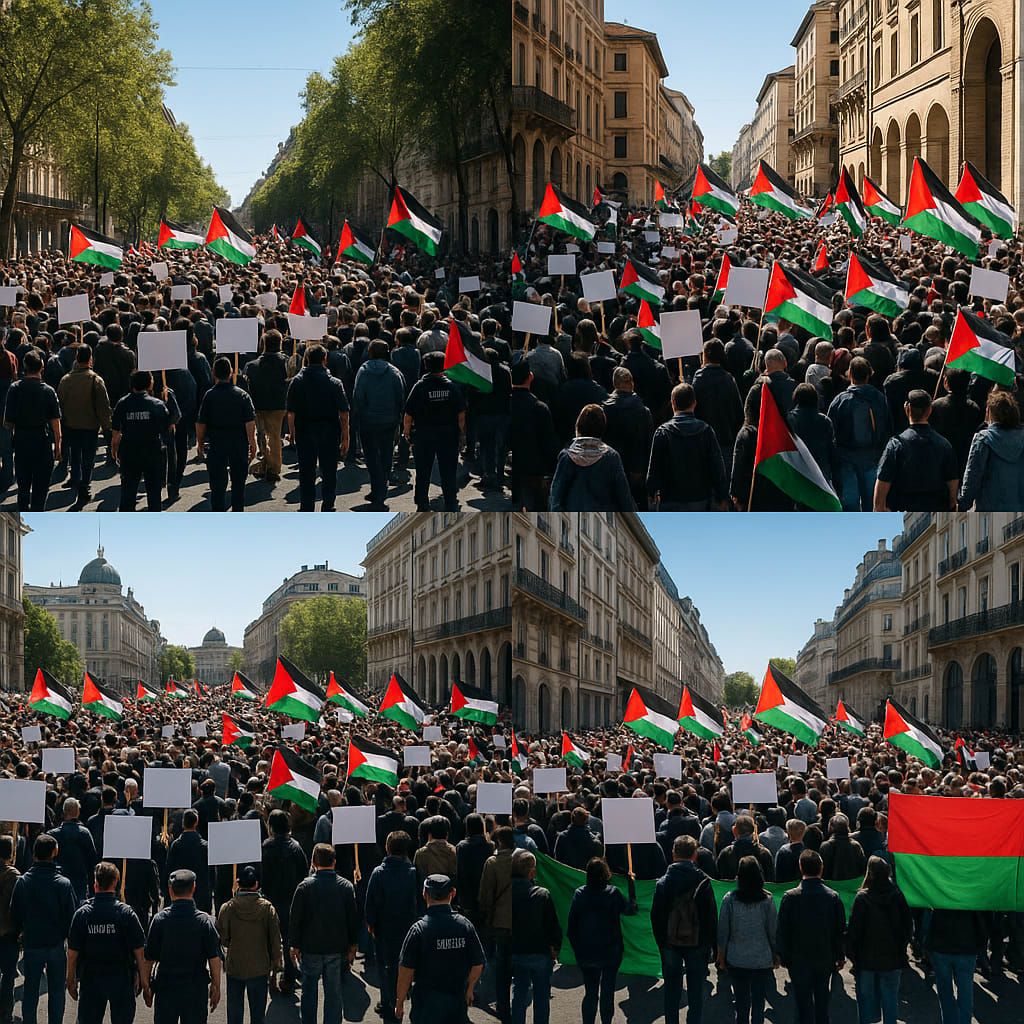
Coordinated pro-Palestinian marches span multiple cities as London police make arrests and protesters press for sanctions, arms curbs
Narrative Snapshot
Across outlets, coverage converges on the scale and coordination of the mobilization while diverging on emphasis and framing. Middle East Eye reports at least 325 linked events globally under a “coordinated” banner, with organizers’ estimates of 250,000 in London, and banners in Berlin under “United4Palestine.” Al Jazeera English, the Bangkok Post, and The Guardian similarly document large turnouts in London and other European cities and center protesters’ claims of “genocide,” the demand to “end” the Gaza war, and calls for sanctions or arms embargoes. Le Monde situates the London march in a policy register, noting organizers consider UK measures to date insufficient, and The Guardian notes the backdrop of Ed Miliband’s statement that the UK deems Israel’s West Bank occupation unlawful.
Israeli outlets and Fox News foreground security and counter-mobilization dynamics. The Times of Israel details a “zero-tolerance” policing posture in London, a reiteration of the mask ban, several arrests, and a small pro-Israel counterprotest. Its Toronto dispatch highlights slogans such as “We will honor all our martyrs,” alongside warnings from a pro-Israel group that permissive policing of provocative rhetoric may fuel antisemitism. Haaretz, in a separate Toronto item, reports police probing the burning of Israeli flags on church grounds as a potential hate crime with no arrests yet.
Fox News centers protest orchestration, citing campaign documents that prescribe communications framing and tactics to “shut down city squares” and “encircle government” while building media leverage, and points to Kuala Lumpur imagery featuring “STOP GENOCIDE” and hostile depictions of Israel’s leadership. Italian wire service ANSA underscores more militant symbolism in Turin, referencing a banner calling 7 October “day of Resistance,” a reported crowd of 4,000, and coverage that featured Trump and Netanyahu “in flames,” while noting Greta Thunberg’s presence at a Naples event. A separate Middle East Eye profile of a 94-year-old arrestee at a UK vigil links the protests to domestic debates over the ban on Palestine Action and the scope of the right to protest.
What Happened
On 10 October 2026, coordinated pro-Palestinian protests took place across multiple cities. Middle East Eye reported a mobilization spanning at least 325 events worldwide, with 176 in Europe, and cited organizers’ estimates of 250,000 participants in London. Al Jazeera English, the Bangkok Post, and The Guardian described large turnouts in London, Berlin, and Rome, with placards demanding an end to the Gaza war and invoking “genocide.” The Times of Israel said London police applied a “zero-tolerance approach to hate crime,” reiterated a mask ban, and made several arrests, while a small pro-Israel counterprotest took place. ANSA reported approximately 4,000 marching in Turin, a banner calling 7 October a “day of Resistance,” and coverage referencing Trump and Netanyahu “in flames,” with Greta Thunberg present at a Naples event. Fox News reported protest planning materials advising transnational tactics to shut city squares and encircle government buildings.
Why It Matters
The protests press governments, especially in Europe, on arms-export and sanctions policy. Middle East Eye framed the mobilization around ending “government complicity in arming” Israel, RT amplified demands for an arms embargo and boycott of Israeli goods, and Le Monde reported organizers in London calling for sanctions while deeming current UK measures inadequate. The Guardian noted the demonstration followed the UK’s stated position that Israel’s West Bank occupation is unlawful, situating the marches within a live policy debate.
Law enforcement and civic-space questions are also central. The Times of Israel highlighted London’s “zero-tolerance” posture and mask ban, while a Middle East Eye interview detailed UK arrests at a vigil calling on the government to lift the ban on Palestine Action. In Canada, The Times of Israel and Haaretz reported rhetoric and incidents under police scrutiny, including a Toronto march invoking “martyrs” and a separate investigation into flag burnings as a potential hate crime. These dynamics bear on how authorities balance public-order, hate-speech enforcement, and protest rights.
Diverging Narratives
Outlets vary in whether they treat the mobilization as orchestrated activism or mass, organic dissent. Fox News emphasizes centralized planning, citing documents that prescribe communications “framing,” designed banners, and disruptive tactics meant to “turn public outrage into collective leverage.” By contrast, Middle East Eye, Al Jazeera English, and The Guardian center crowd size, breadth of participation, and solidarity messaging, presenting a picture of widespread mobilization focused on ending the Gaza war and halting military support to Israel.
Assessments of scale and tone also diverge. Middle East Eye reports “hundreds of thousands” worldwide and 250,000 in London; other outlets describe “thousands,” indicating differing reliance on organizers’ estimates versus general descriptors. The Guardian and RT reproduce protesters’ “genocide” framing and demands for embargoes and boycotts, while The Times of Israel anchors on public-safety measures, arrests, a small counterprotest, and concerns that chants such as “We will honor all our martyrs” in Toronto may abet antisemitism. ANSA’s focus on banners invoking “Resistance” and imagery of Trump and Netanyahu “in flames” highlights more militant symbolism absent from some Anglo-European reporting. Parallel to these accounts, Haaretz’s report on a Toronto hate-crime probe underscores that protest-adjacent incidents are entering criminal review even when direct links to commemorative dates are unproven.
What Happens Next
Policy choices on arms and sanctions are immediate decision points. Protesters’ demands for an arms embargo and sanctions, reported by RT, Le Monde, and Middle East Eye, place pressure on governments that have already adjusted legal positions, as noted by The Guardian on the UK’s stance regarding West Bank occupation. Analysts should watch for official reviews of export licenses, parliamentary debates, or ministerial statements that either entertain or reject embargo and sanctions proposals.
Policing and protest governance will be tested. The Times of Israel’s account of London’s zero-tolerance approach and mask ban sets a baseline for future marches; changes in arrest patterns, prosecution decisions, or updated guidance on hate speech will signal the trajectory. In Canada, outcomes of the Toronto flag-burning investigation reported by Haaretz and responses to rhetoric flagged by The Times of Israel will indicate how authorities calibrate enforcement. Fox News’ report of transnational tactics to “shut down city squares” and “encircle government” provides concrete indicators: attempts to implement such tactics, and official responses to them, will shape subsequent protest-state interactions.