
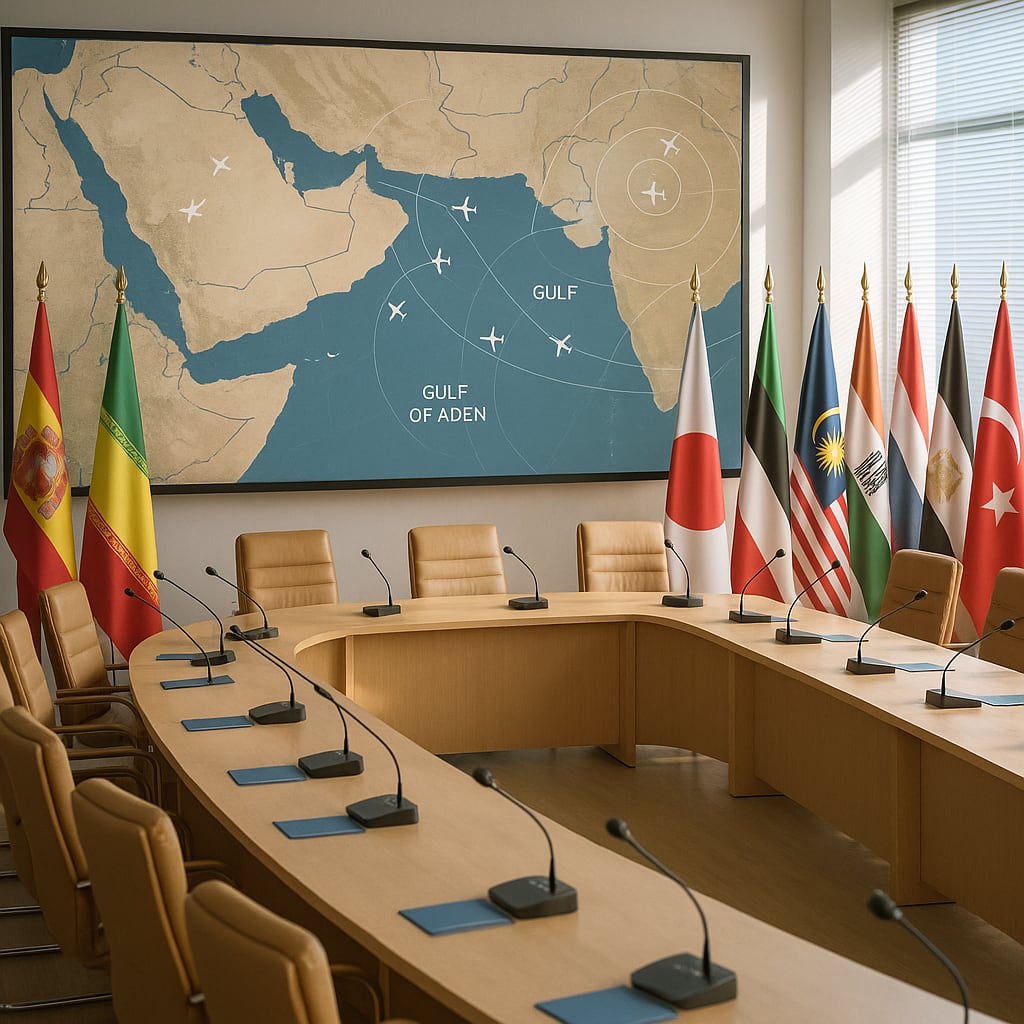
Riyadh airport attacks escalate Yemen conflict, trigger Saudi retaliation and international alarm
Narrative Snapshot
Across outlets, coverage converges on the scale and symbolism of the strikes on Riyadh’s King Khalid International Airport and the ensuing salvos and counterstrikes. French and UK reporting underscores the unprecedented severity since the Yemen war began in 2014, with double-digit fatalities and hundreds wounded, and a subsequent fire from a new projectile the next day. Regional and international responses are prominent: the Saudi-led coalition vows a firm answer, the EU brands the assault an appalling act of terror and warns of a wider spiral, and Israel’s prime minister condemns the attack.
Where coverage diverges is attribution and consequence. Some reports describe the second-day hit as an “unidentified projectile,” even as Houthi spokesmen claim repeated strikes. Saudi statements emphasize a dense intercept-and-strike cycle and damage to Houthi launch infrastructure, while Yemen’s government asserts steep Houthi losses in new offensives. Iran-aligned and regional outlets highlight Houthi rhetoric of strategic resilience and Saudi vulnerability. A separate strand foregrounds the domestic Saudi impact: the closure and extended suspension at Riyadh’s main airport, shaken expatriate confidence, and potential friction with the kingdom’s investment and tourism ambitions.
A widening-perimeter narrative emerges unevenly. One line documents allied coordination under the Mecca Joint Defense Agreement, with Pakistan and Türkiye committing deployable forces to Saudi Arabia. Another traces Western debate: EU calls for accountability, a senior Yemeni official urges action beyond condemnation, and US involvement is floated in both advocacy and reporting. Meanwhile, an Iranian outlet spotlights the costs of potential Syrian entanglement, signaling caution about further regionalization even as actors posture around it.
What Happened
Yemen’s Houthi movement said it targeted Riyadh’s King Khalid International Airport with ballistic missiles, with Saudi and international media reporting at least 12 deaths and more than 300 injured, and some accounts citing 13 dead and over 300 injured after the weekend assault. The following day, the Saudi-led coalition reported an “unidentified projectile” hit Terminal 4 and caused a fire; the airport remained closed, and Saudi authorities later extended the suspension. The Houthis warned airlines and travelers to avoid Saudi airports and urged staff to leave oil facilities. In parallel, the coalition said it intercepted multiple Houthi ballistic missiles aimed at Riyadh, Abha, and Khamis Mushait and launched wide-ranging operations, claiming destruction of launch platforms, depots, and dozens of targets. Yemeni government forces, backed by Saudi air power, reported battlefield gains, including claims of heavy Houthi losses and progress around the Red Sea littoral and Bab el-Mandeb.
Why It Matters
Strikes on a major civilian aviation hub push the Yemen conflict’s risk calculus into Saudi Arabia’s political and economic core, threatening the country’s narrative of stability and its plans to position Riyadh as a global transport and investment node. European leaders’ designation of the attack as terrorism and warnings about “Iran’s proxies” frame the episode within broader debates on state responsibility and the legality of targeting civilian infrastructure. Regionally, the Mecca Joint Defense Agreement’s activation—Pakistan and Türkiye pledging rapid deployments—signals defense-integration trends that could harden blocs. The coalition’s emphasis on intercepts and deep strikes against missile infrastructure reflects the growing centrality of integrated air and missile defense. At sea, reported fighting and claimed government advances near Bab el-Mandeb revive concerns about Red Sea shipping lanes and energy supply chains. The New York Times’ focus on asymmetric pressure and limited Saudi options highlights enduring constraints that shape deterrence, escalation management, and coalition cohesion.
Diverging Narratives
Disagreements begin with attribution and casualty accounting. French and UK outlets report 12 to 13 killed and hundreds wounded in the airport attack, while the coalition labeled the subsequent strike an “unidentified projectile” even as Houthi figures claimed repeated hits on Riyadh. Saudi and allied statements stress successful interceptions over multiple days targeting Khamis Mushait and Abha, plus the destruction of launchers and depots across Sanaa, Saada, Amran, Hodeidah, al-Jawf, and Marib. By contrast, Houthi and Iran-aligned reporting emphasizes strategic endurance and frames Saudi operations as failing to break resistance.
Narratives also diverge on momentum and stakes on Yemen’s front lines. Government and coalition sources cite hundreds to over a thousand Houthi fighters neutralized in counteroffensives and improvements around the Bab el-Mandeb corridor, while independent coverage cautions that intensified fighting may not yield a decisive outcome. Internationally, the EU’s language about “Iran’s proxies” and Israel’s condemnation underscore a transnational security lens; a senior Yemeni official publicly calls for measures beyond statements, while commentary in US media presses Washington not to stand aside even as other reporting describes US deliberation rather than commitment. Iranian coverage, meanwhile, highlights the costs and risks of any Syrian move toward involvement, pointing to hesitancy about opening another front despite rhetorical solidarity.
What Happens Next
Key decisions now sit with Riyadh and its partners on the scale, duration, and targets of retaliation. The coalition’s pledge to respond firmly, coupled with ongoing intercepts and claimed strikes on C2 nodes and missile infrastructure, suggests watchpoints in Saada, Sanaa, and along the Red Sea coast for signs of a sustained suppression campaign versus a shorter punitive cycle. Civil aviation measures are another indicator: Saudi authorities extended the Riyadh airport suspension; whether and how quickly operations resume will signal confidence in air defense coverage and threat assessments amid Houthi warnings to avoid airports.
Regional posture bears monitoring. Under the Mecca Joint Defense Agreement, concrete Pakistani and Turkish deployments—or the absence thereof—will show whether commitments translate into on-the-ground deterrent presence. Internationally, the EU’s rhetorical line and the Yemeni government’s call for non-verbal “firm measures” set up a test of whether partners move toward sanctions, interdictions, or other accountability steps. Finally, front-line dynamics around Bab el-Mandeb and reported government advances will indicate whether the coalition consolidates gains that reduce Houthi launch capacity—or whether the conflict reverts to attrition consistent with assessments that neither side is near a decisive victory.