
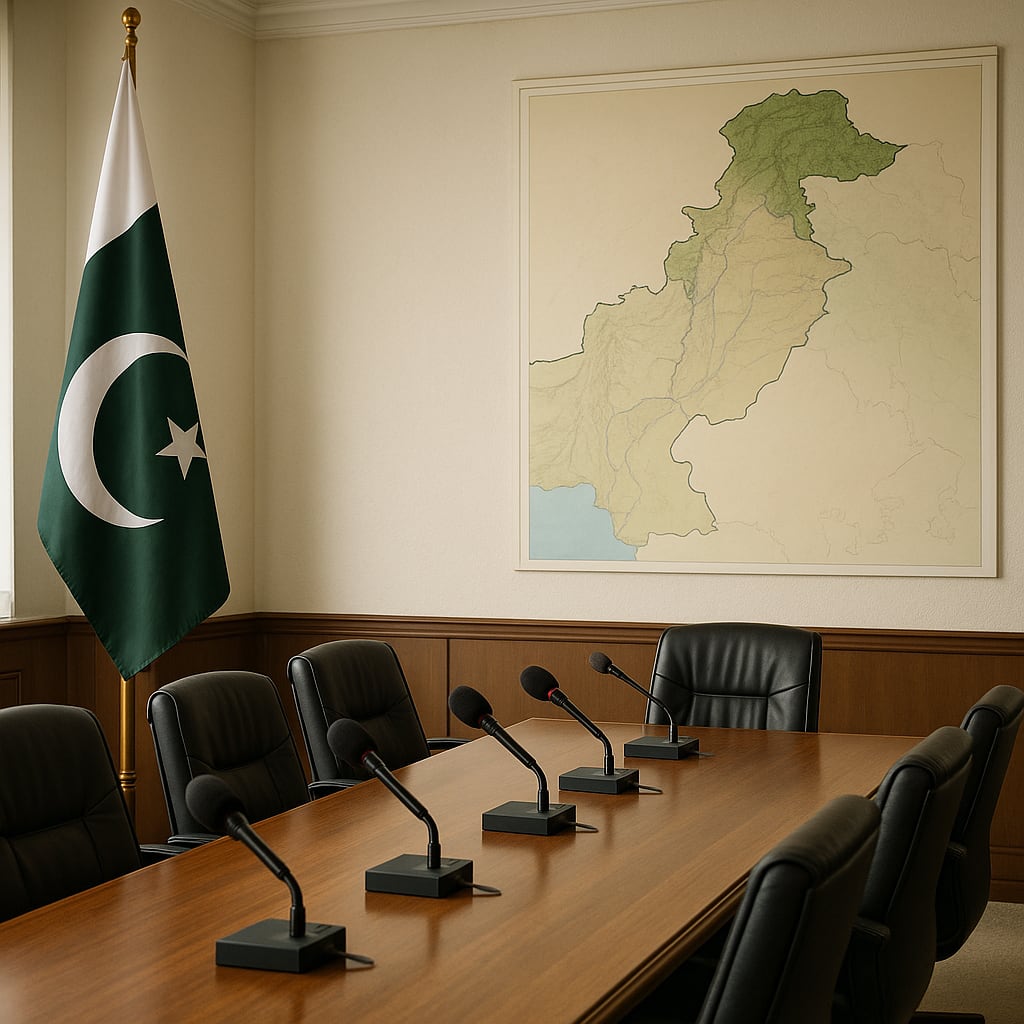
Pakistan suspends PTI-run Khyber Pakhtunkhwa government under emergency rule
Narrative Snapshot
Across outlets there is broad agreement that President Asif Ali Zardari imposed emergency rule in Khyber Pakhtunkhwa, suspended the provincial government run by Imran Khan’s Pakistan Tehreek-e-Insaf, and transferred authority to the center. Coverage converges on the federal rationale—alleged failure to counter Islamist militancy—while emphasizing different facets: Al Jazeera foregrounds the prime minister’s office language of “deliberate disengagement” from counterterrorism; the South China Morning Post details the federal takeover mechanism down to a governor-led advisory council; and The Hindu explains the constitutional basis for assuming executive and legislative powers.
Other outlets sharpen the political stakes. Deutsche Welle situates Khyber Pakhtunkhwa as Khan’s stronghold, The Guardian highlights PTI’s description of the move as “more of a coup disguised as emergency” and connects it to ongoing mobilization for Khan’s release, and Sky News provides a concise confirmation of the declaration. What is most at stake in this coverage is control over a province bordering Afghanistan, the integrity and scope of constitutional emergency powers, and the trajectory of the confrontation between the federal government and PTI.
What Happened
On Sunday, President Asif Ali Zardari declared a state of emergency in Khyber Pakhtunkhwa and effectively suspended the PTI-run provincial government, according to multiple outlets. The prime minister’s office attributed the cabinet’s move to the provincial authorities’ “deliberate disengagement from the fight against terrorism,” while the president’s office cited allegations the province had failed to tackle Islamist militancy. Under Pakistan’s constitution, an emergency enables the federal government to assume key executive and legislative powers in a province; Law Minister Azam Nazeer Tarar said the provincial governor would take charge with an advisory council. Khyber Pakhtunkhwa is described as a northwestern stronghold of Imran Khan’s party. The decision followed a period of mobilization by Khan’s supporters, with thousands marching toward Islamabad to demand his release from prison.
Why It Matters
The move tests Pakistan’s constitutional architecture for emergency governance by shifting core executive and legislative functions from a province to the federal level. Outlets note that the framework permits the center to take over “some or all” provincial functions, placing immediate attention on how expansively those powers are used and for how long. Because Khyber Pakhtunkhwa is both a PTI stronghold and a province bordering Afghanistan, the decision folds internal security claims and high-stakes provincial politics into a single institutional action. The Guardian underscores the escalation of the federal–PTI standoff amid ongoing protests for Khan’s release, while Deutsche Welle and The Hindu highlight the political geography and legal basis. For decision-makers, the implications run through counterterrorism policy execution in the northwest and the precedent set for federal intervention in provincial governance under security justifications.
Diverging Narratives
Government-aligned accounts frame the step as a security imperative. Al Jazeera relays the prime minister’s office charge of “deliberate disengagement” by provincial authorities from counterterrorism, and the South China Morning Post cites allegations of failure to tackle Islamist militancy as the trigger. This framing anchors the emergency in state responsibility to address a specific security deficit. PTI’s response, carried by The Guardian, is starkly different: a spokesperson called the measure “more of a coup disguised as emergency,” presenting it as an illegitimate political maneuver against a rival party’s stronghold. The Hindu’s focus on constitutional provisions and the SCMP’s implementation detail—transferring authority to the governor with an advisory council—emphasize legality and process over motive. Unresolved in the coverage are the duration and scope of the federal takeover—The Hindu notes the capacity to assume key powers, and the SCMP says “some or all” functions—leaving open how comprehensively Islamabad will govern the province under the decree.
What Happens Next
Two sets of decisions will shape trajectories. First is the design and use of emergency powers: the law minister’s statement that the governor will rule with an advisory council sets a procedural baseline, but analysts should watch for formal announcements on the council’s composition, any federal legislative or executive measures enacted under the emergency, and signals on duration, all grounded in the constitutional framework described by The Hindu and the SCMP. Second is the political response. The Guardian reports PTI’s denunciation of the move and links it to the party’s ongoing mobilization, while Al Jazeera notes thousands marching to Islamabad to demand Khan’s release. Indicators include whether protests intensify or change tact in light of the suspension, and whether federal messaging continues to prioritize counterterrorism performance as justification, as cited by Al Jazeera and the SCMP.