
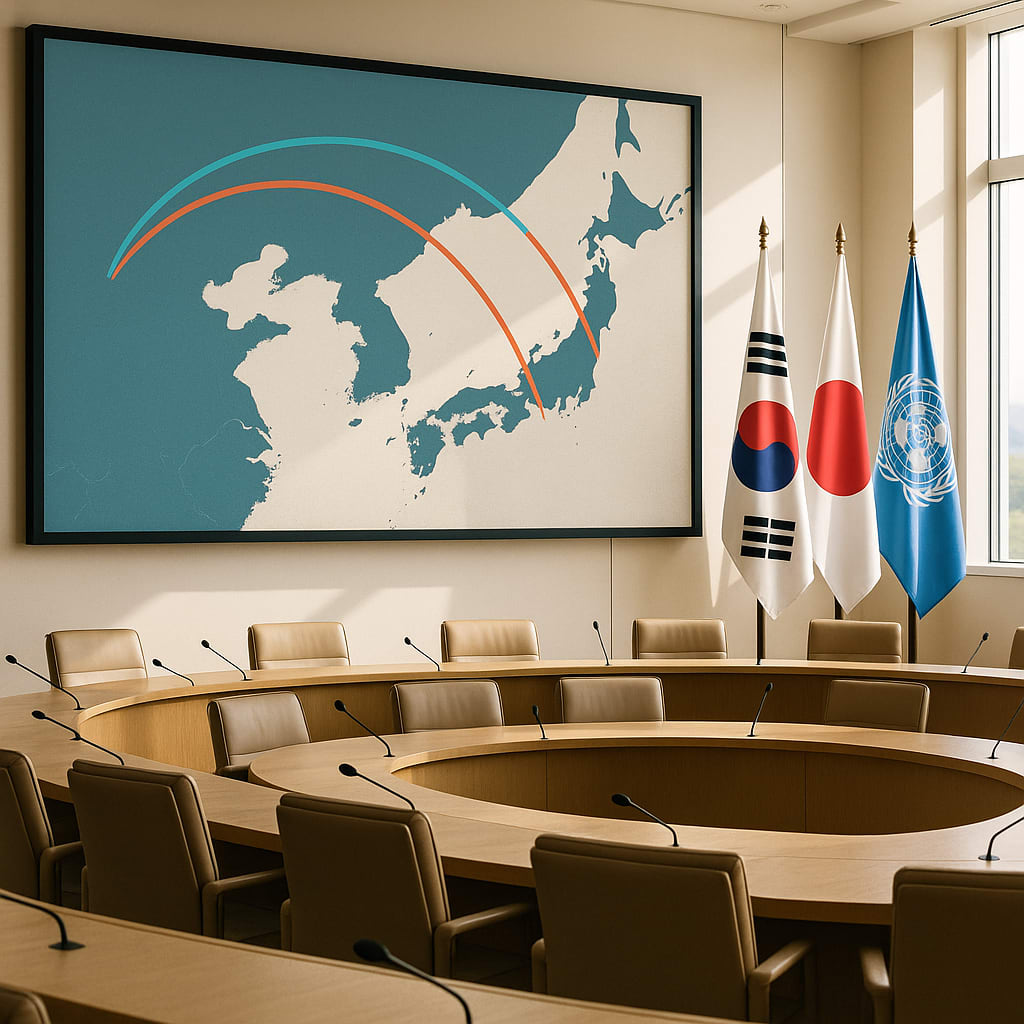
North Korea fires multiple ballistic missiles off east coast, Seoul says
Narrative Snapshot
Across outlets, reporting converges on a launch into eastern waters, but precision varies on scale and trajectory. South Korea’s military is the primary source for initial facts, with several outlets relaying “multiple” ballistic missiles, while others retain caution with “at least one” projectile. Japanese reporting adds geographic specificity: at least two missiles were believed to have fallen outside Japan’s exclusive economic zone, and Tokyo confirmed at least one suspected ballistic missile. Some coverage emphasizes the launch origin as Pyongyang and notes a move to boost surveillance.
Contextual framing diverges. One thread links the activity to a recent South Korean hypersonic capability test, characterizing the latest North Korean launch as a show of force. Another situates it within a broader pattern of North Korean weapons development, including a recent claim of artificial intelligence-enabled missile guidance. A separate through line highlights friction along the inter-Korean border after landmine incidents, underscoring the conventional flashpoints that coexist with the accelerated missile-testing tempo.
What Happened
South Korea’s Joint Chiefs of Staff reported that North Korea fired multiple ballistic missiles off its east coast into the Sea of Japan, with Seoul increasing surveillance following the launches. Japan confirmed at least one suspected ballistic missile, and Japanese coverage indicated at least two fell outside Japan’s exclusive economic zone. Some reports specified the launch point as Pyongyang. No material damage was reported. Several outlets placed the incident within a busy October, marking it as North Korea’s fourth launch this month. The event followed a North Korean ballistic missile test on October 3 that Pyongyang said incorporated artificial intelligence technology capable of adjusting flight, and it came amid weeks of tension after landmine explosions along the inter-Korean border that injured three South Korean soldiers.
Why It Matters
The episode fits a discernible cycle in which demonstrations of advancing capabilities on one side are met by rapid signaling on the other, with the hypersonic and AI references underscoring a qualitative as well as quantitative arms dynamic. Reporting that projectiles splashed down outside Japan’s exclusive economic zone and that Tokyo confirmed at least one suspected ballistic missile shows how these launches routinely activate regional tracking and alert architectures beyond the peninsula. Friction along the border adds a conventional layer to an already complex deterrence environment. For decision-makers, the pairing of higher-frequency launches with claims of novel guidance and hypersonic systems complicates early warning, intercept planning, and crisis communications. The coverage signals that even absent damage, each event revalidates surveillance postures and reinforces the expectation of immediate cross-capital coordination on assessments.
Diverging Narratives
Outlets differ on scale and technical detail. Some describe “multiple” launches, while others report “at least one” projectile, reflecting caution during the initial reporting window. Japanese and Russian reporting adds specificity—two missiles and splashdowns outside Japan’s exclusive economic zone—while South Korean accounts emphasize increased surveillance and the launch origin as Pyongyang. Interpretations of motive also diverge. Several outlets attribute the timing to a show of force following South Korea’s hypersonic test, whereas others cast it as part of a sustained North Korean push to expand nuclear-capable systems. Technological context is framed differently: one strand highlights North Korea’s earlier claim of AI-enabled missile flight-path adjustment, while another foregrounds South Korea’s hypersonic advance, with some characterizing it as a missile and others as a hypersonic drone system. Finally, some coverage layers in recent landmine incidents on the border as a concurrent source of tension, while others keep the focus squarely on missile activity and regional tracking.
What Happens Next
Key decisions will center on posture and messaging. Seoul has already intensified surveillance; whether it continues to frame subsequent North Korean activity as show-of-force responses to South Korean tests will shape expectations for further demonstrations. Tokyo’s technical assessments—missile count, trajectories, and EEZ implications—will indicate how extensively regional warning networks were engaged and whether additional measures are triggered. The link some outlets draw to border landmine incidents suggests that any adjustments to rules of engagement or engineering works along the Demilitarized Zone bear watching for escalation risks. Technological signaling remains a driver: if future North Korean statements reprise AI-enabled guidance claims, or if South Korea publicizes further hypersonic testing, coverage suggests the testing tempo may remain high, keeping surveillance and public alert systems activated even in the absence of reported damage.