
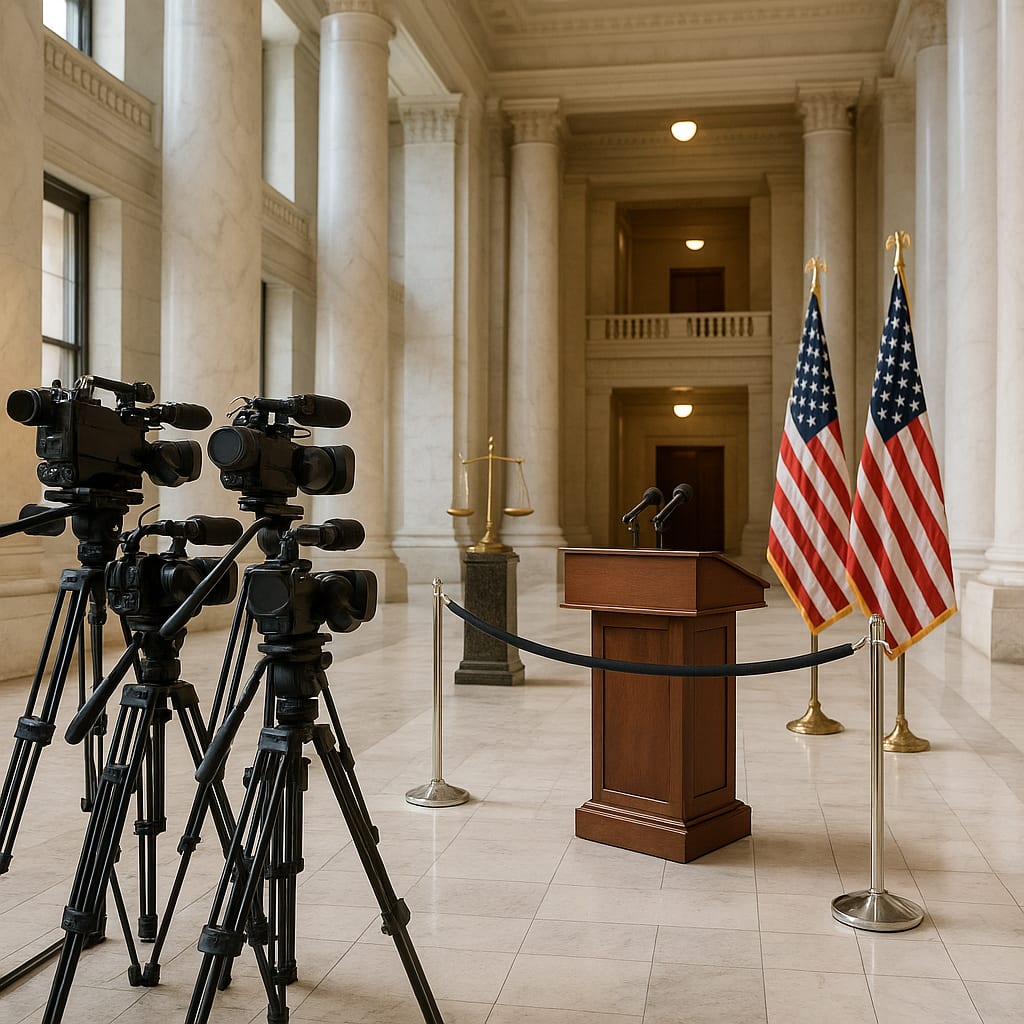
US Justice Department opens antitrust probe into TV networks’ suspension of Trump press pool coverage
Narrative Snapshot
Across outlets, the core throughline is consistent: US authorities are examining whether coordinated limits on presidential pool coverage by major networks ran afoul of competition law. Where accounts diverge is on precipitating factors and scope. Several international outlets foreground the White House’s initial exclusion of specific outlets as the catalyst for the press pool’s response, while others lead with the legal exposure faced by the five largest US television networks. A judicial dimension appears in Latin American coverage that is absent from some Anglophone reports, and an Italian account ties the suspended coverage to a high-profile summit, underscoring the foreign-policy stakes. The stakes laid out across reports center on an unusual collision of antitrust enforcement with institutional norms governing White House access and pooled reporting.
What Happened
The US Justice Department notified major television networks that it is investigating whether they violated antitrust laws when they suspended presidential pool coverage of Donald Trump, according to US reporting. German and Italian outlets specify that ABC, CBS, CNN, NBC, and Fox News are under probe. Other international coverage describes the action as an inquiry into whether the White House press pool’s decision itself breached antitrust rules. The move followed the White House’s blocking of access for certain outlets—including CNN, MS Now, and Politico—after which press organizations restricted pool coverage, UK reporting notes. An Argentine outlet adds that a judge ordered access restored to CNN and other media barred by the Trump White House and that a judicial ruling on the legality of the veto is still pending. Italian coverage specifies that the suspended pool coverage included a summit with China’s Xi.
Why It Matters
The case tests the boundary between longstanding press pool coordination—central to managing access and shared footage of the US presidency—and the reach of competition law when multiple major networks act in concert. It also exposes tension between executive control over media access and judicial checks, with one outlet reporting a court order restoring credentials while a broader ruling on the White House’s veto remains pending. If antitrust is applied to collective decisions by news organizations about access practices, it could reshape how pool arrangements function during high-salience diplomatic events, such as a summit with China’s leader. For decision-makers in governments and international organizations, the outcome will signal how US institutions balance market regulation, press freedom norms, and executive discretion over access—factors that shape transparency around diplomacy and executive policymaking.
Diverging Narratives
Outlets align on the existence of a Justice Department probe but differ on emphasis. US and Qatari reports frame it as an antitrust inquiry into suspended pool coverage, while German and Italian accounts name the five networks reportedly under investigation. UK coverage centers on the White House’s initial exclusion of outlets—CNN, MS Now, and Politico—as the trigger for restricted pool access, placing the origin of the dispute within executive gatekeeping rather than newsroom coordination. Argentine reporting introduces a judicial layer, noting a judge’s order to restore access and a pending decision on the veto’s legality, which could recalibrate the context for both the networks and the government. Italian reporting ties the suspension to coverage of a summit with Xi, highlighting foreign-policy ramifications. Across reports, the precise legal theory and the specific conduct under scrutiny beyond “suspended” or “restricted” coverage are not detailed, leaving the contours of potential antitrust liability undefined in the public record.
What Happens Next
Two decision tracks will shape outcomes. First, on enforcement: the Justice Department may either escalate—by seeking documents or filing a case—or conclude the probe without action. Reports specify the five networks under scrutiny and the behavior at issue, so formal steps from the department would clarify the legal theory and scope. Second, on access: an Argentine outlet reports a judicial order restoring credentials to CNN and others and a forthcoming ruling on the veto’s legality; how courts ultimately resolve that question will influence the rationale and necessity for any continued pool restrictions. Analysts should watch for Justice Department communications, any court rulings on the White House veto and compliance with the restoration order, and public statements from the named networks or the press pool describing adjustments to coverage practices in response to these developments.