
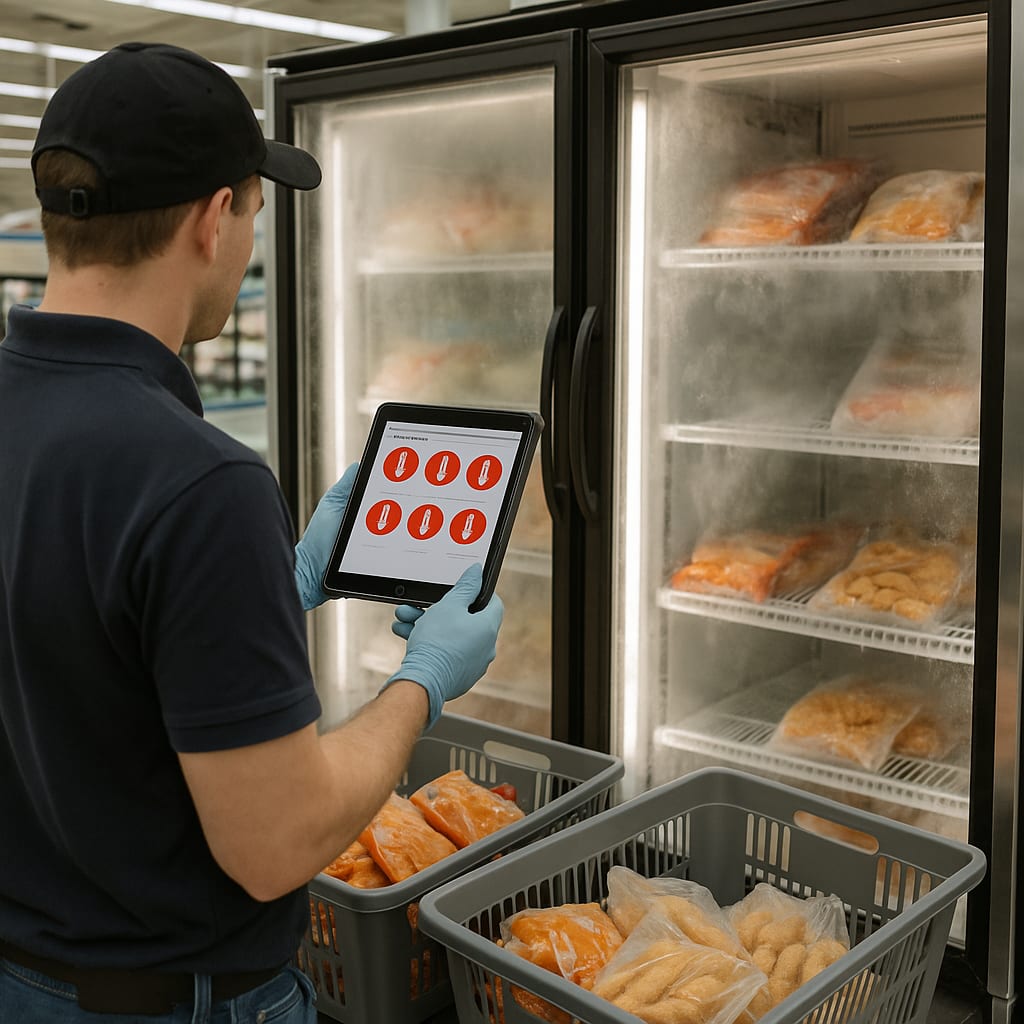
Cyberattack overheats refrigeration at French supermarkets, spoils food and triggers criminal probe
Narrative Snapshot
Across outlets, the scale is consistently described as extensive, but the reported magnitude and composition vary. British and French reporting emphasizes “hundreds” of affected stores and multimillion-euro losses, with the BBC and France24 underscoring the breadth across multiple chains, while The Guardian initially highlighted the impact on Intermarché and Coopérative U. RT carries the largest tally, assembling a chain-by-chain breakdown that would push the total beyond 500 stores, a higher ceiling than most other sources present.
Two framing choices stand out. French coverage sharpens the technical vector: Le Monde reports that investigators traced the fault to software from Denmark’s Danfoss, and France24 adds that some refrigeration systems ran on outdated software no longer receiving security updates. International outlets lean into systemic risk and visible consequences: Deutsche Welle links the event to food security concerns across Europe; Al Jazeera, CBC, and The Hindu foreground fires, spoiled goods, and emptied shelves.
There is also divergence on geographic scope and sectoral spillover. NBC reports impacts in “several other European countries,” echoed by Argentina’s Clarín naming the Netherlands, while most coverage focuses on France. RT extends the claimed footprint to wholesalers and butcher shops, citing French broadcast reporting, which goes beyond the chains identified by other outlets. Prosecutors’ confirmation of a large-scale attack and resultant fires provides institutional anchoring for the most severe on-the-ground effects reported by several international sources, even as numbers and cross-border reach remain unsettled.
What Happened
Major French retailers reported an overnight cyberattack that remotely raised temperatures in refrigeration units, causing defrosting across hundreds of supermarkets. Intermarché and Coopérative U said approximately 150–200 and nearly 100 of their shops, respectively, were targeted (The Guardian; South China Morning Post). French prosecutors confirmed a large-scale incident affecting connected refrigerators at several major food retailers, with outbreaks of fire indicated (South China Morning Post; The Hindu). Additional chains named in coverage include E.Leclerc, Carrefour, and Monoprix (SCMP; France24; Fox News). Le Monde reports that the fault was traced to software from Danish firm Danfoss, and France24 says some systems used outdated software without security updates. Several outlets reported temperatures reaching as high as 50°C, leading to extensive spoilage and some fires (CBC; Clarín). Losses were described as potentially in the millions of euros or higher (BBC; Al Jazeera; France24; NBC).
Why It Matters
The incident exposes how operational technology in retail—refrigeration controllers and their remote management—has become a point of systemic risk. French reporting identifies a shared vendor software layer as the technical origin of the fault (Le Monde) and highlights outdated, unsupported software within affected systems (France24), underscoring how legacy components can amplify cross-chain vulnerability. International coverage links the disruption to food security: Deutsche Welle notes that the event raises serious questions across Europe, while several outlets describe empty shelves and mass disposal of perishables (Al Jazeera; BBC).
Institutionally, the case tests investigative and regulatory capacity to manage cyber risk in civilian supply chains. The Paris prosecutor’s office confirmed the scale and the involvement of multiple retailers, including reports of fires (SCMP; The Hindu), and France’s anticybercrime office has opened an investigation (Le Monde). Reports of effects beyond France (NBC; Clarín) suggest potential cross-border coordination requirements if confirmed, while corporate responses to software lifecycle management and vendor security baselines are likely to be scrutinized given the role of outdated systems (France24).
Diverging Narratives
Outlets diverge on the scope. The Guardian and SCMP focus on Intermarché and Coopérative U counts, placing the direct impact above 200 stores, while the BBC and France24 emphasize “hundreds” across multiple chains. RT cites French media to present a larger composite estimate—more than 500 stores across Intermarché, Coopérative U, Carrefour, Monoprix, and E.Leclerc—and extends the impact to wholesalers and butchers, claims not independently matched in the other provided sources. Estimates of financial losses also vary: British and French outlets describe “millions of euros,” whereas NBC relays company executives’ references to potential “tens of millions of dollars.”
There is also a difference in causal framing. Le Monde reports that investigators identified a fault originating in Danfoss software, and BFM TV reporting cited by RT describes the targeting of Danfoss controllers and activation of automatic defrost functions. France24 stresses that some systems were running outdated, unsupported software. Most international outlets stop short of naming a vendor, instead highlighting consequence and scale. On impacts beyond France, NBC reports involvement of “several other European countries,” which Clarín links to the Netherlands, while many sources keep the geographic lens on France. Multiple outlets, backed by prosecutors’ statements, refer to fires, though not all reports foreground this effect (SCMP; The Hindu; CBC; Al Jazeera versus The Guardian).
What Happens Next
French authorities have opened an investigation; the next decision point is attribution and confirmation of the technical vector. If prosecutors substantiate Le Monde’s reporting on the implicated vendor software and France24’s account of outdated, unsupported systems, retailers will face choices on accelerated upgrades and segmentation of remote controls; watch for formal advisories or remediation timelines from affected chains and any vendor communications referenced in press or official statements.
A second hinge is scope confirmation. If authorities corroborate NBC and Clarín’s reports of impacts in other European countries, the matter will likely engage cross-border law enforcement channels; indicators include statements from non-French national authorities and coordinated incident bulletins. A third concerns impact reconciliation. RT’s larger footprint and sectoral spillover claims may be narrowed or validated as chains complete inventories; look for consolidated figures from retail groups such as Les Mousquetaires, E.Leclerc, and Coopérative U, and for prosecutors’ updates on reported fires and store closures. Finally, loss estimates will solidify as insurers and retailers quantify spoilage; expect revised totals in corporate disclosures noted by mainstream outlets.