
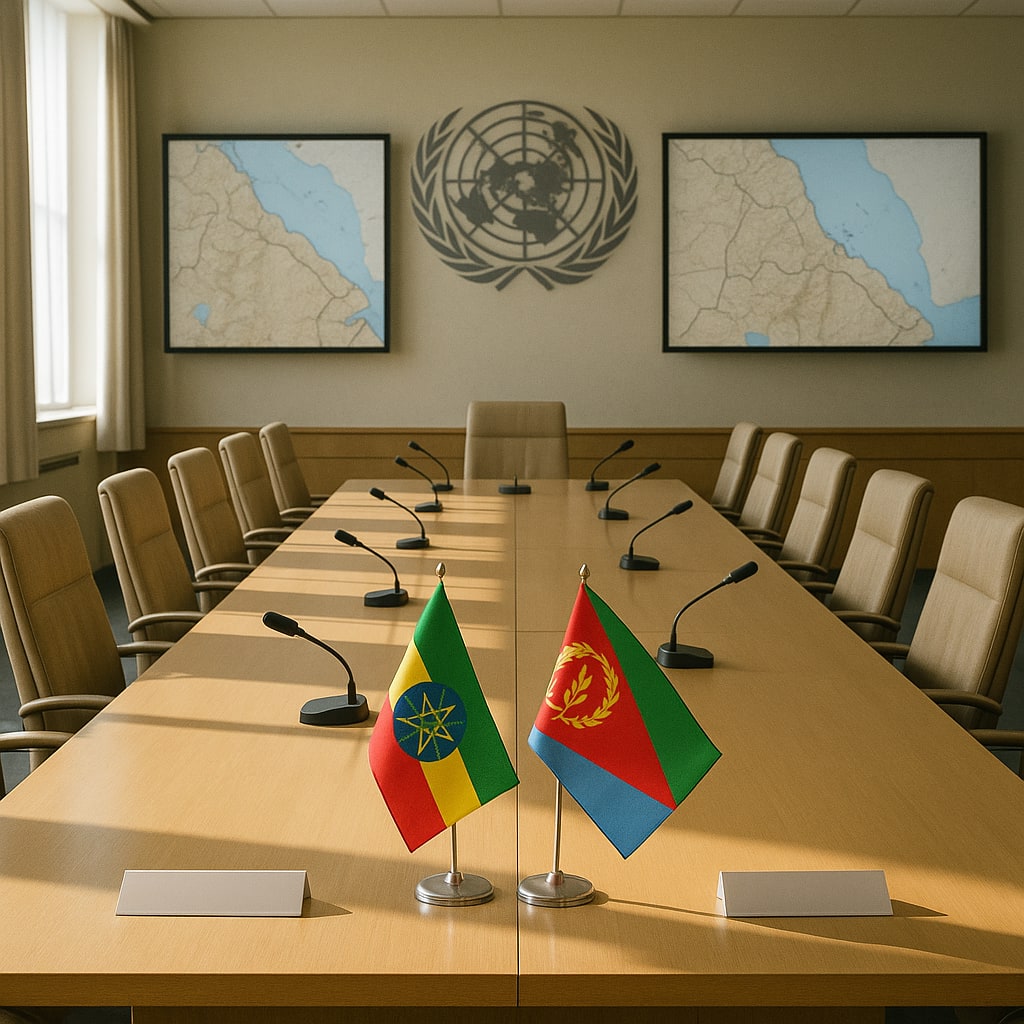
Ethiopian advances in northern Tigray reach the Eritrean border as Asmara turns to the UN and Washington urges de-escalation
Narrative Snapshot
Across outlets, reporting converges on intensifying military movement in northern Tigray and a tightening focus on the Ethiopia–Eritrea frontier. France24 centers the local impact, noting residents’ fears after Ethiopian federal forces and allies entered a key town near the border following a rebel withdrawal. The Daily Nation foregrounds the frontier itself, citing Ethiopian forces pushing Tigrayan fighters back to the border town of Zalambessa and Asmara’s appeal to the UN as troops reached the boundary.
Pan-African coverage broadens the frame. AllAfrica, relaying The New Humanitarian, highlights concerns over Eritrean incursions and the risk of a wider regional war, referencing three grim scenarios for the conflict’s trajectory. Latin American outlets split emphasis: Clarin focuses on Washington’s call for both Ethiopia and Eritrea to de-escalate, respect territorial integrity, and engage in dialogue amid troop deployments near the common border, while Folha de S.Paulo underscores the sharp intensification of fighting between Ethiopian forces and Tigray’s authorities as signaling the possible start of a new war within Ethiopia.
What Happened
Fighting in northern Ethiopia escalated sharply in recent days, with Folha de S.Paulo describing intensified battles between Ethiopia’s armed forces and Tigray’s regional authorities. France24 reports that Ethiopian federal forces and allied units entered a key town in northern Tigray near the Eritrean border after rebel fighters withdrew, prompting fear among residents of further violence and instability. The Daily Nation adds that Ethiopian government forces pushed Tigrayan rebels back to Zalambessa, a border town, as troops reached the frontier and Eritrea’s capital, Asmara, appealed to the UN. AllAfrica, citing The New Humanitarian, frames alleged Eritrean incursions as heightening fears of a wider regional war and references three grim scenarios for how the renewed Tigray conflict could develop. Clarin reports the United States urged Ethiopia and Eritrea to de-escalate, respect territorial integrity, and pursue dialogue amid new deployments near their shared border.
Why It Matters
The conjunction of front-line movement toward Eritrea and an appeal to the UN signals that a domestic conflict is interacting with cross-border security dynamics. Asmara’s recourse to the UN introduces multilateral stakes, while Washington’s call for restraint and respect for territorial integrity situates the crisis within norms governing interstate conduct and conflict management, as reported by Clarin and the Daily Nation. AllAfrica’s reference to analytical scenarios warning of region-wide escalation underscores why policymakers may need contingency planning beyond Ethiopia’s internal theater. France24’s account of residents’ fears highlights protection concerns that can accelerate diplomatic engagement. Folha de S.Paulo’s framing of a potential new war in Africa’s second most populous country points to the scale of possible humanitarian and regional ripple effects, raising the cost of inaction for regional capitals and international partners.
Diverging Narratives
Coverage differs on both characterization and emphasis. On the immediate battlefield dynamics, France24 reports that rebel fighters withdrew before Ethiopian forces entered a key town near the border, while the Daily Nation describes Tigrayan rebels being pushed back to the border town of Zalambessa—distinct framings of momentum that are not necessarily contradictory but point to different interpretations of rebel intent and government pressure. It is not clear from the reporting whether the “key town” referenced by France24 is the same as Zalambessa cited by the Daily Nation.
On the conflict’s scope, AllAfrica’s relay of The New Humanitarian highlights alleged Eritrean incursions and the prospect of regional war, whereas Folha de S.Paulo keeps the lens on an intensifying confrontation between federal forces and Tigray’s authorities, signaling a potential new internal war. Clarin centers diplomatic signaling, presenting Washington’s call for de-escalation by both Ethiopia and Eritrea and stressing territorial integrity and dialogue. Together, these strands surface unresolved questions about the scale and visibility of Eritrea’s involvement and whether the crisis remains primarily an internal Ethiopian conflict or is tilting toward a broader interstate confrontation.
What Happens Next
Key decision points emerge at the border and in diplomacy. First, the operational tempo of Ethiopian forces near frontier towns will shape risk: continued advances into additional localities, as suggested by France24’s and the Daily Nation’s accounts of movement toward the border, would raise friction with Eritrea; consolidation could open space for talks. Second, Eritrea’s response—pursuing its UN appeal or matching deployments reported near the common border by Clarin—will indicate whether diplomatic or military tracks dominate. Third, external engagement may intensify if Washington’s de-escalation call gains traction; signals would include follow-on statements or proposals linked to respect for territorial integrity and dialogue, as Clarin reports. Finally, the posture of Tigrayan forces—whether further withdrawals or renewed resistance are reported around locations like Zalambessa—will influence both sides’ calculations and the credibility of the grim scenario sets referenced by AllAfrica.