
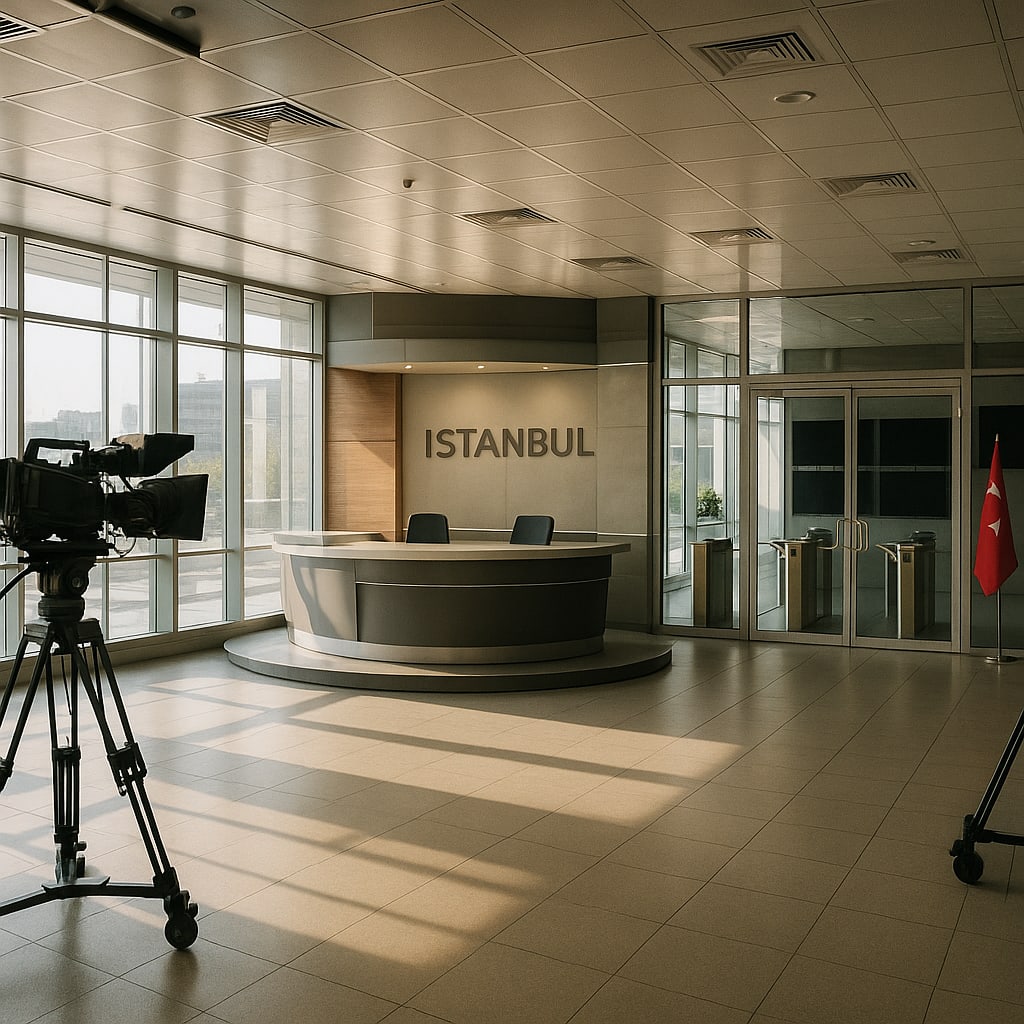
Turkish police seize control of pro-opposition Halk TV, halt broadcasts and install trustee
Narrative Snapshot
Across outlets there is broad concurrence on the core actions: police entered Halk TV’s Istanbul headquarters, halted live programming, and a state-appointed trustee or new manager took control. BBC News adds operational detail that staff said they were unable to enter the building, while ANSA underscores the appointment of an administrator. France24 and Folha de S.Paulo report 11 detentions tied to the raid.
Where emphasis diverges is on rationale and context. The Times of Israel foregrounds authorities’ claim of a corruption investigation targeting chairman Cafer Mahiroglu, noting 17 suspects sought and that he resides abroad, while Deutsche Welle, Le Monde, Folha, Corriere della Sera, and Middle East Eye situate the move within a sustained squeeze on critical media. Opposition lawmakers and a journalists’ union protesting, reported by The Times of Israel, and Mahiroglu’s “dark day” denunciation and family detentions, carried by France24 and Middle East Eye, frame the domestic backlash.
Outlets also differ in characterizing Halk TV’s prominence: Le Monde calls it the main opposition channel; Middle East Eye describes it as the country’s most-watched; Deutsche Welle labels it a top news channel; and Corriere della Sera presents it as one of the few remaining independent voices. Le Monde further links timing to a planned live broadcast of suspended Istanbul mayor Ekrem Imamoglu’s defense and to the shuttering of news portal T24 two weeks earlier, extending the episode’s significance beyond a single outlet.
What Happened
On 14 October, police raided the Istanbul headquarters of Halk TV, halted its live broadcasts, and installed a government-backed trustee or new manager, according to ANSA, BBC News, France24, The Times of Israel, Deutsche Welle, and Middle East Eye. BBC News reported that Halk TV staff said they were blocked from entering the building. France24, The Times of Israel, and Folha de S.Paulo said 11 people were detained; France24 and Middle East Eye relayed chairman Cafer Mahiroglu’s statement that seven of his relatives were among those held. The Times of Israel reported authorities are seeking 17 suspects in a corruption probe linked to Mahiroglu, who lives abroad. Middle East Eye cited Halk TV’s post on X confirming a trustee appointment and halted broadcasts, including on YouTube. The Times of Israel noted protests by opposition lawmakers and a journalists’ union. Le Monde reported the move followed T24’s closure and coincided with plans to air Imamoglu’s defense.
Why It Matters
Multiple outlets frame the takeover as part of a structural contraction of media pluralism in Turkey: Deutsche Welle situates it within what it calls decades of media capture, Le Monde describes tightening pressure on remaining independent outlets, Folha de S.Paulo refers to a wider campaign against critical sectors, and Corriere della Sera portrays Halk TV as one of the few independent television voices left. Interrupting a prominent broadcaster—variously described as the main opposition channel (Le Monde), most-watched (Middle East Eye), or a top news channel (Deutsche Welle)—narrows access to nationwide platforms for political communication. Le Monde’s note that the operation coincided with a planned live broadcast of suspended mayor Ekrem Imamoglu’s defense highlights the implications for coverage of high-salience legal and political proceedings. Administratively, the reliance on trustee appointments, access restrictions, and criminal probes—documented across outlets—illustrates the tools shaping the media environment that policymakers, regulators, and observers will need to account for when assessing civic space and information integrity in Turkey.
Diverging Narratives
Outlets present two distinct frames for causality. The Times of Israel relays authorities’ justification of a corruption probe targeting Cafer Mahiroglu, citing 17 sought suspects and placing the detentions in that investigative context. In contrast, Deutsche Welle, Le Monde, Folha de S.Paulo, Corriere della Sera, and Middle East Eye emphasize a pattern of media pressure, censorship, or “media capture,” using Halk TV as a current example. These accounts also differ in what they prioritize as evidence: Middle East Eye and France24 feature Mahiroglu’s “dark day” statement and his claim that seven family members, including a 70-year-old brother (Middle East Eye), were detained, underscoring perceived intimidation, while BBC News focuses on immediate operational constraints, such as staff being barred from entry.
Characterizations of Halk TV’s standing vary, from “most-watched” (Middle East Eye) to “main opposition channel” (Le Monde) to “top news channel” (Deutsche Welle), which shape judgments about the takeover’s impact. Le Monde’s report that the raid coincided with a planned live airing of Imamoglu’s defense adds a timing-sensitive dimension absent from other accounts. Notably, beyond the assertion of a corruption probe, details of alleged offenses are not elaborated in the coverage, leaving the scope and evidence base of the investigation unclear.
What Happens Next
Key decision points revolve around control and continuity of broadcasting, the trajectory of the investigation, and the breadth of further actions against media. Whether the trustee maintains the suspension or restarts programming will be signaled by staff access to the Istanbul facility, noted by BBC News, and by resumption of live and online streams flagged by Middle East Eye. On the legal track, authorities’ claim that 17 suspects are sought, with 11 already detained (The Times of Israel; France24; Folha de S.Paulo), sets expectations for additional arrests or formal charges; disclosures about the case against Mahiroglu, who resides abroad (The Times of Israel), will indicate how far prosecutors intend to go. Domestic response bears watching: The Times of Israel reports protests by opposition lawmakers and a journalists’ union; further mobilization or official replies would clarify political costs. Finally, Le Monde’s reference to T24’s recent closure and Middle East Eye’s description of broader arrests make subsequent moves against other outlets a critical barometer of trend consolidation.