
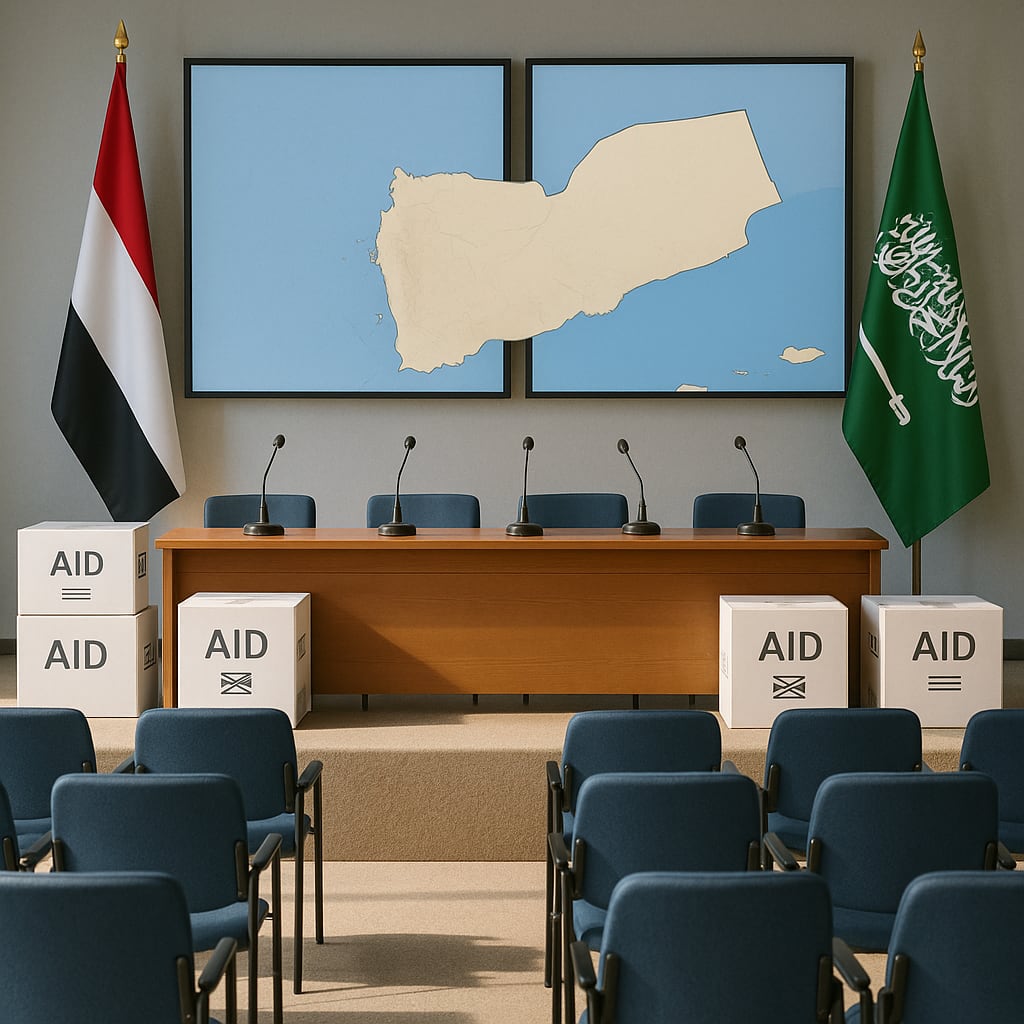
Missiles hit Yemen’s Aden presidential palace complex; Houthis claim attack as officials report deaths
Narrative Snapshot
Coverage converges on the strike location and immediacy of the risk to Yemen’s internationally recognized leadership, while diverging on casualty counts, weapons used, and the intended target. Multiple outlets report the Al-Maashiq palace compound in Aden was hit and that senior officials were unharmed, but death tolls range from two, as cited by Yemen’s information minister and carried by the BBC and New York Times, to five with 16 wounded reported by France24, CGTN, and the Japan Times; the Guardian and Middle East Eye relay intermediate figures from government and AFP sources. Most describe missiles, while France24 adds drones.
Outlets also split on framing the target. The Houthis say they struck a Saudi military operations headquarters and vowed to hit Saudi “build-ups wherever they are,” a line reflected in Haaretz, RT and Al Jazeera’s note of coalition allegations about external missile parts. Several reports still cast the site principally as Yemen’s government seat, while Middle East Eye cites a Yemeni minister alleging separate hits on Yemeni and Saudi-led coalition command centers within or alongside the complex.
The wider context emphasized varies by geography. Israeli outlets highlight simultaneous fronts, including a Saudi interception over Medina and Houthi fire on Marib, while Canadian and European outlets point to a pattern of attacks on Saudi infrastructure and maritime insecurity. Asian and Latin American coverage brings the Iran-Saudi dimension to the fore, with the South China Morning Post and Clarin foregrounding Riyadh’s accusation that Tehran is fueling the escalation. Humanitarian impact receives particular attention in Middle East Eye’s separate report of overwhelmed hospitals amid intensified fighting across Marib, Taiz, and the Red Sea coast.
What Happened
At least four to five missiles struck the Al-Maashiq Presidential Palace area in Aden, producing multiple explosions, according to witnesses and officials cited by the Toronto Star, Haaretz, and TASS. Yemen’s information minister said five missiles were fired, and the BBC, New York Times, and CBC reported that the prime minister and cabinet were unhurt. Initial official tallies put fatalities at two guards, per the BBC, New York Times, and CBC, while subsequent figures cited by France24, CGTN, and the Japan Times reported five dead and 16 wounded among guards and civilian staff. The Houthis claimed responsibility, stating they targeted a Saudi military operations headquarters at the complex and warning they would attack Saudi “build-ups wherever they are,” as reported by Haaretz and RT. Related same-day reporting described additional Houthi fire on Marib and a Saudi interception over Medina, per the Times of Israel, and a separate strike on a coalition facility in Aden’s Al Buraiqa district, per CGTN.
Why It Matters
A successful strike on the interim seat of Yemen’s recognized government underscores the Houthis’ ability to hit across front lines and complicates the coalition’s effort to protect political institutions in Aden, a risk long anticipated but rarely realized at this scale. Conflicting portrayals of the palace as a civilian government site versus a hub for Saudi-led military operations also speak to the blurred basing arrangements that shape targeting decisions and collateral risk. The attack aligns with a broader pattern of cross-border and infrastructure-focused operations—from a reported hit on Aramco headquarters to strikes on Riyadh’s airport and an interception over Medina—expanding strategic pressure on Saudi Arabia, as reported by The Hindu and Le Monde and noted by the Times of Israel and CBC. Simultaneously, humanitarian capacity is under acute strain, with the ICRC warning of unprecedented trauma caseloads and shortages nationwide, which raises the stakes for international aid coordination and protection of health facilities, as reported by Middle East Eye.
Diverging Narratives
The casualty picture remains unsettled. Government-linked accounts initially cited two dead guards, reflected by the BBC, New York Times, and CBC, while later official tallies carried by France24, CGTN, Japan Times, and TASS put fatalities at five with at least 16 wounded; AFP-sourced figures via the Guardian and Middle East Eye cited four dead and 10 wounded. Weapon descriptions vary: most emphasize ballistic missiles, while France24 reports combined missile-and-drone use. The intended target is also contested. Houthi statements, echoed by Haaretz and RT, characterize the site as a Saudi military headquarters hosting “build-ups,” with RT relaying unverified Houthi claims of Saudi officer casualties. Government and international outlets commonly frame it as the presidential palace, although Middle East Eye quotes a Yemeni minister alleging that both a Yemeni command center and a Saudi-led coalition headquarters were struck. There is divergence over senior officials’ presence: multiple outlets report the prime minister and cabinet were present and unharmed, while Middle East Eye cites a minister saying the president was also there. Finally, on attribution and escalation dynamics, Saudi officials and allied reporting emphasize Iranian support and external sourcing of missile parts, as noted by the New York Times, Folha de S.Paulo, and Al Jazeera, whereas other coverage situates the escalation amid multi-front fighting and humanitarian breakdown without independent corroboration of supply routes; the South China Morning Post goes further in placing events within a wider regional war narrative that includes earlier US-Israeli strikes on Iran.
What Happens Next
Key decisions now sit with three actors. First, the Houthi command has publicly committed to striking Saudi military “build-ups wherever they are,” per Haaretz; whether subsequent operations replicate the Aden pattern or focus on cross-border targets like those previously reported in Riyadh and Medina will signal their target prioritization. Second, the Saudi-led coalition must choose between concentrating on air and missile defense of Aden’s political core and coalition assets, intensifying retaliatory strikes, or acting on its allegation that the Houthis acquire missile parts from regional states, as reported by Al Jazeera; observable indicators include changes in basing, publicized interceptions, and statements on interdiction efforts. Third, the Yemeni government’s security posture in Aden—amid reports of high-level meetings at the palace before the strike, per CGTN—will reveal whether it hardens, disperses, or shifts command functions. Humanitarian indicators flagged by the ICRC, including trauma caseloads and displacement trends, will help gauge whether front-line escalation outpaces any political or military containment.