
US photojournalist injured in West Bank settler attack during olive harvest; Washington condemns violence
Narrative Snapshot
Across Israeli, Palestinian, and international outlets, there is broad alignment that masked Israeli settlers assaulted Palestinians during the olive harvest near Abu Falah and injured Washington Post photojournalist Heidi Levine, who was wearing press protection at the time. Multiple reports center the attack within the seasonal context of harvest-related violence in the Ramallah area, with European papers emphasizing Levine’s professional stature and the circumstances of her assignment, and Canadian and German outlets highlighting institutional reactions, including an Israeli army review and a condemnation from Reporters Without Borders.
Descriptions diverge on scale, characterization, and the role of state actors. Several outlets describe “dozens” of attackers, while others cite “at least 50” or “about 80.” Al Jazeera uses “pogrom,” and some reports relay claims that equipment was taken and that soldiers did not intervene, while others foreground the army’s statement that the incident will be examined. US government reactions also split between a State Department statement condemning “criminal violence by any party” and calls from US lawmakers for specific accountability for settlers. The stakes most frequently cited are press safety, accountability for settler violence, and how official responses—Israeli, US, and international—translate into investigations and enforcement.
What Happened
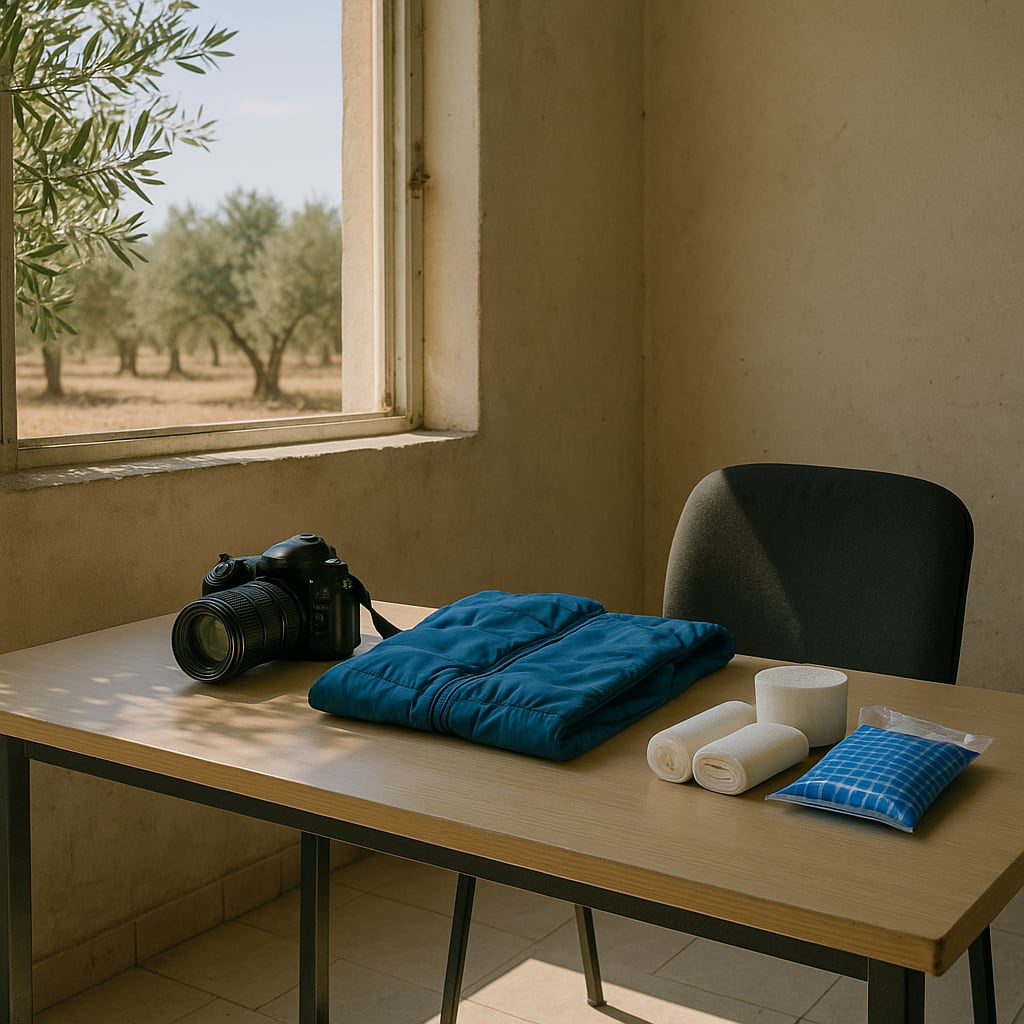
In mid-October, Washington Post photojournalist Heidi Levine was beaten by masked Israeli settlers while covering attacks on Palestinian olive harvesters near the West Bank villages of Abu Falah and Turmus Ayya, northeast of Ramallah. Multiple outlets report she was pushed to the ground and kicked; Levine says her flak jacket and helmet likely saved her life. Some accounts note her equipment was taken. She sustained injuries including a broken rib and a deep hand wound requiring surgery. Reports the same day described arson against olive groves and vehicles near Turmus Ayya and an assault on a 70-year-old near Birzeit. The US State Department condemned “criminal violence by any party,” offered consular assistance, and supported investigations and legal accountability. The US Embassy urged investigations, arrests, and convictions. Reporters Without Borders denounced “brazen violence,” and the Israeli army said the incident “will be examined.”
Why It Matters
This episode concentrates several structural pressures: recurring settler–Palestinian violence around the West Bank olive harvest; growing risks to journalists working in conflict settings; and the test of whether accountability mechanisms function in areas under Israeli occupation. Washington’s condemnation and consular outreach, coupled with calls from members of Congress for action against perpetrators, signal potential friction points within US policy, where rhetorical balance (“by any party”) meets demands for case-specific enforcement. European and Canadian coverage reinforces the salience of press protections and potential legal follow-up, while rights groups press for deterrent measures. The incident also unfolds amid Israel’s election-season debate over Palestinian statehood, which shapes approaches to West Bank governance and settler oversight, and against the backdrop of UK street mobilization urging arms export restrictions—contexts that can influence whether investigations translate into arrests and prosecutions or dissipate without outcomes.
Diverging Narratives
Outlets converge that settlers attacked Palestinians and injured an American journalist during the harvest, but framing varies. Language choices range from Al Jazeera’s “pogrom” to Italian and French coverage that stresses the professional context of Levine’s assignment. Accounts differ on scale: “dozens” (multiple outlets), “at least 50” (Middle East Eye), and “about 80” (Telesur). Some reports say Levine’s cameras and phone were taken and that soldiers present did not intervene (RT, Telesur), while others emphasize the army’s statement that the incident will be examined (CBC). ANSA presents the beating amid a “violent clash” between settlers and Palestinians, softening unilateral attribution, while Clarin, citing the Washington Post, relays claims of coordinated settler actions occurring daily. On the US side, the State Department’s formulation condemns violence “by any party,” contrasting with US Embassy language urging “investigations, arrests and convictions,” and lawmakers’ explicit demands to hold settlers accountable. These gaps define the main uncertainties: the extent of organized intent, on-the-ground security force conduct, and whether accountability will be case-specific or systemic.
What Happens Next
Key inflection points center on investigations and enforcement. The Israeli army’s stated examination could lead to identifications and arrests, aligning with US Embassy calls for “investigations, arrests and convictions”; absence of visible steps would reinforce narratives of impunity cited by several outlets. In Washington, the State Department has offered consular assistance and backed “legal accountability,” while members of Congress have urged action against settlers; observers can watch whether this translates into public designations, legal cooperation requests, or case updates communicated to the Washington Post. Press-freedom advocacy, already mobilized by Reporters Without Borders, may channel documentation into legal petitions or UN rapporteur engagement. Domestically in Israel, the election-season debate over Palestinian statehood could influence policy signals on settler oversight. Internationally, large UK demonstrations calling for arms export curbs provide a barometer of whether incidents like this drive policy review discussions, even absent immediate government moves.