
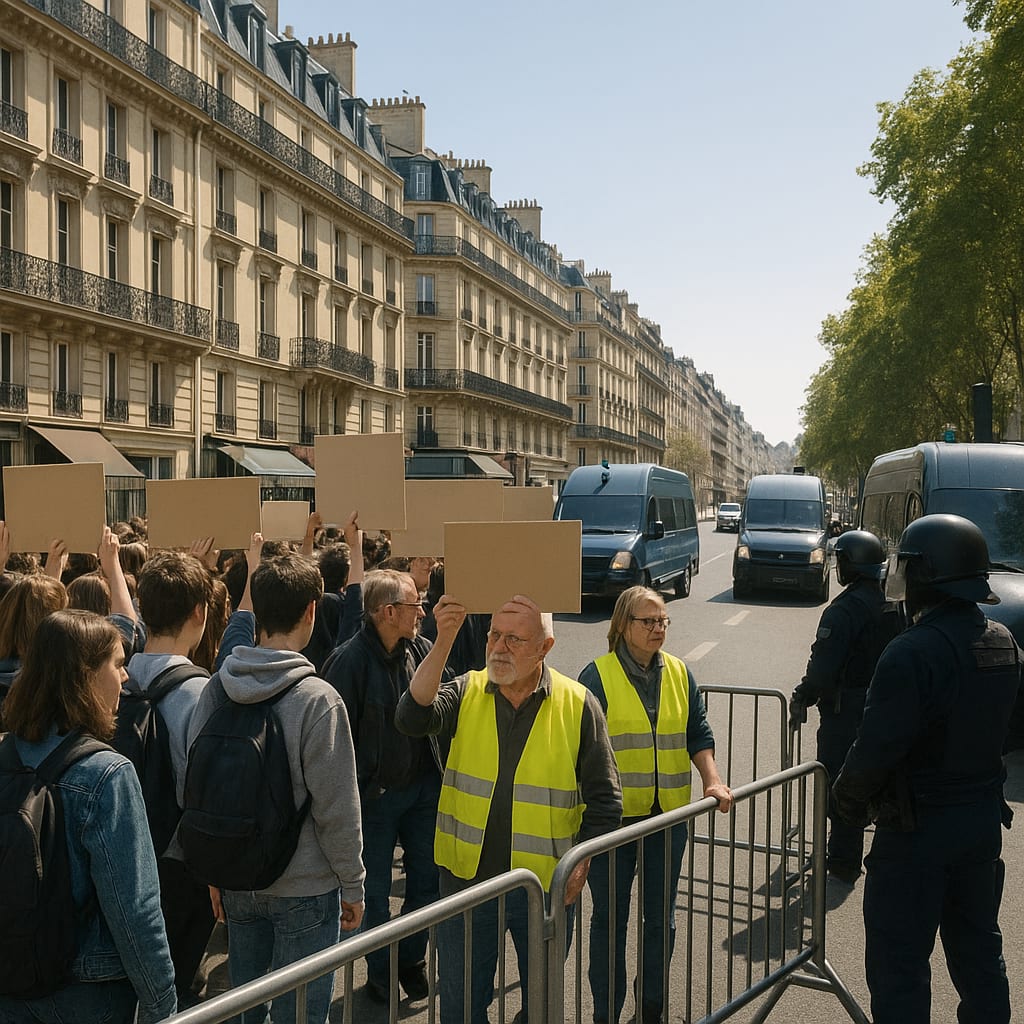
France braces for nationwide student–Yellow Vest protests as authorities tighten controls
Narrative Snapshot
Across outlets, there is broad agreement on the scale and breadth of the mobilization and the unusual coalition behind it. France24 and Balkan Insight anticipate hundreds of thousands of demonstrators as students, trade union members, and remnants of the Yellow Vest movement link grievances. Le Monde notes that high school students have been mobilized for a month and are explicitly seeking convergence with the Yellow Vests. Reporting from the Bangkok Post underscores how the movement manifests locally—school blockades drawing in students, teachers, and parents—while France24 stresses a parallel cost‑of‑living agenda.
Coverage also clusters around the state’s security posture. Le Monde reports that Interior Minister Laurent Nuñez expects 250 gatherings and has authorized stun grenades, while the Paris police prefecture banned undeclared marches across swaths of central Paris, including around the Élysée and Matignon. The Bangkok Post relays President Emmanuel Macron’s call for calm amid fears of violence, and the Toronto Star frames intensified policing as politically consequential for Macron’s final months.
A third strand centers on representation and symbols. Clarin highlights 17‑year‑old Elwan Benoît as a galvanizing student voice, whereas the New York Times profiles Bally Bagayoko, a suburban mayor whose visibility at marches is both praised and criticized. Middle East Eye documents how a viral slogan—“Bismillah, c’est les ténèbres”—mocking suspected police infiltration and racial stereotypes has become a unifying meme across protests. Together, these threads depict a movement contested in the streets, managed through restrictive policing, and narrated through both personalities and digital culture.
What Happened
Weeks of high‑school mobilization, marked by school blockades and marches, have culminated in nationwide demonstrations set for October 17. Le Monde reports that students are joining forces with Yellow Vest networks after a month of activism, while France24 says former Yellow Vest figures have rallied around an online campaign against rising fuel prices. The Interior Minister, cited by Le Monde, plans for roughly 250 gatherings and has authorized stun grenades, as the Paris police prefecture bans undeclared demonstrations across several central zones, including near the Élysée and Matignon. Macron called for calm on the eve of the protests, according to the Bangkok Post. France24 and Balkan Insight expect large turnouts. On the ground, the Bangkok Post describes early‑morning school blockades drawing in students, teachers, and parents. Middle East Eye tracks the spread of a viral slogan tied to alleged police infiltration. The New York Times and Clarin spotlight emergent figures at the protests.
Why It Matters
The coalition of students, unions, and Yellow Vests ties education‑system grievances to cost‑of‑living pressures, broadening the constituency and policy scope in ways reminiscent of 2018’s disruptive protests, as noted by France24. Le Monde frames a deeper political rift: Macron entered office promising social emancipation but now faces what it calls a “consummated divorce” with youth. The state’s crowd‑control posture—authorization of stun grenades and expanded protest restrictions reported by Le Monde—tests France’s public‑order doctrine and will shape perceptions of legitimacy among young people already wary of institutions. Middle East Eye’s account of a meme mocking suspected police infiltration spotlights how digital culture can erode trust in policing and racial neutrality claims. The visibility of local officials like Mayor Bally Bagayoko, profiled by the New York Times, underscores the role municipalities may play as intermediaries—or antagonists—in nationally charged street politics.
Diverging Narratives
The most explicit contrast is between the government’s security framing and protesters’ narratives. Le Monde relays Interior Ministry warnings about “far‑left” elements at the rear of marches provoking damage and justifying measures such as stun grenades and targeted bans. By contrast, Middle East Eye documents a protest culture that lampoons alleged police infiltration and foregrounds racial stereotyping, recasting the security problem as one of policing credibility rather than crowd behavior. Media also differ on emphasis: France24 centers convergence around cost‑of‑living strains and a “fraying social model,” while Balkan Insight and the Bangkok Post foreground the education system and school‑level mobilization. Le Monde’s political analysis of a broken relationship between Macron and youth sets a macro frame, whereas the New York Times and Clarin personify the movement through figures like Bagayoko and Elwan Benoît—Benoît himself acknowledging, per Clarin, that prominence may fade once the conflict ebbs. Together, these angles surface unresolved questions about whether the driver is primarily educational reform, household economics, or state‑society legitimacy.
What Happens Next
Three decision points will shape trajectories. First, policing on October 17 and beyond: Le Monde reports authorization of stun grenades and protest‑free zones; analysts should watch how strictly bans are enforced, whether force is used, and how any incidents recalibrate Interior Ministry doctrine. Second, cross‑movement convergence: France24 expects students, unions, and Yellow Vests to march together. Turnout and the depth of coordination will signal whether grievances consolidate or remain parallel streams. Third, political engagement: Macron has called for calm, per the Bangkok Post. Whether the Élysée pairs this with outreach on education and cost‑of‑living concerns—or sustains a security‑first stance highlighted by Le Monde—will influence mobilization. Indicators include the persistence of school blockades (Bangkok Post), the prominence of figures like Bagayoko (New York Times) and Benoît (Clarin), and the continued spread of protest memes tracked by Middle East Eye.