
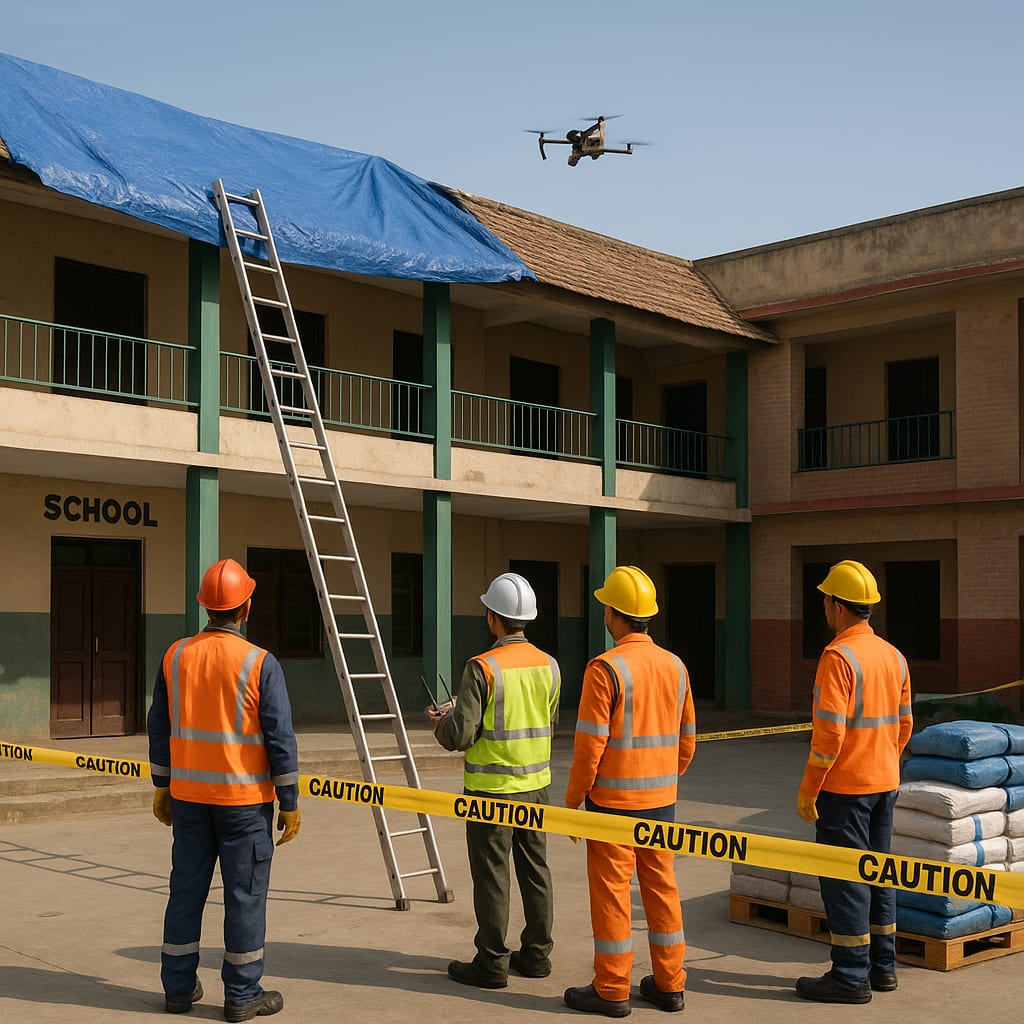
Peshawar school roof collapse kills dozens of children; owner arrested as province orders inspections
Narrative Snapshot
Across outlets there is consensus that a privately run school in Peshawar suffered a catastrophic roof failure during class hours, causing mass casualties among pupils and at least one teacher, with rescue operations drawing in emergency workers, police, and local residents. Reporting rapidly converged on a high death toll and large numbers of injured, but figures vary by outlet and update cycle. Several sources emphasize that more than 50 people were wounded and that the collapse affected multiple floors, underscoring the scale of the structural failure.
Coverage splits in emphasis between immediate accountability and systemic oversight. United Kingdom and Italian outlets focus on the rising fatality counts and the arrest of the school owner, alongside details that rescue work continued into the night or had only recently concluded. The Guardian adds the condition of critically injured pupils, while BBC and ANSA highlight uncertainty over whether more victims remained under debris.
Regional reporting layers in community and policy responses. Al Jazeera details mass funeral prayers, relatives’ prior warnings about a leaking roof, and a provincial order to inspect private schools. The Bangkok Post centers families’ demands for “justice,” while the Toronto Star (AP) links those demands to the inspection order in Khyber Pakhtunkhwa. Deutsche Welle situates the event within a wider pattern of increasingly common roof collapses in Pakistan, shifting attention from a single-actor failure to recurrent infrastructure risk. IRNA’s official condolences signal diplomatic attention, and CGTN’s markedly lower death toll illustrates the fluidity of early casualty reporting.
What Happened
During morning classes at the privately run Al-Khair school in Peshawar, the roof of an upper floor collapsed, caving in ceilings of classrooms below and trapping students and teachers beneath the debris. Multiple outlets report heavy casualties among children and at least one teacher, with more than 50 people injured. Rescue workers, police, and local residents pulled victims from the rubble, and an emergency was declared at Lady Reading Hospital. While some outlets reported that the rescue concluded with all trapped persons recovered, others noted fears that people might still be under the debris and that digging continued. Authorities arrested the school owner, and provincial officials in Khyber Pakhtunkhwa ordered inspections of all private schools. Relatives told reporters they had warned of roof leaks prior to the collapse. Thousands gathered for funeral prayers as the city mourned the victims.
Why It Matters
The incident highlights systemic infrastructure vulnerabilities and regulatory gaps in school safety, particularly within Pakistan’s private education sector. Deutsche Welle’s characterization of roof collapses as increasingly common points to recurrent building integrity risks that overwhelm case-by-case responses. The Khyber Pakhtunkhwa government’s order to inspect all private schools signals an immediate regulatory turn from post-disaster rescue to preventive oversight, with potential implications for licensing, building code enforcement, and closure or remediation orders across the sector. Arresting the school owner puts individual liability on the table, but sustained risk reduction will hinge on whether inspections translate into enforceable standards and corrective action. Public grief and demands for justice, reported across South and international outlets, raise the political stakes for provincial authorities. Official condolences from Iran reflect regional attention, underscoring that mass-casualty school incidents can draw diplomatic notice and shape perceptions of state capacity to safeguard children.
Diverging Narratives
Casualty figures differ across reports. Several outlets cite at least 34 children and a teacher dead, others report 33 pupils and a teacher, 28 children and a teacher, or 17 students and one teacher. One Italian report lists two teachers among the dead, while another Al Jazeera account cites 35 people killed. These disparities reflect the timing of updates and differing source baselines in the immediate aftermath. There is also variance on the operational status of the response: some coverage says the rescue concluded with all trapped persons recovered, while other reporting notes fears of additional victims under rubble and continued digging.
Accounts diverge on framing causality and accountability. RT foregrounds an official investigation into structural safety, while the Toronto Star (AP) and Al Jazeera relay relatives’ prior warnings about a leaking roof, aligning with families’ calls for justice reported by the Bangkok Post and Al Jazeera. The arrest of the school owner, cited in UK and Italian outlets, sharpens focus on potential negligence at the school level even as the province orders sector-wide inspections. Deutsche Welle places the event in a broader pattern of frequent roof collapses, pushing the narrative beyond a single failure toward systemic oversight and infrastructure quality.
What Happens Next
The scope and rigor of Khyber Pakhtunkhwa’s ordered inspections of private schools will be the central indicator of policy follow-through. Analysts should track whether authorities publish inspection criteria, name non-compliant schools, and issue closure or remediation directives, as reported orders target the entire private sector. Legal proceedings following the owner’s arrest are a second decision point; charging decisions and court actions will signal how authorities balance individual accountability with systemic fixes. Medical updates on injured pupils, including those reported in critical condition, will determine whether casualty figures stabilize or change. Finally, clarity on the status of search operations—amid reports alternately stating conclusion and ongoing digging—will settle immediate operational questions. Watch for official statements from provincial authorities and hospital spokespeople, as well as whether relatives’ documented warnings about leaks are incorporated into investigative findings or regulatory actions.