
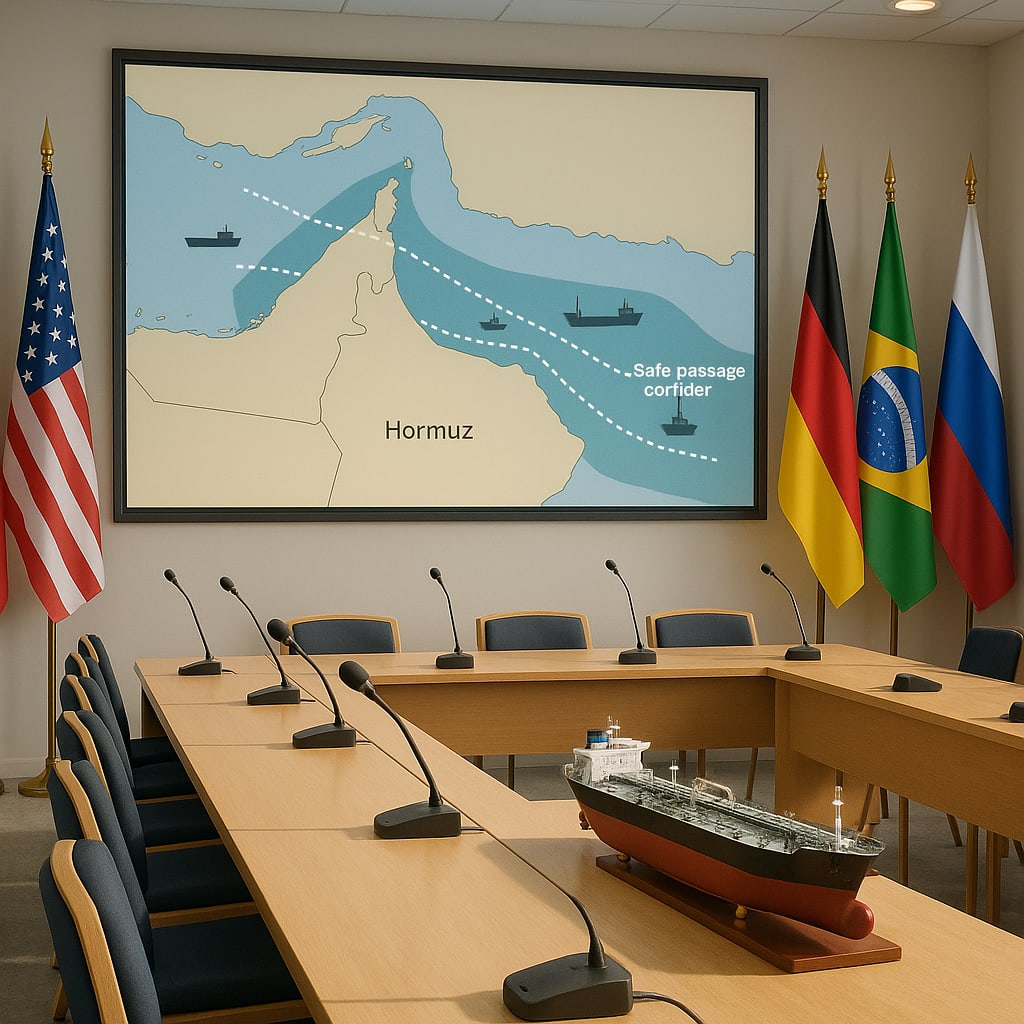
Hormuz shipping under attack as Iran enforces restrictions and floats a one‑week reopening proposal
Narrative Snapshot
Across outlets, the factual backbone is consistent: commercial vessels are being attacked in and around the Strait of Hormuz, and risk to maritime transit is elevated. Russian and regional reporting quantify the disruption and intensity—TASS cites 22 attacks between 1 and 13 October and a sharp reduction in throughput relative to pre-war levels—while U.S.-aligned and Iranian outlets diverge on whether the waterway is effectively open or restricted. U.S. Central Command tells Fox News and Middle East Eye the “vast majority” of Iranian attempts have failed and the strait remains open with coordinated protection; Iranian state media and Tehran-based outlets insist passage is conditional on coordination with Iran and warn violators.
Coverage also splits on attribution and remedies. Al Jazeera and Telesur report mine strikes on large tankers, with Telesur carrying IRGC claims that U.S. deception induced unsafe navigation; Fox News and RT differ on whether a key container ship was hit by a projectile or struck a mine. On diplomacy, RT and Middle East Eye (via Press TV) highlight Foreign Minister Abbas Araghchi’s offer to restore normal passage within seven days if U.S. conditions are met, while Iranian outlets link any easing to respect for Iran’s rights and reduced U.S. military pressure.
What is most at stake, as framed by different sources, ranges from energy security and insurance-exposed trade flows (Russia-based reporting and U.S. military statements) to the balance of coercion and consent governing Gulf transit (Iranian media and Al Jazeera). La Repubblica injects macroeconomic and proliferation angles—a Moody’s estimate of per-household costs in the U.S., reports of Houthi efforts to produce ballistic missiles with Chinese components, and spillover to Saudi Arabia—expanding the story’s implications beyond the strait itself.
What Happened
Iranian officials reiterated that the Strait of Hormuz is closed to uncoordinated maritime traffic, tying any easing to “respect for Iran’s rights” and warning against U.S. military presence, with the IRGC Navy threatening violators (Tehran Times; IRNA). Maritime risks intensified: TASS reported a record 22 vessel attacks from 1–13 October, and Al Jazeera said two ships were struck by naval mines in the week. A Singapore-flagged container ship, the GFS Pride, was hit and later sank; CENTCOM told Fox News it was struck by an Iranian projectile, while RT reported a mine strike, and a second Singapore-registered vessel sustained damage (Fox News; RT). Telesur relayed IRGC claims that two supertankers caught fire after mine collisions. TASS cited a Russian presidential adviser saying throughput is now 1.5–2 times below the pre-war 20 million barrels per day. CENTCOM publicly rejected Iranian claims of control, asserting the waterway is open and heavily escorted (Middle East Eye). Iran’s foreign minister said Tehran has conveyed via Qatar a “concrete” seven-day plan to restore passage if conditions are met, referencing a June 17 MoU and talks with Oman (Middle East Eye; RT).
Why It Matters
The contest over navigation norms in the Strait of Hormuz tests how far coercive enforcement, military escorting, and third-party mediation can sustain a global commons under fire. TASS’s figures on reduced throughput and attack frequency, combined with mine incidents reported by Al Jazeera and Telesur, indicate sustained operational risk to a corridor that underpins global energy supply. CENTCOM’s claim that about 97 percent of attempted attacks fail points to a resource-intensive protection model whose sustainability intersects with U.S. force management and interceptor stockpiles; Fox News highlights Patriot and THAAD redeployments from the Indo-Pacific and substantial missile-expense estimates.
Economically, La Repubblica cites a Moody’s estimate that the Iran war imposes about $2,000 in costs per American household, underscoring the downstream exposure of consumers to maritime disruption. Regionally, La Repubblica references a Wall Street Journal report on Houthi efforts to produce ballistic missiles with Chinese components, and notes four injuries in Riyadh from missile fragments, signaling spillover risks. Iran’s “seven-day” reopening proposal, relayed by RT and Middle East Eye, introduces a diplomatic off-ramp conditioned on U.S. choices, placing Gulf partners, OIC interlocutors, and mediators like Qatar and Oman in consequential roles.
Diverging Narratives
U.S. military messaging emphasizes continuity of passage and deterrence efficacy. CENTCOM told Fox News and Middle East Eye that the strait “remains open,” roughly 97 percent of ships transit unhit, and IRGC claims of control are dismissed—“IRGC’s navy commander has no navy”—with an assertion that U.S. forces helped move more than 19 million barrels through the strait in a single day. Iranian official media presents the inverse: Tehran Times says the strait is closed to uncoordinated traffic; IRNA carries a direct threat from the IRGC Navy against vessels “trusting the terrorist US military,” insisting that restrictions hinge on respect for Iran’s rights and reduced U.S. military pressure.
There are attribution discrepancies regarding specific incidents. Fox News reports the GFS Pride was hit by an Iranian projectile and sank while being towed; RT and Al Jazeera highlight mine strikes, and Telesur echoes IRGC claims that two supertankers hit mines after alleged U.S.-induced navigation irregularities. Quantitative signals also diverge. TASS reports a halving to two-thirds of pre-war throughput and 22 attacks in under two weeks, while CENTCOM highlights high safe-transit rates, producing different pictures of operational risk. On de-escalation, RT and Middle East Eye relay Araghchi’s “concrete” seven-day plan via Qatar and a June MoU with subsequent Oman talks, contrasted with U.S. public messaging focused on military protection and rejection of Iranian control, with RT adding that the proposal was previously rebuffed by President Trump.
What Happens Next
Three decision points emerge. First, whether Washington engages Tehran’s “seven-day” reopening proposal conveyed via Qatar, as reported by RT and Middle East Eye. Acceptance would test Iran’s stated linkage between resumed normal passage and changes in U.S. posture; non-engagement aligns with current CENTCOM emphasis on protection and could prolong constraints TASS describes. Analysts should watch for U.S. and Qatari readouts, OIC follow-up, and any Omani-facilitated technical arrangements referenced by Middle East Eye.
Second, the operational contest between Iranian enforcement and U.S.-led protection. Iran’s stated requirement for coordinated passage and IRGC warnings suggest continued interdiction risk (Tehran Times; IRNA), while CENTCOM signals sustained escorting with high transit success (Fox News; Middle East Eye). Indicators include attack rates (TASS), mine incidents (Al Jazeera; Telesur), and daily throughput disclosures.
Third, broader regional and economic spillovers. La Repubblica’s note on Houthi missile production efforts with Chinese components and injuries in Riyadh, combined with U.S. redeployment of air defenses and expenditure rates (Fox News), point to cumulative strain. Watch for insurance adjustments, routing changes, interceptor resupply timelines, and any additional strikes beyond the Hormuz theater.