
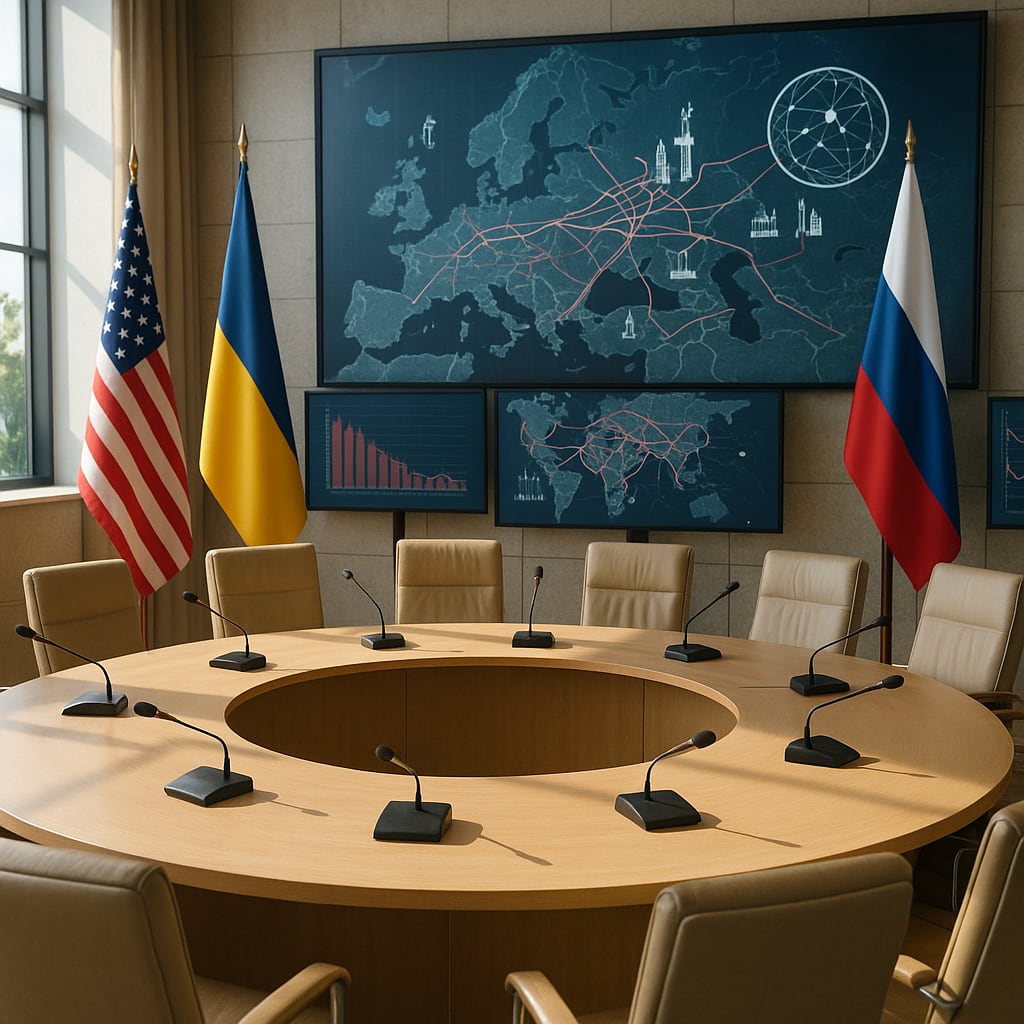
Zelensky warns US against ‘historic mistake’ after Trump pauses Russia sanctions, offers refinery-strike pause for Patriot missiles
Narrative Snapshot
Across mainstream US and European outlets, coverage converges on two linked dynamics: President Donald Trump’s executive pause or waivers on Russia sanctions and President Volodymyr Zelenskyy’s unusually direct warning that a formal US tilt toward Moscow would be a “historic mistake,” even as Kyiv keeps communication channels with Washington open. Reports consistently note both leaders’ public pressure tactics and parallel back-channel contacts, including Zelenskyy’s call with US envoys Jared Kushner and Steve Witkoff and his insistence that exchanges with Washington are “virtually nonstop.”
Outlets diverge on the framing and implications. US and European reporting emphasizes allied unease and policy reversals in Washington, with NBC referencing concern on Capitol Hill and Japan Times warning that the Trump–Zelenskyy rift could jeopardize support for Kyiv. Russian state media instead amplifies Trump’s claim of “great progress” toward a settlement and his rationale for sanctions relief, portraying Kyiv as obstructing peace. France24, Le Monde, Deutsche Welle, and others document Trump’s accusation that Zelenskyy is prolonging the war, sharpening the public split.
Energy warfare is a focal lens. Sky News and South China Morning Post detail Ukrainian drone strikes on Russian oil facilities, including in St. Petersburg, alongside Russian attacks that left thousands without power. Trump’s unilateral “energy ceasefire” declaration is treated skeptically outside pro-Russian outlets; Fox News carried Zelenskyy’s on-air response that Ukraine held its fire while Russia continued striking energy infrastructure, while Telesur reported Zelenskyy would agree to an energy truce if Moscow did.
Capability shortfalls shape the bargaining space. Multiple outlets report Ukraine’s acute air-defense needs—Patriot missiles are depleted or delayed and Kyiv has asked Europe for immediate PAC-2/PAC-3 stocks—while the New York Times highlights Kyiv’s concerns about restrictions on Starshield/Starlink services. RT, citing NATO’s envoy to Warsaw, asserts US industrial capacity is tied up replenishing domestic stocks after other conflicts, underscoring Europe’s need to scale production; ANSA notes the UK’s additional Storm Shadow transfers as one countervailing signal.
What Happened
Trump signed an executive order pausing or waiving portions of new US Russia sanctions, prompting Zelenskyy to publicly urge supporters to defend the measures and to warn that Washington formally siding with Moscow would be a “historic mistake” (CBC News; NBC News; Deutsche Welle; France24). Even as Trump accused Zelenskyy of prolonging the war and claimed “great progress” in negotiations, Zelenskyy said contact with Washington was constant and spoke with US envoys Jared Kushner and Steve Witkoff (France24; TASS; Al Jazeera English; South China Morning Post; Kyiv Independent). Amid intensified strikes on energy infrastructure—including Ukrainian drones hitting oil sites near St. Petersburg and Russian attacks causing power outages—Trump declared an “energy ceasefire”; Zelenskyy told Fox News Ukraine held its fire while Russia continued attacking (Sky News; SCMP; Telesur; Fox News). Kyiv pressed for Patriot missiles—amid reports of shortages and delays—and sought clarity on possible Starshield restrictions; Japan Times reported Zelenskyy offered to stop targeting Russian refineries in exchange for Patriot deliveries, while RT, citing the Wall Street Journal, described a proposed 100‑day halt tied to Starlink coverage (Kyiv Independent; TASS; ANSA; La Repubblica; New York Times; Japan Times; RT).
Why It Matters
The episode tests the cohesion and credibility of the sanctions architecture that has underpinned Western coercive strategy since 2022. A US pause or waiver undercuts EU efforts to tighten measures and signals potential realignment of Washington’s negotiating posture, which European governments and Kyiv must factor into military planning and financing frameworks (CBC News; France24; Deutsche Welle; Kyiv Independent). It also highlights how dual-use private infrastructure—Starshield/Starlink—has become a lever in wartime bargaining, raising governance questions for allies reliant on commercial systems (New York Times; RT citing WSJ).
Air-defense scarcity is a structural constraint shaping Ukraine’s operations and resilience against strikes on critical infrastructure, with reports of depleted Patriot interceptors, delayed deliveries, and appeals for European PAC‑2/PAC‑3 stocks (Kyiv Independent; TASS; ANSA; Ukrinform). RT’s account of a NATO envoy urging Europe to expand production spotlights an emerging division of labor: US capacity focused on replenishing its own inventories and Europe pressed to close near-term gaps. The combination of sanctions relief signals, contested “energy ceasefire” narratives, and weapons shortfalls narrows Kyiv’s options and complicates allied deterrence and crisis-management calculus.
Diverging Narratives
Trump’s camp presents sanctions waivers as facilitative of negotiations and warns against actions that might “push Russia away from the bargaining table,” casting Zelenskyy as unwilling to end the conflict (TASS; Deutsche Welle; Ukrinform). European and US outlets record the same statements but situate them alongside allied concern and recent pro‑Moscow moves, with France24 and Le Monde highlighting Trump’s direct accusation that Zelenskyy rejects peace. Zelenskyy’s counter-narrative simultaneously warns that a US tilt toward Russia would be a historic error and stresses that he still views Trump as an ally and maintains near‑continuous contact with Washington (NBC News; Al Jazeera English; Ukrinform; Kyiv Independent).
Energy strikes are read differently. Sky News and SCMP frame Ukrainian attacks on Russian refineries as part of an escalatory cycle with reciprocal strikes on energy infrastructure. Trump attributes such attacks to higher fuel prices, a line Clarin reports he linked to US domestic politics, while Fox News carried Zelenskyy’s claim that Kyiv honored Trump’s announced “energy ceasefire” for a night even as Russia continued attacking (Sky News; SCMP; Clarin; Fox News; Telesur). The bargaining terms are also contested: Japan Times reports Zelenskyy offered to halt refinery targeting for Patriot deliveries, while RT, citing the Wall Street Journal, describes a 100‑day pause tied to expanded Starlink coverage—different instruments and timelines that point to unresolved modalities (Japan Times; RT).
On enablers, Ukraine’s stated shortages and delays in Patriot resupply and its request for European PAC‑2/PAC‑3 stocks contrast with RT’s portrayal of a broader US capacity squeeze that limits exports, even as ANSA notes the UK moving additional Storm Shadow missiles (Kyiv Independent; TASS; Ukrinform; ANSA). Finally, the New York Times reports Kyiv pressing for clarity on Starshield restrictions, an outstanding question with direct implications for any operational pause-for-access deal.
What Happens Next
Three decision points will shape trajectories reported here. First, whether the White House sustains, expands, or reverses sanctions relief: CBC, France24, and Deutsche Welle document the current pause/waivers; NBC notes unease on Capitol Hill, so statements from Congress and subsequent executive actions will signal durability or retrenchment. Second, the contours of any refinery-strike pause: Japan Times reports an offer linked to Patriot deliveries; RT cites a separate proposal tied to Starlink coverage. Analysts should watch for visible changes in Ukrainian strike patterns on Russian energy sites (Sky News; SCMP), concrete Patriot transfer announcements or European PAC‑2/PAC‑3 allocations (Kyiv Independent; Ukrinform), and any Starshield/Starlink policy updates (New York Times; RT). Third, the viability of Trump’s claimed negotiating “progress”: TASS and The Hindu record the claim, while Fox reports continuing Russian strikes after an “energy ceasefire” announcement; sustained reductions in Russian attacks or formalized talks would be the clearest indicators. European financing decisions in response to Kyiv’s ask for 70 billion euros and Russian asset use will shape Kyiv’s endurance regardless of US shifts (Kyiv Independent; La Repubblica).