
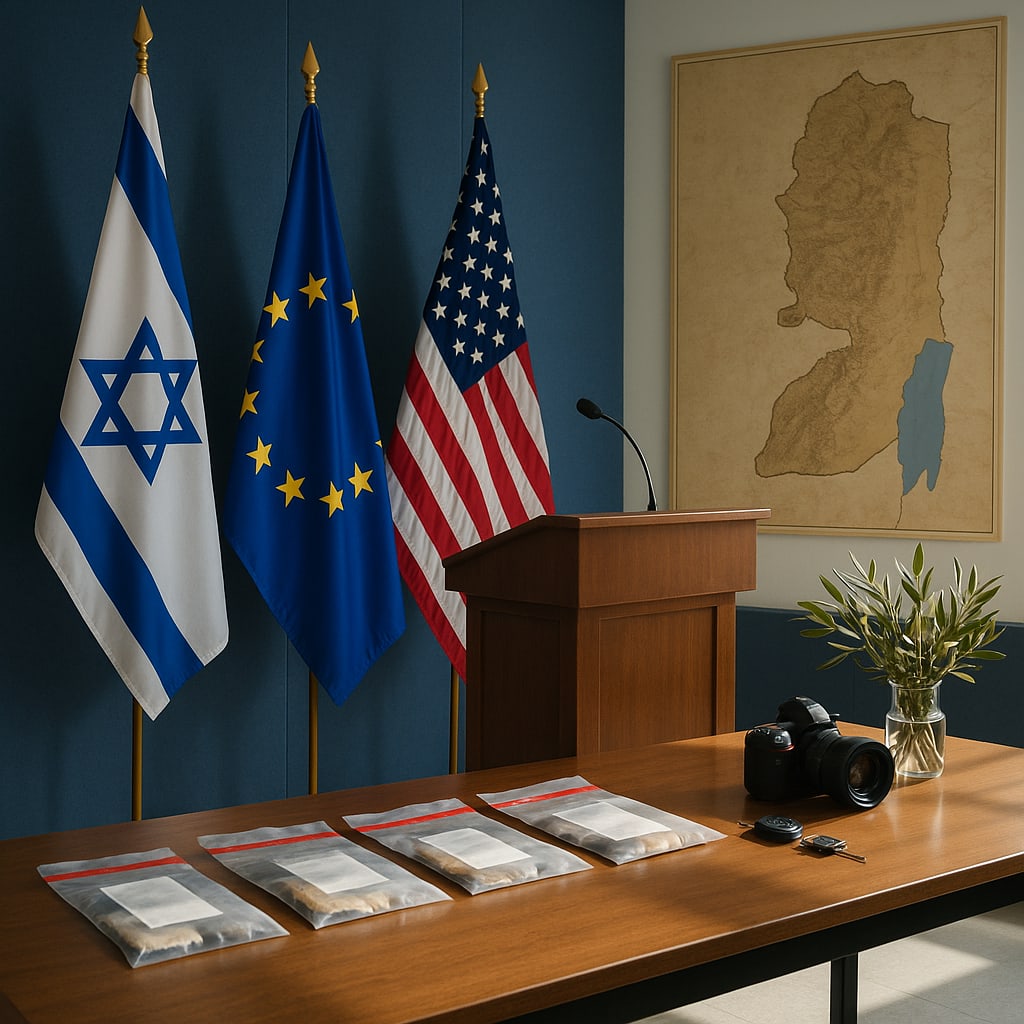
Israel arrests 10 over West Bank settler attacks on US journalist and European diplomats
Narrative Snapshot
Across outlets, the action is presented as both unusual and externally prompted. Israeli and British coverage call it a “rare” move against settlers amid days of international pressure after assaults on Westerners, while U.S. and Canadian reports center the American and European diplomatic victims to explain why Washington and European capitals demanded a response. French and German outlets emphasize the severity and symbolism: a French mayor and a convoy of European diplomats were attacked, and a U.S. photojournalist was seriously injured.
Several reports situate the arrests within a broader spike in settler violence linked to the Palestinian olive harvest. German and Latin American coverage foreground the frequency and intent of attacks—near-daily incidents and efforts to disrupt harvesting—while Chinese and Russian outlets add operational detail, noting a joint police–Shin Bet–IDF sweep that seized evidence and vehicles under “Operation Olive Leaf.” Israeli and Thai reports highlight that additional incidents were reported even as arrests were made, underscoring the immediate stakes for deterrence and follow-through.
A second axis of coverage probes institutional capacity and political signaling. Rights-group assessments that most investigations stall are juxtaposed with indications of a coordinated enforcement push. Meanwhile, references to mixed government messaging and domestic political tensions point to the contested space in which police and prosecutors will either test or reaffirm the state’s willingness to constrain violent settler actors.
What Happened
Israeli police said they detained 10 suspects in the occupied West Bank following weekend assaults on a U.S. journalist and on European diplomats, including a French mayor. The journalist, identified in multiple outlets as Heidi Levine of the Washington Post, suffered serious injuries while covering a Palestinian olive harvest. In a separate incident, a convoy of European diplomats from countries including France, Belgium, and Poland was attacked during a visit to assess conditions on the ground. Police described a pre-dawn operation conducted with the Shin Bet and the Israel Defense Forces under “Operation Olive Leaf,” with evidence and vehicles seized. Authorities released video of the arrests. The action followed public pressure from the United States and European governments. Even as arrests were announced, additional extremist attacks were reported by Israeli media.
Why It Matters
The arrests test whether Israeli law enforcement can translate high-profile detentions into credible accountability in a domain where rights groups say most inquiries into extremist violence stall. They also intersect with peak-season tensions around the Palestinian olive harvest, a period several outlets report has seen a sharp rise in settler attacks intended to disrupt agricultural livelihoods. The targeting of Western journalists and European diplomats escalated diplomatic exposure and drew direct U.S. calls for a crackdown, while European capitals publicly condemned the incidents. Joint police–Shin Bet–IDF operations and the public release of arrest footage signal an effort to demonstrate state capacity; however, references to mixed official messaging and domestic political strains highlight an unresolved policy line. For governments and multilateral actors, the episode is a barometer of Israeli enforcement posture toward settler violence with implications for consular protection, field access, and engagement in the West Bank.
Diverging Narratives
Outlets broadly report 10 arrests, but one Brazilian source cites 19, an outlier against the otherwise consistent figure. There is also variation in how directly suspects are identified: several reports describe them as settlers, while others note police have not formally named the detainees even as local media attribute them to settler outposts. Israeli and British coverage characterize the operation as rare, framing it against a backdrop of limited prior action. By contrast, some international outlets emphasize procedural assertiveness—naming the joint “Olive Leaf” sweep, the seizure of evidence and vehicles, and a police claim that the law applies “to everyone”—to underscore enforcement optics.
Human rights–oriented reporting stresses scale and persistence, citing at least 170 attacks since late September and near-daily incidents around the harvest, while U.S. and European pieces underscore diplomatic stakes by detailing the nationalities of targeted officials and the severe injuries to the American journalist. Another tension lies in trajectory: several outlets note continued extremist incidents even as arrests were announced, raising the question of whether the operation marks a turning point or a response limited to assaults on Westerners. Finally, some coverage highlights mixed messages from Israel’s government and domestic political friction, suggesting that sustained enforcement will depend on coherence among political leaders and security agencies.
What Happens Next
The immediate decision point is prosecutorial follow-through. Rights groups note most cases historically go nowhere, so indictments, charge sheets, and court proceedings will indicate whether this operation departs from past patterns. A second test is operational continuity: police publicized “Operation Olive Leaf” and a joint force posture; additional raids, evidence seizures, or further arrest videos would signal continued prioritization, while a pause amid reports of new attacks would suggest an episodic response.
Government signaling bears watching. Reports of mixed messages and internal tensions imply that sustained enforcement requires clear directives; ensuing statements or policy guidance will clarify the political baseline. Internationally, U.S. and European reactions have already pressured for a crackdown; whether they seek updates, increase monitoring of the olive harvest, or adjust engagement in the West Bank will shape incentives. Finally, incident trends during the harvest—documented by NGOs and media—will show whether deterrence is taking hold or if violence persists despite the arrests.