
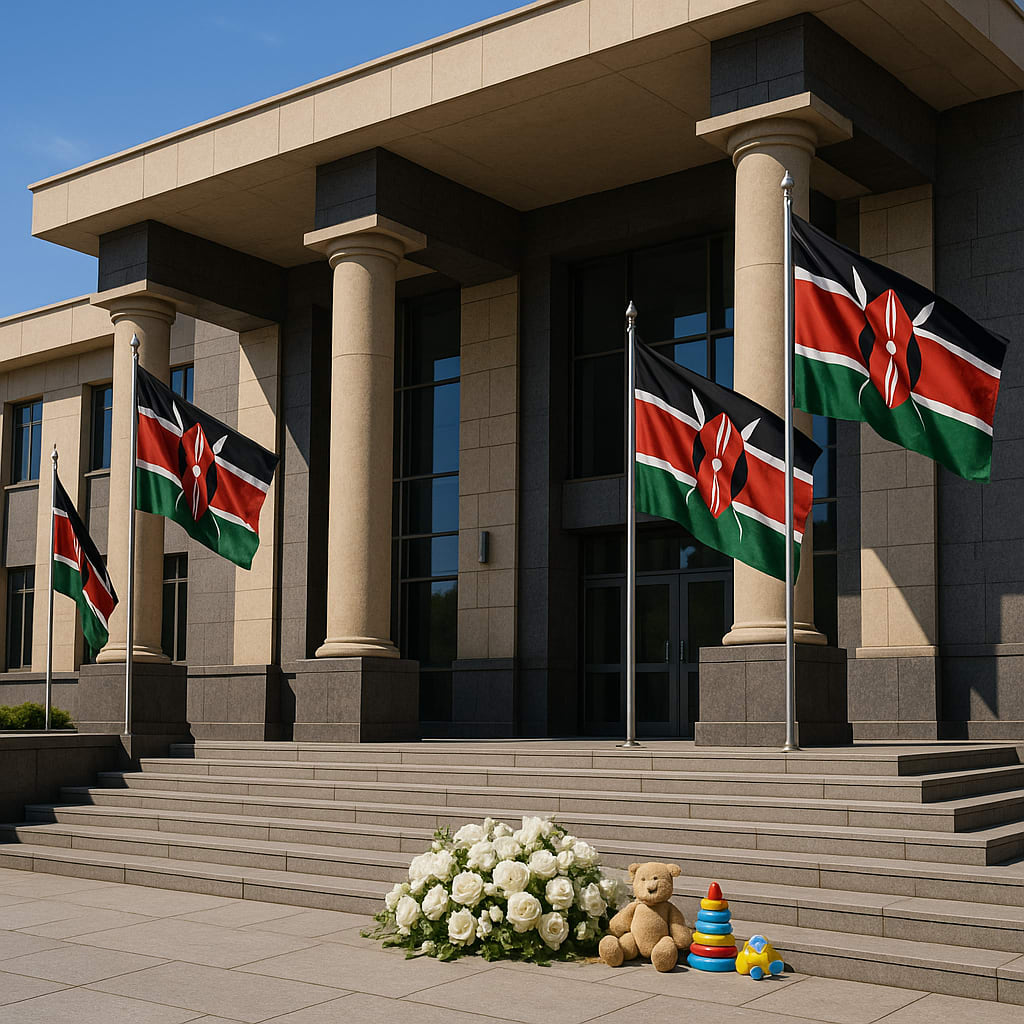
Kenyan High Court convicts Paul Mackenzie and 28 associates for murders in Shakahola starvation case
Narrative Snapshot
Across outlets there is firm agreement on the verdict, the victim count addressed in court, and the Shakahola Forest as the locus. International reporting tends to foreground scale and horror. France24 underscores that hundreds of bodies were discovered from 2023 at the cult base near Malindi, widely framed as the “Shakahola Forest Massacre,” while the South China Morning Post characterizes it as among the worst cult-related tragedies in recent history and details the investigative trigger and mass graves. Corriere della Sera emphasizes the doctrinal rationale attributed to Paul Nthenge Mackenzie—convincing followers to die by starvation with their children.
Process and accountability feature prominently in francophone and pan-African coverage. Le Monde stresses the trial’s duration—thirteen months and over 120 witnesses—and notes this was the first trial, with sentencing to follow, while AllAfrica/Capital FM anchors the calendar with a November 6 sentencing date and confirms that all 29 accused were convicted of murdering 191 people, including 190 children. Kenyan domestic coverage adds biographical texture: the Daily Nation sketches Mackenzie’s modest work trajectory before his rise to radical religious influence. The BBC introduces a parallel thread of continuing harm, reporting the son’s account that children were still being starved weeks before the trial and his decision to report his grandmother, extending the story beyond courtroom outcomes into enforcement and protection challenges.
What Happened
On October 19, 2026, Kenya’s High Court convicted self-proclaimed preacher Paul Mackenzie and 28 co-accused of murdering 191 people, including 190 children, linked to a starvation cult in Shakahola Forest (AllAfrica/Capital FM; France24; South China Morning Post). Mackenzie was arrested in 2023 after a tip-off; in the weeks that followed, authorities uncovered bodies in shallow graves in the forest near the coast inland from the resort town of Malindi (South China Morning Post; France24). Corriere della Sera reports Mackenzie convinced followers to let themselves and their children die of hunger. Le Monde notes the first trial concluded after thirteen months of hearings and testimony from more than 120 witnesses, with sentencing to be pronounced later; AllAfrica specifies November 6 as the date set for sentencing. France24 situates the case within a broader set of exhumations at the site since 2023.
Why It Matters
The convictions mark a high-stakes test of Kenya’s capacity to investigate and adjudicate mass fatality crimes rooted in coercive religious control, with an overwhelming proportion of child victims. Le Monde’s account of a protracted, witness-heavy proceeding, together with AllAfrica/Capital FM’s clear timeline to sentencing, signals institutional willingness to dedicate time and resources to complex atrocity cases. France24’s reference to hundreds of bodies found since 2023 and the South China Morning Post’s framing of the incident as among the worst cult-related tragedies highlight scale and persistence that strain forensic, policing, and victim identification systems. The BBC’s reporting on continued child starvation within the leader’s family weeks before trial points to ongoing protection gaps even amid prosecution, underscoring the policy interface between criminal accountability, child welfare interventions, and oversight of harmful religious practices. For decision-makers, the case crystallizes demands on justice, social services, and community-level prevention.
Diverging Narratives
Outlets converge on the verdict and core counts but diverge in framing emphasis. France24 and the South China Morning Post center the atrocity’s scale, discovery of remains, and its labeling as the Shakahola Forest Massacre, while Corriere della Sera dwells on the theological injunction—starvation “to save their souls”—that bound followers to Mackenzie’s authority. Le Monde foregrounds judicial process and signals sequencing by calling this the first trial, which, juxtaposed with France24’s note that hundreds of bodies were discovered since 2023, implies a wider case universe than the 191 murders adjudicated here without asserting outcomes beyond this docket. Domestic reporting by the Daily Nation adds socioeconomic background about Mackenzie’s earlier life selling flour by handcart and later training as a driver, a contrast to the international press’s focus on mass graves and the courtroom. The BBC’s piece departs most from verdict-centric coverage by surfacing allegations of ongoing child starvation within Mackenzie’s family network weeks before trial, adding a live enforcement and safeguarding dimension absent from the legal narratives.
What Happens Next
Sentencing is scheduled for November 6, with Le Monde noting that the pronouncement will occur after the trial’s conclusion and AllAfrica/Capital FM fixing the date. Analysts should watch how the High Court calibrates penalties across the 29 convicted and whether its reasoning distinguishes roles within the Good News International Church as described in international coverage. Le Monde’s characterization of this as the first trial, together with France24’s report of hundreds of bodies discovered since 2023, sets up a second decision point: whether prosecutors initiate additional proceedings tied to deaths beyond the 191 counted here. Finally, the BBC’s account of continued child starvation within Mackenzie’s family prior to trial raises an enforcement test outside the courtroom. Indicators include follow-through on the son’s report of his grandmother, visible child-protection actions, and any official statements linking ongoing safeguarding operations to the Shakahola case.