
IRGC says mines ignited two tankers south of Strait of Hormuz
Narrative Snapshot
Iranian and state-aligned reporting centers the IRGC’s enforcement rationale. IRNA describes the vessels as “non-compliant” and entering a “prohibited area,” and TASS amplifies the IRGC’s claim that a supertanker transited with radar and navigation systems off along an “unauthorized route.” This framing foregrounds vessel conduct and Iranian control of specific lanes. Middle East Eye, relaying Reuters, carries the core claims and adds the IRGC’s assertion that a US drone was downed, introducing a military encounter dimension absent elsewhere in the set.
Other coverage concentrates on maritime safety and route risk. The Hindu situates the episode in a pattern of Iranian actions against ships using a southern path close to Oman. Fox News emphasizes the International Maritime Organization’s warning that sea mines remain a serious hazard in this chokepoint and that third-party verification of clearance is presently not feasible, underscoring uncertainty over safe transit. A separate UKMTO alert about an “unknown projectile” striking a tanker off Saudi Arabia the same week points to additional, non-mine threats in adjacent waters. Across these accounts, what is most at stake is operational predictability for commercial shipping, adherence to recognized traffic schemes, and the feasibility of hazard verification while mine risks persist.
What Happened
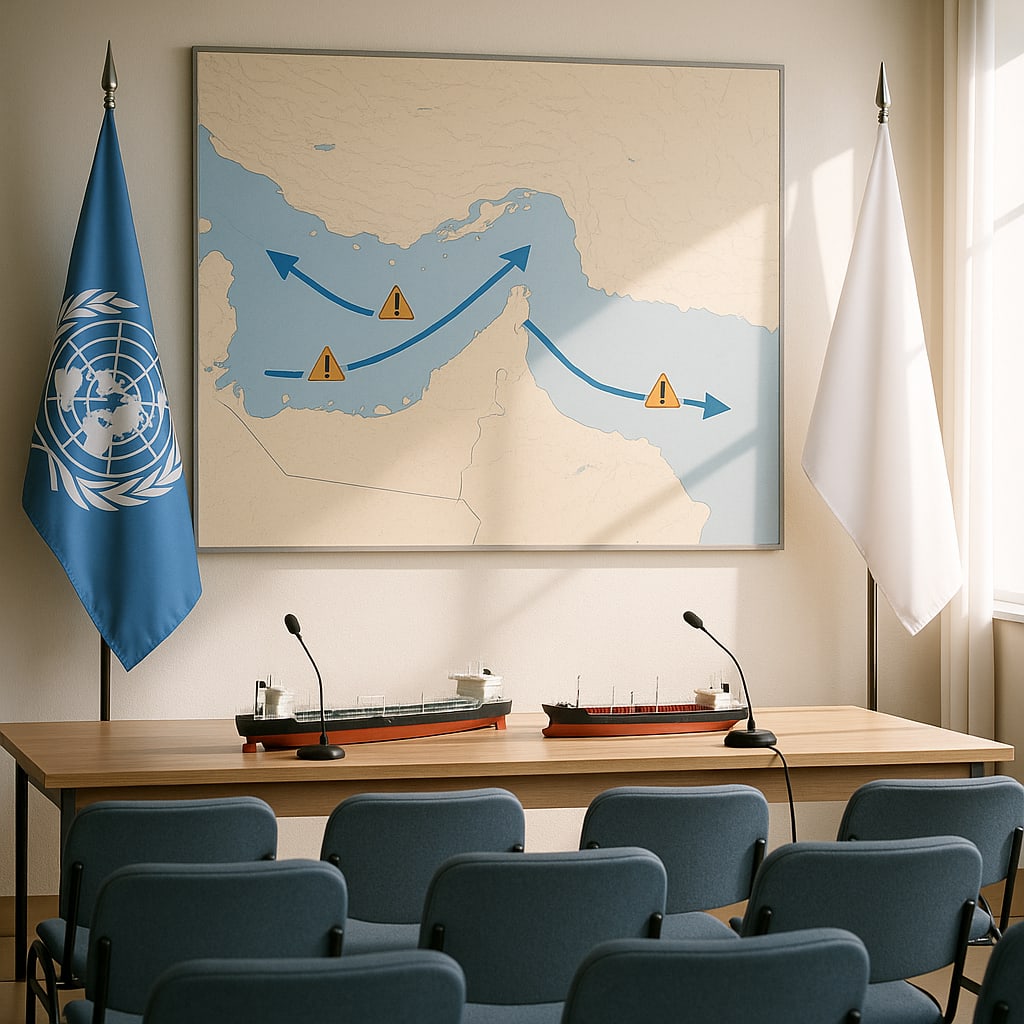
The IRGC said two tankers were set ablaze and halted after striking Iranian-laid mines south of the Strait of Hormuz, without specifying when the incidents occurred, according to a statement carried by Middle East Eye via Reuters. IRNA reported the vessels were “non-compliant” and attempted to transit a “prohibited area” in the southern strait. TASS, citing the IRGC, added that a supertanker had its radar and navigation systems off and was trying to leave the waterway along an “unauthorized route.” The Hindu noted that Iranian forces have repeatedly targeted ships using a southern route near the Omani coast. Fox News reported Iran’s claim on October 17 that two oil tankers caught fire after striking mines and quoted the IMO secretary-general warning that mines pose a serious threat and cannot be reliably cleared or verified at present. Separately, UKMTO reported an “unknown projectile” hit a tanker northeast of Al Jubail, Saudi Arabia, on October 17, with crew safe.
Why It Matters
The Strait of Hormuz is identified as one of the world’s most critical shipping lanes, and the IMO’s warning that mines remain a serious threat, with verification constrained, heightens operational risk for transiting vessels. Iranian accounts frame the episode as enforcement against traffic using “prohibited” or “unauthorized” lanes, intersecting with broader questions about which routes are considered compliant with recognized traffic separation schemes. The Hindu’s reference to repeated Iranian actions along a southern path close to Oman highlights a geographic pattern mariners must account for. The IRGC’s separate claim of downing a US drone, as reported by Middle East Eye via Reuters, suggests potential proximity between military and commercial activity. In parallel, the UKMTO alert off Saudi Arabia indicates that hazards in the wider Gulf are not confined to mines, complicating risk management by governments, industry, and multilateral maritime bodies.
Diverging Narratives
Iranian and aligned outlets emphasize vessel behavior and Iranian jurisdiction. IRNA’s “non-compliant” and “prohibited area” language and TASS’s details about radar and navigation systems being off reinforce an enforcement narrative that places responsibility on the ships and legitimizes IRGC actions in areas Iran asserts control. Middle East Eye’s inclusion of the IRGC’s drone-downing claim adds a defense posture narrative not echoed in the other sources provided. By contrast, Fox News frames the development through global trade security, citing the IMO secretary-general’s assessment that mine hazards remain and cannot be independently verified while current conditions persist; it also reports that Iran maintains an “unauthorized shipping corridor” inside its territorial waters, underscoring concerns about parallel routing regimes. The Hindu’s brief note on repeated targeting along the southern route near Oman situates risk geographically rather than legally. The UKMTO report of an “unknown projectile” off Al Jubail introduces a separate threat vector in nearby waters, suggesting that even beyond the strait, incident typologies and perpetrators are not clearly determined in open reporting.
What Happens Next
Key decisions hinge on routing and hazard management. If ship operators and flag states hew strictly to recognized traffic separation schemes and avoid the southern approaches flagged by The Hindu and characterized as “prohibited” or “unauthorized” by Iranian and TASS reports, incident risk may shift; continued attempts to use those lanes would sustain friction with the IRGC’s stated enforcement posture. The IMO’s position, as cited by Fox News, that third-party verification is currently impracticable means any move toward mine clearance or external assessment would be a significant signal; watch for changes in access, verification mechanisms, or formal advisories. The IRGC’s claim to have downed a US drone, reported by Middle East Eye via Reuters, creates a potential inflection point for military-to-military signaling; confirmation, denial, or follow-on incidents would shape deconfliction dynamics over and around the waterway. Regionally, further UKMTO alerts—especially attribution or patterning of the Al Jubail strike—will indicate whether non-mine threats are expanding along Gulf energy routes.