
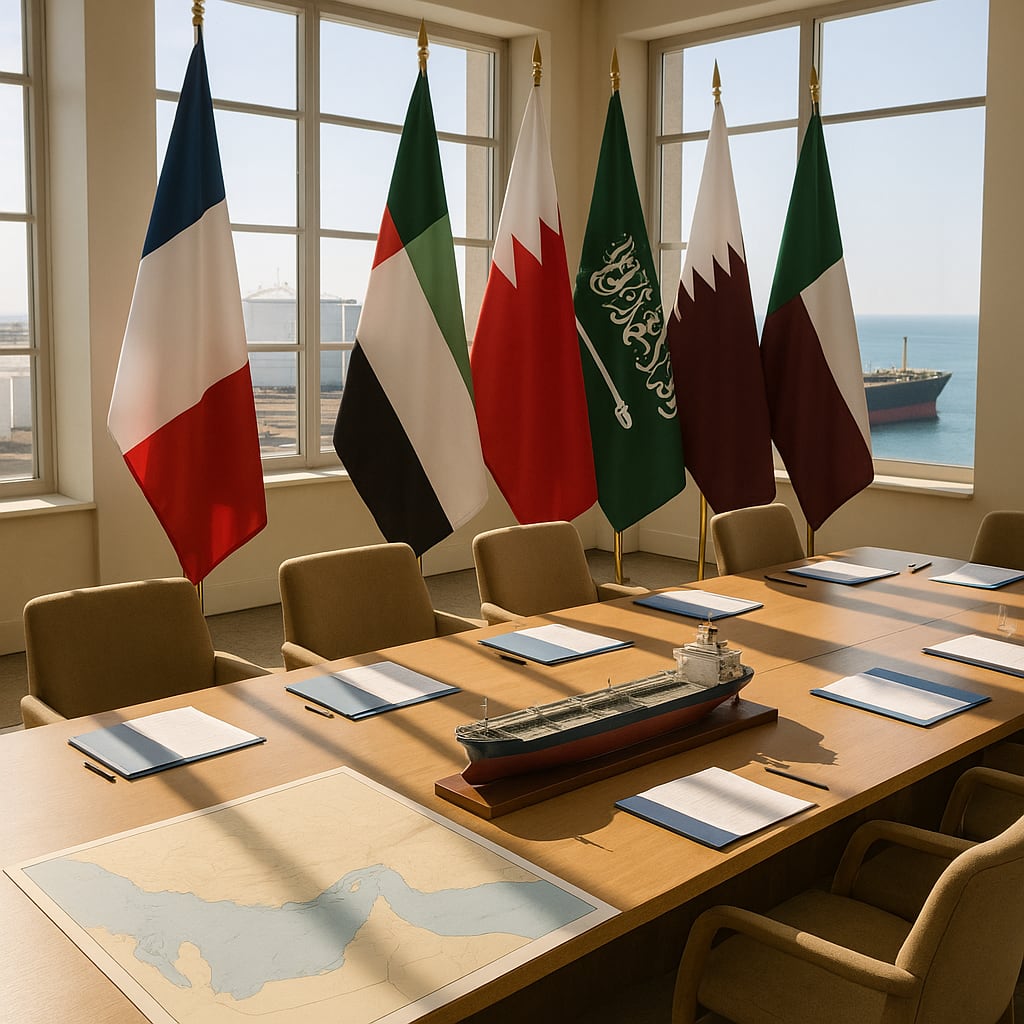
Macron secures 200,000 tonnes per month of diesel from UAE and Bahrain during Gulf tour
Narrative Snapshot
Across French and Qatari outlets there is convergence on the core outcome: Emmanuel Macron obtained commitments for an additional 200,000 tonnes per month of diesel from the United Arab Emirates and Bahrain. Le Monde cites the Elysée to note that, when combined with prior Saudi commitments, the total equates to roughly 10% of France’s diesel consumption, while Al Jazeera puts cumulative monthly commitments at 295,000 tonnes, “just over 10 percent” of consumption.
Coverage diverges on framing the domestic backdrop. France24 ties the mission to surging living costs and “violent protests” at home, presenting the tour as an effort to secure fuel and bring down prices. Fox News emphasizes political optics, describing a “riot-torn” France and highlighting criticism of Macron’s decision to travel amid unrest, adding its own reporting on the range of groups it says were involved.
A distinct rights-focused lens appears in Middle East Eye, which centers a public appeal by 32 human rights organizations urging Macron not to allow Bahrain to “buy France’s silence” and to confront Manama over a crackdown on dissent. That emphasis is largely absent from the energy- and security-led framing in the French and Qatari reports.
On regional constraints and strategy, a former French ambassador on France24 underscores the visit’s dual role—relieving energy pressures and reaffirming defense partnerships—framing French military assistance as “strategic solidarity” rather than participation in a “war with Iran.” Le Monde, by contrast, stresses structural limits, noting that Gulf hydrocarbon exports have dropped due to the closure of the Strait of Hormuz and that the monarchies have little leverage over the U.S.-Iran confrontation driving the shock.
What Happened
Emmanuel Macron embarked on a three-day tour of Kuwait, the United Arab Emirates, Bahrain, and Qatar to “secure energy supplies” for France, according to Le Monde. Fox News reports he departed for Kuwait on Sunday, and Le Monde reports the trip began Monday. During the visit, the Elysée announced agreements for an extra 200,000 tonnes of diesel per month from the UAE and Bahrain; Le Monde says that, when combined with earlier Saudi commitments, the total equals about 10% of France’s diesel use. Al Jazeera reports cumulative monthly deliveries now at 295,000 tonnes, just over 10%. France24 frames the push as a response to soaring fuel prices and unrest. In Manama, Macron met Bahrain’s King Hamad bin Isa Al Khalifa, while Middle East Eye reports that 32 rights groups urged him to raise human rights concerns during the stop.
Why It Matters
The deals sit at the intersection of France’s domestic energy security and its longstanding Gulf partnerships. France24’s interview with former ambassador François Gouyette highlights decades-old ties built on “economic development, oil, [and] defence agreements,” and argues the tour both alleviates energy pressure and reaffirms defense partnerships at a moment of “escalating conflict in the Middle East.” His framing of French military assistance as solidarity rather than participation “in the war with Iran” reflects an attempt to firewall alliance signaling from combat involvement.
Le Monde’s reporting on the Strait of Hormuz closure and the Gulf monarchies’ limited sway over U.S.-Iran dynamics underscores structural exposure: bilateral procurement can soften but not remove upstream chokepoint risk. Al Jazeera’s framing—whether France can forge an “energy-for-security” path—captures the strategic trade-offs alongside the rights concerns raised by Middle East Eye. For policymakers, the episode illustrates how domestic price stabilization, normative commitments, and defense assurances now move in tandem.
Diverging Narratives
The weight of coverage from Le Monde, France24, and Al Jazeera is on the materiality of added volumes—200,000 tonnes per month from the UAE and Bahrain, with totals just over 10% when Saudi commitments are included—without quantifying price effects. France24 explicitly connects the mission to easing prices after protests, while Fox News centers political optics, depicting Macron as leaving a “riot-torn” country and underscoring criticism of his leadership. Fox News adds its own investigative claim about the range of groups involved in unrest, which is not echoed in the other sources.
On strategic scope, France24’s diplomatic perspective presents the tour as both energy relief and defense reassurance, with Gouyette stressing “France has to play its role as a key partner” and distancing any assistance from direct participation in conflict with Iran. Le Monde injects constraint, noting Hormuz’s closure has already reduced Gulf export capacity and that regional monarchies have limited leverage over the U.S.-Iran confrontation shaping supply risk. Middle East Eye reframes the visit around conditionality, amplifying a coordinated NGO call to prioritize human rights in Bahrain and cautioning against transactional silence—an element not foregrounded in the French and Qatari energy-security narratives.
What Happens Next
Two implementation tracks emerge from the reporting. First, energy delivery execution: the announced 200,000 tonnes per month from the UAE and Bahrain, and the cumulative 295,000 tonnes per month cited by Al Jazeera, will be decision points for market impact. Analysts should watch for official confirmations of shipment schedules and whether the closure of the Strait of Hormuz, flagged by Le Monde, affects flows.
Second, diplomatic signaling: France24 indicates the visit also serves to reaffirm defense partnerships while avoiding direct involvement “in the war with Iran,” suggesting forthcoming statements or agreements will calibrate solidarity without escalation. In Bahrain, Middle East Eye’s account of a 32-organization letter makes public readouts salient; whether French statements reference human rights will indicate how Paris balances rights advocacy with energy and security aims. Domestically, France24 and Fox News link the tour to unrest over living costs, so subsequent fuel price moves will shape the political resonance of these commitments.