
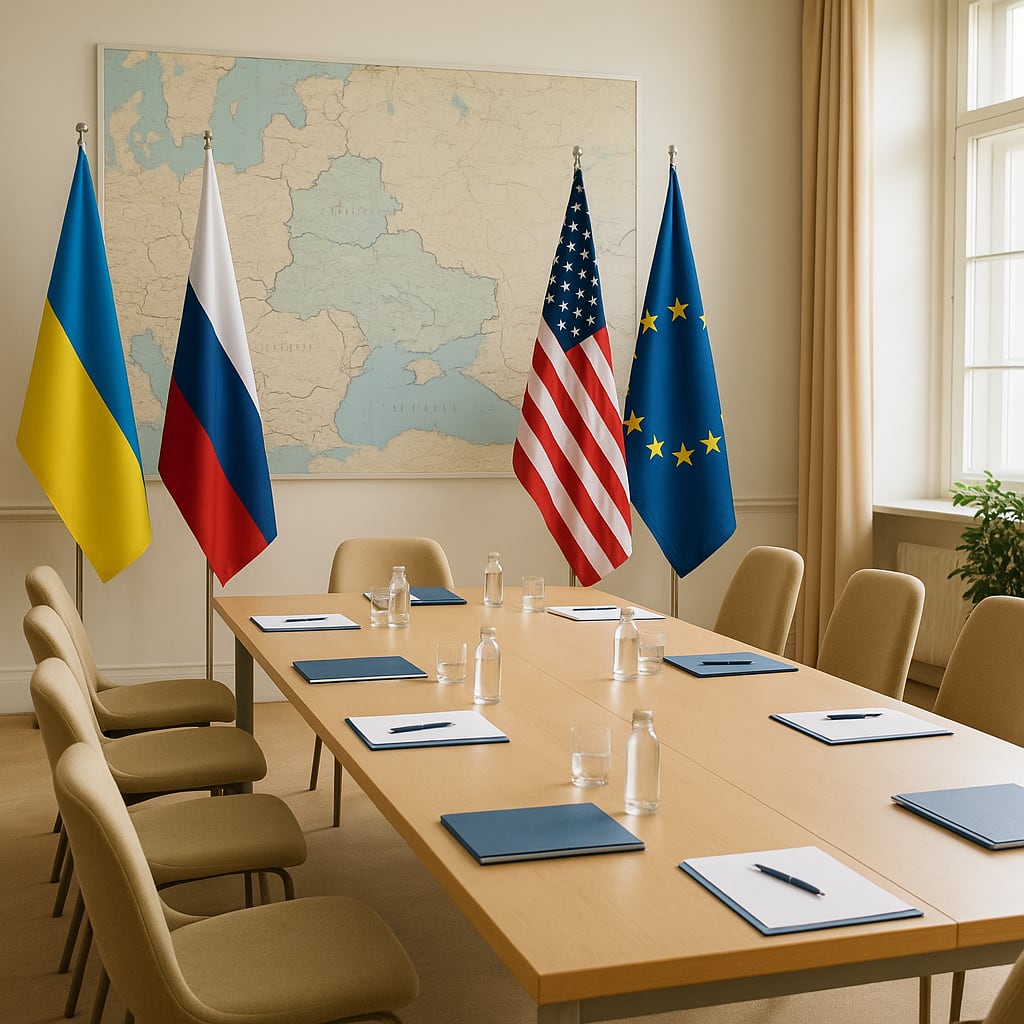
Russia-Ukraine Strikes Continue as U.S.-Mediated Contacts Seek Path to Talks
Narrative Snapshot
The coverage converges on a pattern of intensified strikes against urban and civilian targets alongside renewed diplomatic activity involving Washington, Moscow and Kyiv. Toronto Star, Clarín and The Hindu foreground the human and infrastructure costs in Ukraine, while Deutsche Welle and the South China Morning Post emphasize the reciprocal nature of attacks, including reported strikes directed toward Moscow. TASS instead highlights civilian casualties in Russia and cites the UN secretary-general’s call for all attacks on civilians and civilian infrastructure to end.
The casualty figures reported for the Ukrainian attacks differ substantially. Toronto Star reports at least four deaths, Clarín seven and The Hindu nine. The sources do not explain whether these differences reflect separate reporting windows, varying official tallies or different incidents. The coverage therefore establishes the scale of harm but not a single consolidated casualty record.
The diplomatic frame also varies. Several outlets present President Volodymyr Zelenskyy’s meetings in Norway as an effort to secure continued American and European assistance, particularly amid air-defense shortages and the reported prospect of Europe compensating for reduced US support. The South China Morning Post and Deutsche Welle instead center the apparent contradiction between claims of progress after US envoy Steve Witkoff’s meeting with Vladimir Putin and the subsequent exchange of major attacks.
What Happened
Reports published between 19 and 22 October describe continued Russian and Ukrainian missile and drone operations, including attacks affecting Kyiv, Moscow and surrounding areas. Ukrainian reporting cited by Corriere della Sera said ballistic missiles struck residential buildings and caused injuries, while Russian officials reported drones intercepted near Moscow. Moscow’s mayor was quoted by the South China Morning Post as saying that 630 drones had been launched toward the region. Earlier reporting described Russian strikes that killed civilians in Ukraine and caused power outages. During the same period, Zelenskyy met US and European officials in Oslo and said Kyiv was maintaining contacts that could help bring peace. TASS reported UN concern over civilian casualties in Russia.
Why It Matters
The reports place battlefield escalation alongside an attempt to restore US-mediated diplomacy, creating a direct test of whether negotiations can proceed while attacks continue. The reported positions of Washington, Moscow and Kyiv also touch several institutional relationships: US security assistance to Ukraine, European efforts to compensate for possible reductions in American support, and the UN’s continuing appeal for protection of civilians and civilian infrastructure.
The broader policy issue is the relationship between military leverage and diplomatic access. RT reports that the Trump administration is pressing Ukraine to halt attacks on Russian oil refineries while pursuing arrangements with Moscow linked to fuel prices and peace negotiations. It also reports threats to restrict intelligence sharing and weapons supplies. If accurate, those measures would make US support more explicitly conditional and could alter Kyiv’s operational choices, alliance coordination and bargaining position.
Diverging Narratives
The principal divergence concerns how responsibility and strategic meaning are assigned. Russian coverage led by TASS stresses attacks on Russian civilians and presents the UN statement as a call applying to both sides. Canadian, Argentine and Indian reports focus primarily on Russian attacks in Ukraine, civilian deaths, power disruptions and Kyiv’s need for additional air defenses. Deutsche Welle and the South China Morning Post give greater weight to the reciprocal attacks, particularly the reported threat to Moscow.
The sources also differ in their interpretation of diplomacy. The South China Morning Post reports Donald Trump’s claim that the parties were approaching a breakthrough, while Deutsche Welle describes the strikes as occurring soon after Putin and Zelenskyy expressed willingness to resume US-mediated talks. Corriere della Sera records Moscow’s assertion that the conflict is moving toward an end, but its account simultaneously reports fresh missile strikes and injuries. RT presents the US-Ukraine dispute over Russian refineries, intelligence and weapons as a major obstacle. These accounts support no settled conclusion about whether negotiations are advancing, only that diplomatic contacts and military escalation are occurring concurrently.
What Happens Next
The immediate decision point is whether US-mediated contacts develop into a resumed negotiating framework. The relevant indicators are further meetings involving Washington, Moscow and Kyiv, and whether the reported willingness to resume talks produces concrete arrangements rather than remaining at the level of public statements. A second decision concerns US support for Ukraine. RT’s account makes continued weapons and intelligence provision, as well as pressure to stop attacks on Russian refineries, central signals to watch; European efforts to fill any US support gap would indicate a different burden-sharing path.
A third indicator is the treatment of civilian protection. Further strikes on residential areas, energy infrastructure or urban centers would test the UN’s call for an immediate end to such attacks and clarify whether diplomacy is accompanied by any restraint. The competing casualty figures and claims about intercepted drones also make consistent, independently established reporting important for assessing the conflict’s trajectory.