
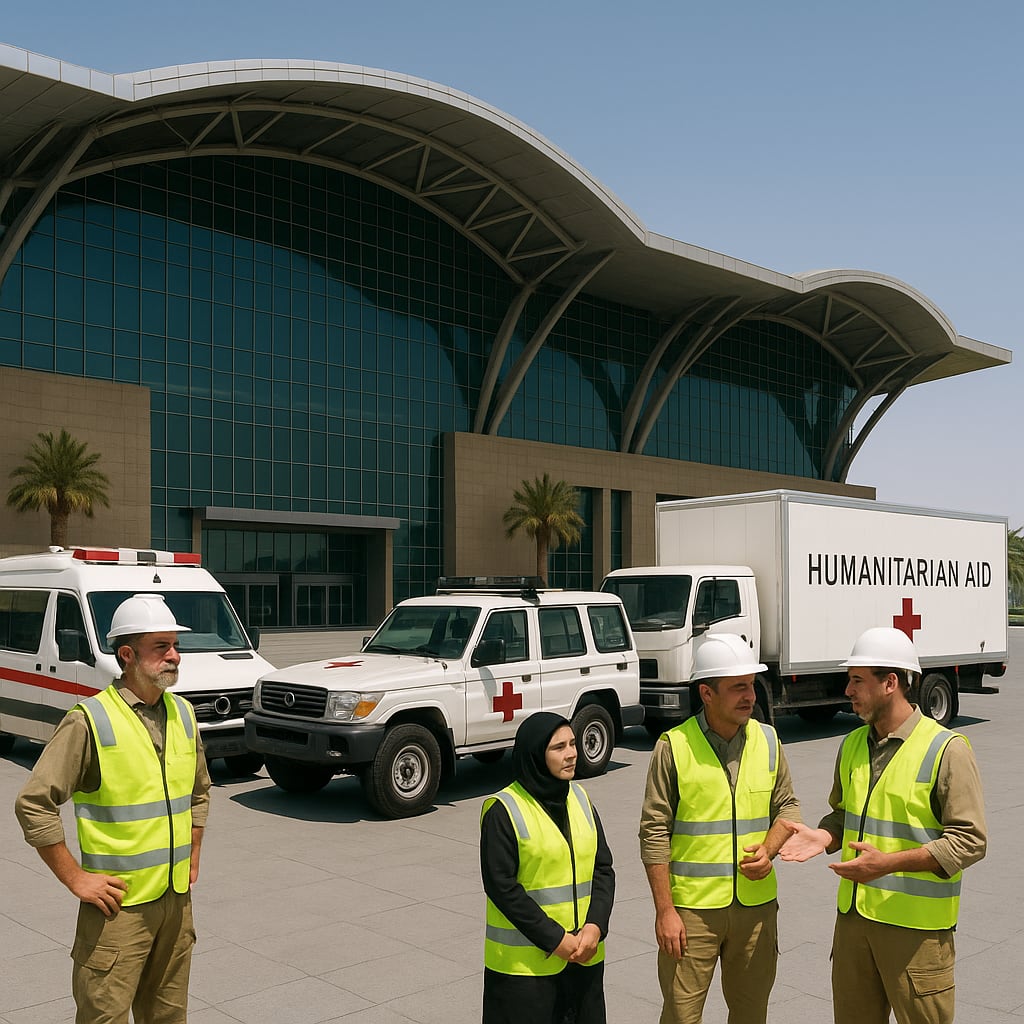
Saudi Arabia Reports Deadly Attack on Dammam Airport Amid Wider Houthi Escalation
Narrative Snapshot
The coverage broadly presents the Dammam airport attack as part of a wider campaign by Yemen’s Houthis against Saudi airports, energy infrastructure and commercial routes. Saudi authorities reported one death and eight injuries, while other accounts gave a death toll of two or referred to an Indian national among those killed. The sources do not establish whether these differences reflect separate casualties, later revisions or inconsistent reporting.
The outlets also assign different levels of importance to the attack. Middle East Eye and the Saudi Civil Aviation agency foreground civilian casualties and damage to infrastructure. RT emphasizes the strategic logic of inexpensive Houthi weapons imposing disproportionate costs on airports and oil facilities. Fox News focuses on Saudi Arabia’s dependence on external defensive support, while CGTN and Middle East Eye stress Egypt’s political and military backing for Riyadh.
A second divide concerns the regional frame. Saudi statements and several reports describe the Houthis as Iranian-supported actors whose attacks breach the spirit of the 2023 Saudi-Iranian rapprochement. Other coverage places greater emphasis on the Yemen conflict, including Houthi demands that Saudi Arabia lift restrictions on Yemeni airports and ports. The result is a story that operates simultaneously as an airport-security incident, a Saudi-Iranian diplomatic test, and a potential expansion of the Yemen war into a broader regional confrontation.
What Happened
Saudi Arabia’s Civil Aviation agency said an attack on King Fahd International Airport in Dammam killed one person and injured eight, while damage was still being assessed. Clarin reported two deaths, and The Hindu identified an Indian victim, indicating that casualty information remained unsettled across accounts. The incident followed repeated Houthi attacks or attempted attacks on Saudi territory, including strikes affecting Riyadh airport, oil facilities and residential areas in Najran. Saudi Arabia has sought international and regional assistance. Egypt pledged “all necessary and possible” support, while President Abdel Fattah el-Sisi later specified that any Egyptian action would be limited to defending Saudi territory rather than attacking Yemen. The United States ordered non-emergency diplomatic personnel and their families to leave Saudi Arabia.
Why It Matters
The attacks test the practical limits of Saudi Arabia’s security partnerships and the capacity of existing regional institutions to contain escalation. The UN Security Council condemned Houthi strikes on Saudi territory and Red Sea shipping while affirming Riyadh’s right of self-defence under international law. Saudi Arabia has used that statement to support demands for cooperation against weapons supplies to the Houthis.
The episode also places the 2023 Saudi-Iranian rapprochement under pressure. Riyadh says Iranian support for the Houthis violates commitments associated with that agreement, whose success had been linked to Chinese diplomacy. At the same time, Egypt’s offer of support introduces a distinction between territorial defence and offensive action in Yemen. For policymakers, the central institutional question is whether outside assistance remains narrowly defensive or becomes part of a wider military response, with consequences for Red Sea navigation, energy infrastructure and regional diplomacy.
Diverging Narratives
The sources differ first on the basic casualty record. Saudi civil aviation officials reported one death and eight injuries; Clarin reported two deaths, while The Hindu described an Indian national as killed. The Guardian referred to at least three people killed at an airport and oilfield on the same evening, but its account does not clarify whether those fatalities include the Dammam incident or separate attacks. These discrepancies leave the immediate human cost unresolved.
They also differ in how responsibility and motive are presented. Several reports explicitly attribute the broader campaign to Iran-backed Houthis, drawing on Saudi, American or UN descriptions. RT interprets the targeting of airports and oil installations as an effort to raise the cost of Saudi involvement in Yemen and pressure Riyadh over a settlement. Coverage of Houthi positions adds that the group has linked its attacks to Saudi restrictions on Yemeni airports and ports, and has accused Saudi Arabia of attacking a yacht carrying Indians in the Red Sea. Saudi officials instead describe the campaign as Iranian-enabled aggression and a violation of the Saudi-Iranian diplomatic framework. The sources establish these competing claims but do not independently resolve them.
What Happens Next
The immediate decision point is the scope of external protection for Saudi infrastructure. Egypt has committed support but says its forces would defend Saudi territory without attacking Yemen; Britain, according to Fox News, has announced Typhoon deployments; and Riyadh is seeking additional American interceptors. Whether these measures remain defensive will indicate the degree of regional militarization.
A second indicator is the response of the United States. Washington has limited its departure order to non-emergency personnel and families in Saudi Arabia, rejecting reports of a wider Gulf evacuation, while President Donald Trump is reported to be weighing direct action against the Houthis. Any move beyond protection of personnel and infrastructure would mark a substantially different phase.
Finally, analysts should watch Saudi-Iranian diplomatic messaging, Houthi attacks on airports or shipping, and implementation of the UN call to obstruct weapons supplies. Those signals will show whether the crisis is managed through containment and negotiations or incorporated into a broader confrontation over Yemen and regional security.