
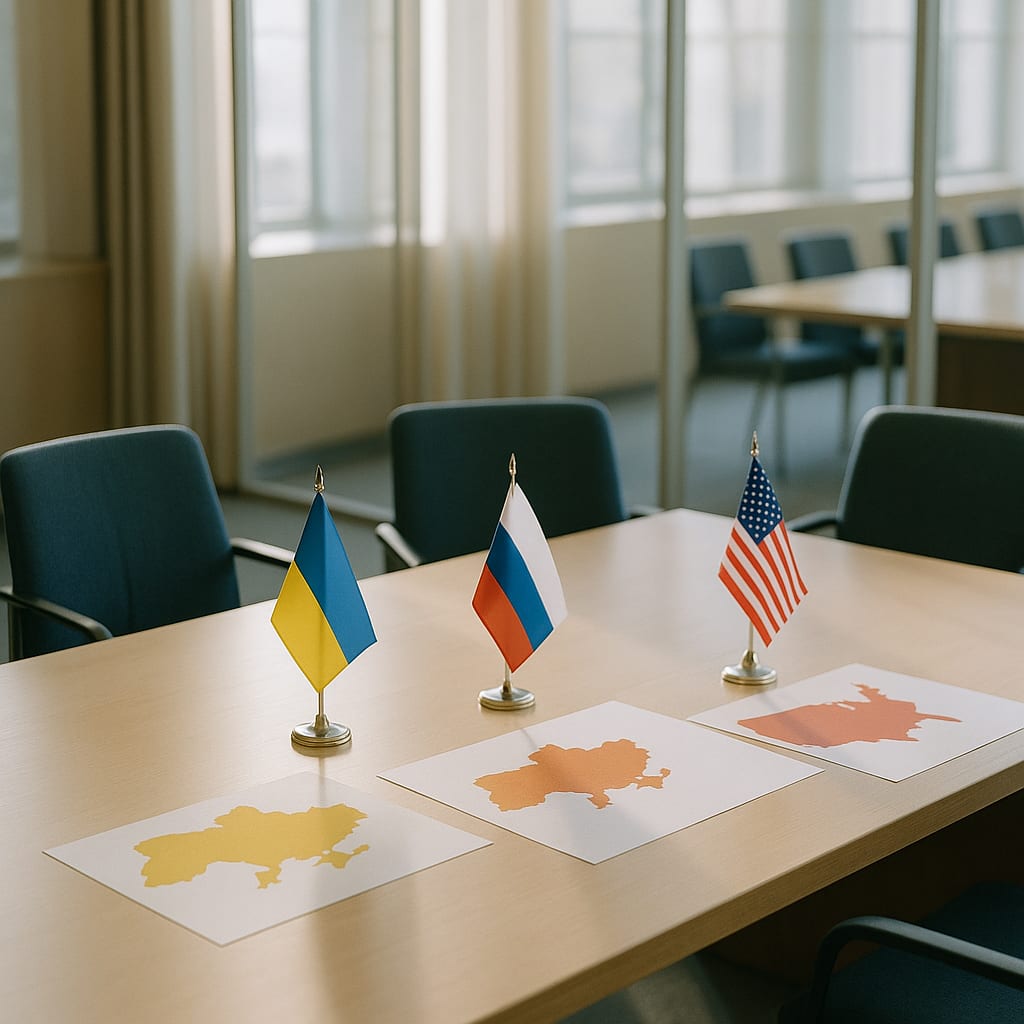
US-mediated Ukraine talks advance toward trilateral negotiations as Russian strikes continue
Narrative Snapshot
The coverage broadly converges on a diplomatic sequence linking meetings in Oslo, a subsequent Witkoff-Putin encounter in St. Petersburg, and a stated Russian willingness to resume trilateral negotiations involving the United States and Ukraine. Sources in China, Russia, Venezuela, France, Germany, India, Japan, and elsewhere emphasize the possibility of talks beginning around November 10, with security arrangements for both Russia and Ukraine identified as a central subject. Ukrainian and Western reports also note discussions of ceasefire formats, recovery, and guarantees for Ukraine.
The principal difference is one of diplomatic meaning. Russian state-linked coverage presents Moscow as responding constructively to US mediation while portraying Kyiv and European proposals as lacking substance or as insufficiently oriented toward a final settlement. Ukrainian sources place greater weight on whether Russia produces proposals for ending the war and stress that Vladimir Putin has no intention of stopping it. Western and international outlets focus on the pressure applied to Kyiv, the concern that Washington may be weakening its support, and the contrast between negotiations and continuing attacks.
The release of American detainee Stephen Hubbard functions as a secondary but significant frame. Russian and some international reports treat it as a goodwill gesture that helped create a more favorable setting for talks; the New York Times describes it as a low-cost way for Putin to gain goodwill with President Donald Trump. Ukrainian coverage instead highlights the personal and legal circumstances of Hubbard’s captivity and the timing of US envoy Steve Witkoff’s praise for Putin as a “humanitarian.” Reports of strikes on Kyiv shortly afterward sharpen the question of whether diplomatic engagement is constraining military conduct or proceeding independently of it.
What Happened
On October 20, President Volodymyr Zelenskyy met Witkoff in Oslo alongside Norwegian Prime Minister Jonas Gahr Støre and Finnish President Alexander Stubb. The discussions covered ceasefire formats, security guarantees, and Ukraine’s recovery; Zelenskyy later said he was open to freezing the front line as a route toward diplomacy while retaining at least 75 percent of Ukraine’s territory. Witkoff then travelled to St. Petersburg, where he met Putin on October 21 and presented ideas developed in Oslo. Russia announced Hubbard’s release during the meeting. Putin subsequently said Moscow was prepared to resume US-mediated trilateral talks, potentially from around November 10, while insisting that discussions address a final agreement and security guarantees rather than a temporary pause. Russian strikes on Kyiv and other areas continued during the diplomatic exchanges.
Why It Matters
The episode tests whether the United States can operate simultaneously as mediator, security partner to Ukraine, and interlocutor with Russia. It also places European governments in a more explicit role: Norway and Finland participated in the Oslo consultations, while European leaders are separately considering how to cover Ukraine’s reported €70 billion financing shortfall for 2027. The proposed agenda reaches beyond a ceasefire toward security guarantees for both belligerents, raising unresolved questions about Ukraine’s future protection, Russia’s demands, and the relationship between any agreement and existing European security arrangements. For decision-makers, the sequence also illustrates the limited institutional separation between diplomacy and coercion. Negotiations can advance while attacks continue, making verification, enforcement, intelligence support, and long-term financing as consequential as the wording of a political settlement.
Diverging Narratives
Washington’s public framing, as reported by several outlets, places responsibility on Zelenskyy to demonstrate a willingness to end the war. Trump said Ukraine had to want an agreement and argued that delaying a settlement would worsen the situation; he also defended withholding additional sanctions against Russia to avoid driving Moscow from the negotiating table. Rubio described the conflict as difficult but said the United States was prepared to mediate.
Kyiv’s framing is more conditional. Zelenskyy described the Oslo meeting as productive, supported trilateral leadership talks, and endorsed freezing the fighting if accompanied by security guarantees. Yet he also said progress depended on Russia presenting proposals for peace rather than for continuing the war, and told Ukrinform that tensions with Trump were not personal. Russian statements present a different endpoint: Putin says talks should produce a final agreement, not a truce, while Kremlin officials say Ukrainian and European proposals contain little substance. The sources do not establish whether the parties share a workable definition of a ceasefire, the territorial status quo, or security guarantees. They also report different casualty figures from separate Kyiv attacks, underscoring the difficulty of assessing the immediate military effect of the diplomatic process.
What Happens Next
The first decision point is whether the proposed trilateral talks are scheduled and conducted at the negotiator level, possibly in Abu Dhabi from around November 10. Analysts should watch whether the agenda remains limited to security guarantees or expands to territory, military status, recovery, and enforcement. A second indicator is Russia’s response to the Oslo proposals. Moscow’s stated willingness to engage could produce a negotiating channel if it supplies substantive terms; its repeated emphasis on a final agreement rather than a ceasefire would narrow the space for an interim arrangement.
A third decision concerns Ukraine’s external guarantees. Zelenskyy’s acceptance of a frozen front depends on assurances from Trump and European allies, while European governments are addressing longer-term financing separately. Their willingness to specify, fund, and sustain those commitments will shape Kyiv’s position. Finally, continued Russian and Ukrainian strikes will remain a direct test of whether diplomacy is accompanied by military restraint or operates without it.