
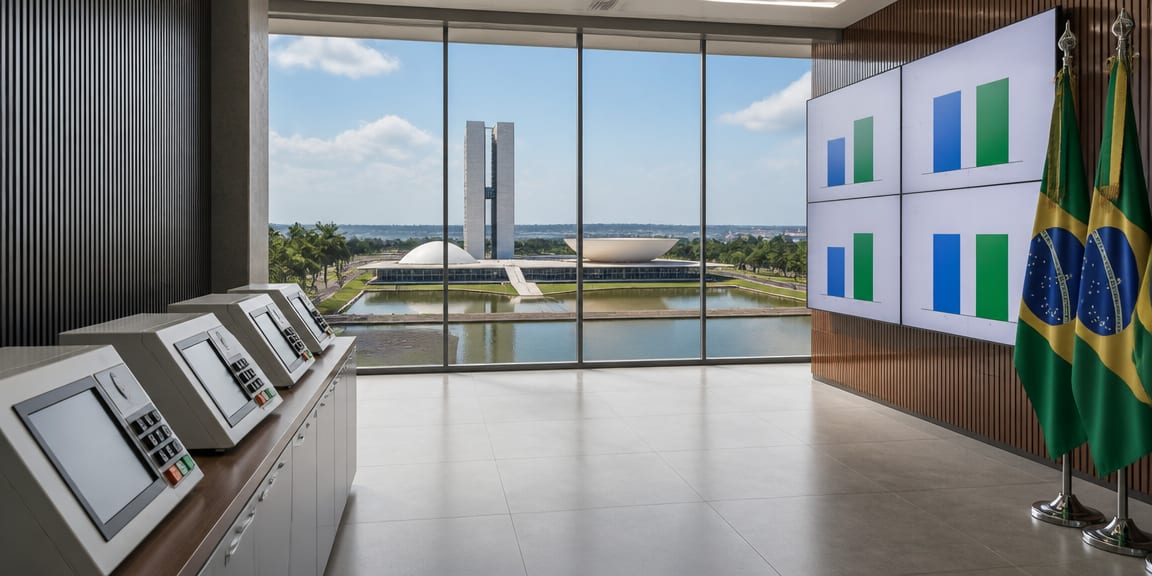
Lula Reelected Brazil’s President for a Fourth Non-Consecutive Term
Narrative Snapshot
The coverage broadly agrees on the institutional result and its narrow margin, while differing in the political meaning attached to it. European and North American outlets emphasize the scale of Lula’s comeback, his age and longevity in public life, and the significance of defeating another member of the Bolsonaro family. Brazilian coverage places greater weight on historical duration: Folha de S.Paulo reports that, by the end of the new term in 2030, Lula will have spent 16 years leading the federal executive, making him the second-longest-serving president in the country’s republican history.
Several regional outlets interpret the result through ideological and social lenses. Argentina’s Clarín presents Lula as a progressive leader rooted in the working-class Northeast and unionism, highlighting Bolsa Família and his proposal for a five-day working week. Venezuelan outlet Telesur focuses on congratulations from Latin American leaders and the symbolism of an unprecedented second-round turnaround. Middle East Eye and other sources instead foreground the unresolved dispute over the vote, including Flávio Bolsonaro’s refusal to concede and his call for annulment.
International coverage also assigns different external significance to the result. CBC identifies Lula as a vocal critic of U.S. President Donald Trump, while the South China Morning Post emphasizes the Brazilian government’s record Chinese investment. Folha reports French President Emmanuel Macron’s call to strengthen the strategic partnership with Brazil. These emphases suggest that the election will be read simultaneously as a domestic democratic contest, a regional ideological signal and a development with consequences for Brazil’s major external relationships.
What Happened
The Superior Electoral Court and Brazil’s electoral authority confirmed Lula’s victory in the 25 October runoff against Senator Flávio Bolsonaro of the Liberal Party. Official tallies cited by the sources put Lula between 51.7 and 51.79 percent of valid votes and Bolsonaro between 48.2 and 48.25 percent, with the final count approaching completion. Telesur reported 64,255,891 votes for Lula and 59,825,984 for Bolsonaro, a difference of 4,429,907. Lula had finished second in the first round, making the reversal, described by the South China Morning Post and Telesur as unprecedented since the runoff system was adopted in 1989, central to the result’s historical interpretation. CGTN reported that Lula is due to be sworn in on 5 January 2027.
Why It Matters
The result extends Lula’s political longevity and preserves a governing framework associated in the sources with social transfers, particularly Bolsa Família, while keeping his proposed reduction of the working week on the policy agenda. His victory also gives continuity to a government that the South China Morning Post says has overseen record Chinese investment, while Macron’s response points toward renewed European engagement and a stronger strategic partnership. Lula’s stated support for regulating digital platforms adds an institutional question to the new term, especially after his victory speech linked democracy to resistance against outside interference. For regional governments, the congratulations reported by Al Jazeera and Telesur indicate that Brazil remains a central reference point in Latin American politics. For international organizations and foreign partners, the narrow result underscores the importance of Brazil’s electoral institutions and of political management after a closely contested vote.
Diverging Narratives
The principal divergence concerns whether the election is best understood as a historic democratic recovery, a continuation of left-wing social policy or an unsettled institutional contest. The Guardian, BBC and La Repubblica stress Lula’s campaign ability and his street-level effort to win support “vote by vote,” while Clarín emphasizes his social origins, union background and progressive program. Telesur frames the outcome through regional solidarity and the support of Latin American leaders. The South China Morning Post gives greater prominence to the electoral precedent and to Brazil’s relationship with China; CBC instead highlights Lula’s criticism of Trump.
The sources also differ in the precision of their reported figures because they refer to different stages of the count, ranging from approximately 99 percent to 99.99 percent of precincts. More substantively, Middle East Eye reports that Flávio Bolsonaro refused to concede, alleged that extending voting hours was unprecedented and called for annulment, while noting that both candidates had requested the extension. Lula’s account, reported by Clarín, presents the vote as a defense of Brazilian democracy and argues for digital-platform regulation. The material does not establish how the challenge will be handled or whether it will alter the certified result.
What Happens Next
The first decision point is the transition from electoral certification to the scheduled inauguration on 5 January 2027. Analysts should watch whether Flávio Bolsonaro’s reported refusal to concede produces a formal institutional challenge, and how Brazil’s electoral authorities and courts respond. A clear acceptance would reinforce the authority of the electoral system; continued efforts to annul the result would keep legitimacy and democratic procedure at the center of the transition.
The second concerns policy implementation. Lula’s stated priorities include preserving the social agenda associated with Bolsa Família, pursuing a five-day working week and regulating digital platforms. The treatment of these proposals will indicate whether the new administration prioritizes immediate social legislation, information governance or coalition-building. Externally, Macron’s call for a stronger strategic partnership and the reported importance of Chinese investment make diplomatic signals significant: government decisions on those relationships will clarify how Lula balances European engagement, ties with China and his established criticism of Trump.