
U.S. Reduces Staffing at Four Middle East Embassies After Iran Threat Warning
Narrative Snapshot
The coverage is broadly consistent on the core evidentiary chain: a U.S. intelligence warning, attributed to National Intelligence Director Jay Clayton, preceded staffing reductions at four Middle Eastern missions and the ordered departure of non-essential personnel and families from Saudi Arabia. U.S. outlets generally foreground the intelligence assessment that alleged Iranian plots against Americans have reached “advanced stages.” International reports largely reproduce that assessment, while varying in how much context they attach to it.
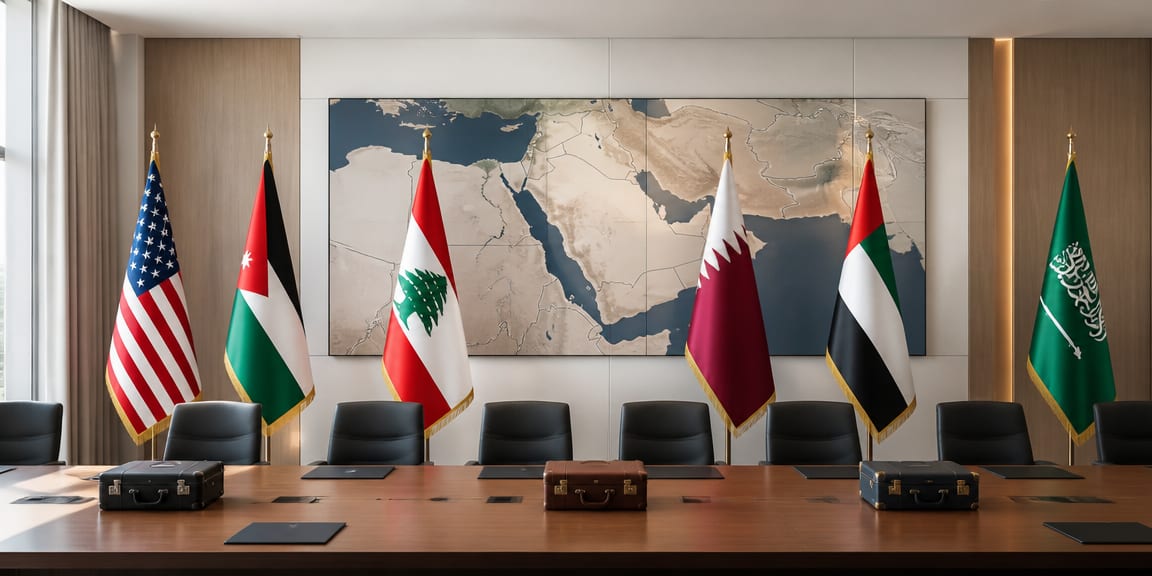
The geographic emphasis differs. The Toronto Star, Clarín, The Hindu, The Times of Israel, and the Japan Times concentrate on the operational response at diplomatic posts, identifying Jordan, Lebanon, Qatar, and the United Arab Emirates as affected while distinguishing those reductions from the more extensive Saudi departure order. The New York Times, Fox News, NBC News, and Middle East Eye give greater prominence to the alleged assassination planning and to the possibility that targets and operatives extend beyond the Middle East.
Iranian and regional coverage places the warning within a wider cycle of military escalation. Iranian state-linked outlets emphasize retaliation against attacks on energy infrastructure, expanded missile and drone capabilities, and the possibility of targeting U.S. naval assets or infrastructure around the Strait of Hormuz. Israeli reporting adds the claim, attributed to unnamed Iranian officials, that American diplomats and personnel may be regarded as legitimate targets because of alleged U.S.-Israeli assassinations. The central policy issue is therefore not only embassy security, but whether diplomatic risk management can contain a broader escalation involving military forces, shipping, energy infrastructure, and possible operations outside the region.
What Happened
On October 23, Director of National Intelligence Jay Clayton sent Secretary of State Marco Rubio an unclassified memo stating that Iran had “substantially increased” efforts to target U.S. personnel. The memo said lethal plotting against U.S. citizens had reached advanced stages in the Middle East and other countries. The State Department subsequently reduced staffing at missions in Jordan, Lebanon, Qatar, and the United Arab Emirates, according to Clarín, while maintaining personnel in those countries. Earlier in the week, Washington ordered non-essential government employees and their families to leave Saudi Arabia. Reports linked that decision to escalating attacks by Iran-backed Houthi rebels. U.S. officials confirmed the memo’s authenticity, and intelligence agencies reportedly planned to downgrade some information for wider dissemination.
Why It Matters
The measures test the United States’ ability to maintain diplomatic presence while managing threats that extend across host countries, military theaters, and potentially non-regional jurisdictions. Staffing reductions preserve a degree of representation but also signal that ordinary embassy operating assumptions are no longer considered sufficient. The reported Saudi departure order sets a higher threshold, separating selective mission adjustments from the evacuation of non-essential personnel and families.
The episode also connects diplomatic security to deterrence and escalation control. Iranian officials have warned of severe retaliation against attacks on energy infrastructure and claimed that missile and drone capabilities have expanded since the war began. Reports of a downed U.S. drone, threats to naval vessels, and possible risks to undersea cables and commercial tankers indicate that decisions made in response to alleged plots could interact with maritime security, energy markets, and military signaling. For governments and international organizations, the issue is whether existing security and communication channels can prevent attacks on personnel from becoming a trigger for wider confrontation.
Diverging Narratives
The main differences concern emphasis and attribution rather than the existence of the U.S. warning. American reporting presents the intelligence memo as the central fact and describes the alleged Iranian activity in terms of lethal plots, advanced planning, and possible targets abroad. Several international outlets give more attention to the practical distinction between reducing embassy staff and requiring personnel to leave a country. That distinction is significant because the sources do not report a general U.S. diplomatic withdrawal from the region.
Iranian coverage frames the broader confrontation as a response to possible U.S. military action. The IRGC has warned of severe consequences for attacks on energy infrastructure, said Iranian capabilities have increased, and claimed the ability to strike U.S. naval vessels. TASS reported a warning concerning undersea cables in the Strait of Hormuz, while Middle East Eye reported Iranian claims that a U.S. drone was shot down and that two tankers hit mines. Those accounts are presented as Iranian or state-media claims; the supplied sources do not independently establish them.
Israeli reports add a retaliatory rationale, citing unnamed Iranian officials who allegedly described U.S. diplomats as “fair game” because of U.S.-Israeli assassinations. Other reports refer to the threat level as the highest since the war began or suggest renewed conflict could be imminent. The supplied material does not establish the specific plots, their intended targets, or whether the reported military and maritime incidents are directly connected to them.
What Happens Next
The first decision point is the scope and duration of the U.S. diplomatic drawdown. Continued reductions would indicate that Washington assesses the threat as persistent across multiple posts; restoration of staffing would suggest that security conditions or intelligence judgments had materially changed. Analysts should watch for further State Department orders, changes affecting families or non-essential personnel, and the dissemination of declassified intelligence.
A second path concerns escalation beyond diplomatic facilities. Iranian officials have publicly linked possible U.S. attacks to retaliation against energy infrastructure, naval assets, and other strategic targets. Any confirmed attack on American personnel, a diplomatic site, shipping, or regional infrastructure would raise the pressure for a U.S. response. Conversely, the absence of such incidents alongside renewed security coordination could keep the measures contained.
A third indicator is whether alleged retaliation claims acquire independent confirmation. Reports of Iranian plots, the drone incident, tanker damage, and threats to undersea cables currently come from differing official or media accounts. Their verification, denial, or linkage would materially shape assessments of whether the crisis is primarily precautionary or part of an expanding operational confrontation.