
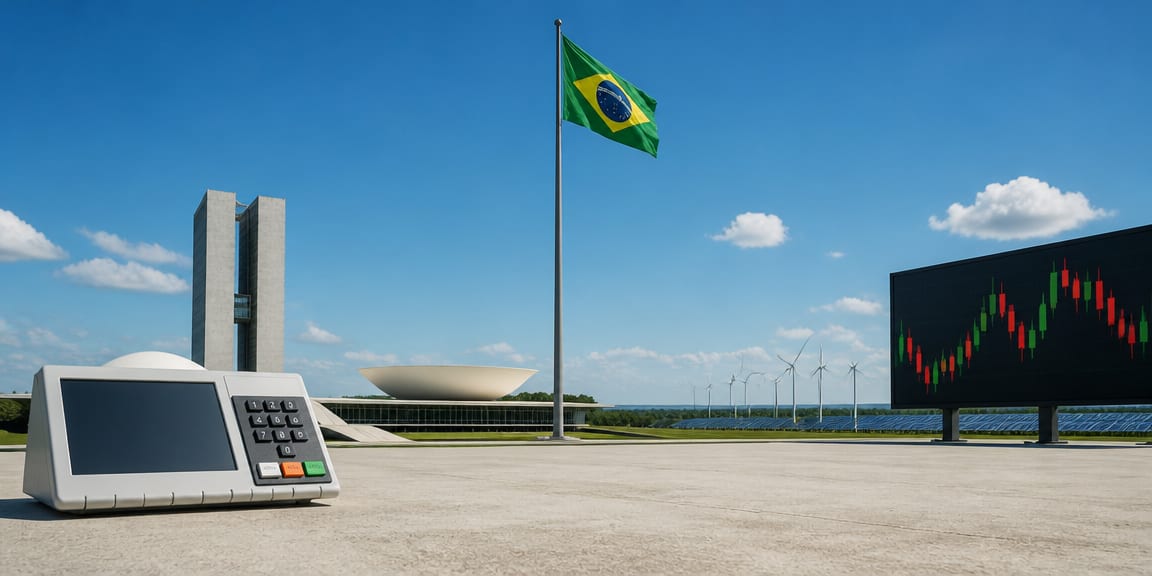
Lula da Silva re-elected in Brazil runoff as Flavio Bolsonaro disputes result and markets swing
Narrative Snapshot
Across outlets, the result is treated as simultaneously narrow and decisive, with international and domestic sources anchoring legitimacy in official tallies while foregrounding competing political frames. Russian state media fixates on quantification and precedent, reporting 51.79% for Luiz Inácio Lula da Silva after 100% of ballots were counted and noting he is the first in modern Brazil to win after trailing in the first round. France-based coverage cites a nearly identical official share and highlights the tight margin, while Indian reporting couples the numbers with policy positioning, describing Lula as a democratic leftist promising social spending with ecological and infrastructure priorities.
Economic reaction splits the narrative. Brazilian and Argentine outlets describe violent post-vote market repricing and extraordinary pre-market stock drops, yet Brazil’s banking federation publicly acknowledged the electoral outcome. Domestic debate over democratic guardrails is present both before and after the vote: a manifesto by social scientists urged support for Lula to avoid democratic erosion, while post-election reports chronicle both institutional normalization and persistent contestation.
International framing diverges between congratulatory diplomacy and claims of illegitimacy. China, Iran, and France emphasized partnership and cooperation in their messages; the Kremlin welcomed the result by recalling Lula’s record of engagement with Russia. In contrast, coverage in India and Argentina highlights Donald Trump’s unsupported allegation that the election was rigged and the absence or withholding of congratulatory messages from some leaders. Italian reporting amplifies a Reuters investigation alleging pressure tactics by Trump-aligned actors aimed at aiding the Bolsonaro family, situating Brazil’s race within transnational political currents.
What Happened
Brazil’s electoral authority confirmed that President Luiz Inácio Lula da Silva won a fourth, non-consecutive term in a runoff against Senator Flavio Bolsonaro. Official results reported by multiple outlets placed Lula around 51.7%, with Russian reporting citing 51.79% after all ballots were counted. Bolsonaro has refused to concede, calling an extension of voting hours unprecedented, even as reporting indicates both campaigns sought extensions amid complaints that public transport disruptions impeded voters. Trump alleged the election was rigged without evidence. The day after the vote, Brazilian markets saw sharp repricing in interest rates, the currency, and equities, and Argentine coverage described extraordinary pre-market stock declines, even as Brazil’s banking federation formally congratulated Lula. International reactions included congratulations from China and Iran, a strategic-partnership message from France’s president, and a Kremlin welcome highlighting Lula’s prior cooperation with Russia.
Why It Matters
The result intersects with Brazil’s domestic policy trajectory and its external alignment. Lula’s program, as described in Indian coverage, centers on expanded social spending tied to ecological and infrastructure priorities—an agenda that collides with immediate market pessimism captured by Brazilian and Argentine financial reporting. Cabinet composition will shape policy credibility; domestic press indicates plans to professionalize the government and strengthen its liberal wing, with early names circulating for the finance brief. Institutionally, the combination of close margins, transport-access disputes, and litigation talk tests Brazil’s electoral governance, even as business associations and foreign governments move to normalize ties.
Internationally, congratulatory signals from China, Iran, and Russia, and a French call to deepen a strategic partnership, underscore continuity in Brazil’s multi-vector diplomacy. At the same time, coverage of Trump’s unsubstantiated fraud claims and reporting on pressure campaigns to aid the Bolsonaro family point to contested transnational political influences—a factor relevant to regional partners, including Argentina, where the president publicly attacked Lula ahead of the vote.
Diverging Narratives
Legitimacy is the central point of divergence. Multiple outlets cite official results confirming Lula’s victory, yet Trump labeled the election rigged without evidence, and Flavio Bolsonaro refused to concede, calling extended voting hours unprecedented despite reporting that both campaigns had requested extensions. Election-day access issues feature prominently in Argentine coverage, with Lula denouncing bus service disruptions and seeking extended voting, while other outlets emphasize the judicially overseen process and swift tabulation.
Economic interpretation also splits. Brazilian reporting depicts a post-election market meltdown across interest rates, the real, and equities; an Argentine outlet describes historically steep pre-market equity declines. In parallel, Brazil’s banking federation publicly congratulated the winner, signaling institutional acceptance even as asset prices reset. Pre- and post-election political frames further diverge: Western and Indian sources highlight the vote’s democratic stakes and Lula’s policy agenda, while Italian reporting relays a Reuters probe into pressure and sanctions by Trump-aligned actors to benefit the Bolsonaro family. Internationally, messages from Paris, Beijing, Tehran, and Moscow focus on partnership and continuity, whereas Canadian and Indian coverage foregrounds Lula’s adversarial stance toward Trump and the ensuing rhetorical contest.
What Happens Next
Two decision tracks will shape near-term dynamics. First, the legal-institutional path: Bolsonaro’s refusal to concede and calls to annul results put the electoral court and allied institutions at center stage. Indicators to watch include any formal challenges, court rulings on voting-hour extensions and access complaints, and whether reported protests dissipate, as one Argentine account suggests. Resolution that affirms the tally would consolidate institutional continuity; sustained challenges would prolong uncertainty.
Second, the policy-market path: domestic press signals cabinet professionalization and a stronger liberal wing, with names floated for the finance portfolio. Personnel choices, fiscal guidance, and early legislative signals will be pivotal for market stabilization after the sharp repricing reported in Brazil and Argentina. Internationally, follow-through on Macron’s strategic-partnership overture, the Kremlin’s welcome, and congratulations from China and Iran will indicate Lula’s diplomatic priorities. Analysts should track the sequence and substance of cabinet announcements, any legal filings from the Bolsonaro camp, and initial bilateral engagements.