
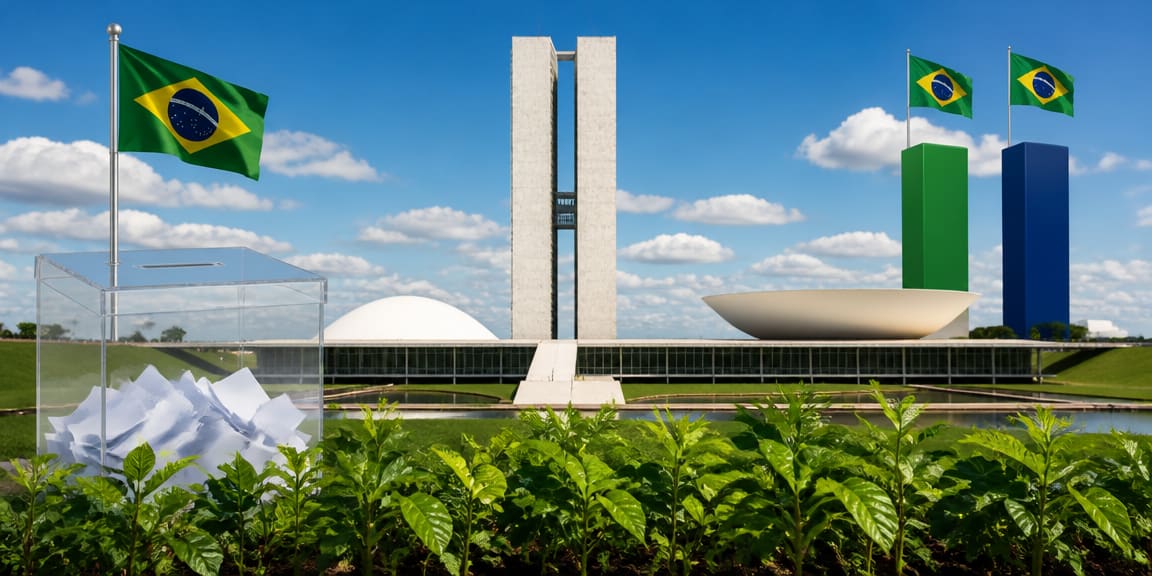
Lula narrowly wins Brazil’s presidential runoff against Flávio Bolsonaro after razor-thin contest
Narrative Snapshot
Across outlets, the race is cast as a genuine coin flip resolved at the last moment, with broad agreement that late-campaign dynamics mattered. European, Latin American and Middle Eastern coverage converges on the candidates entering the runoff virtually tied and the electorate highly polarized, while noting an intense ground game and energized bases on both sides. Le Monde, The Guardian, France 24, Al Jazeera English, Clarín and the Bangkok Post all emphasize the knife-edge conditions and unusually high uncertainty heading into Sunday.
Where emphasis diverges is on what most defined the runoff. French and Argentine reporting highlights debate performance and rhetorical missteps by Flávio Bolsonaro as potentially consequential with undecideds, portraying Lula as more aggressive and Bolsonaro as more polished yet error-prone in ways that backfired. By contrast, conservative U.S. coverage framed the contest inside a regional “conservative wave” narrative before repositioning after the result. Several outlets read the vote through a geopolitical lens—either U.S. influence in Latin America or BRICS alignment—while Brazilian and European reporting draw out institutional and environmental stakes, from civil-society mobilization for democratic safeguards to the Amazon policy horizon and foreign partnerships.
Religion and rule-of-law concerns surface more prominently in Brazilian and Latin American sources than elsewhere. Folha de S.Paulo chronicles legal and civic interventions—open letters from lawyers and jurists, and union complaints about voting access—whereas Telesur features a public warning by Catholic bishops about Flávio Bolsonaro’s positions. Coverage also differs regionally on context-setting: Italian reporting underscores Jair Bolsonaro’s conviction and sentence as backdrop to his son’s bid, while France 24 underscores allegations of U.S. interference that Washington denied.
What Happened
After trailing in the first round on October 4, when Flávio Bolsonaro took 47% to Luiz Inácio Lula da Silva’s roughly 45% (The Guardian; Telesur English; The Hindu), the runoff campaign tightened. Le Monde describes a late surge by the president’s supporters and last-minute measures as he sought an unprecedented fourth term. A final debate drew attention for Bolsonaro’s personal attacks that were turned against him (Le Monde), with Brazilian media cited by Clarín highlighting missteps, including mocking Lula’s disability and mishandling facts about a high-profile police killing.
Mass rallies closed the campaign (Al Jazeera English). Election day opened nationwide and abroad with about 158–160 million eligible voters and expectations of lower abstention (France 24; Telesur English). Civil-society concerns about access persisted—trade unions flagged transport problems (Folha), and prosecutors sought measures for Indigenous voters in remote Amazon areas (Toronto Star). The Associated Press called the race for Lula; Fox News reports he won by a narrow margin exceeding 51% and carried Minas Gerais, the traditional bellwether (Folha).
Why It Matters
Coverage links the outcome to Brazil’s environmental policy trajectory and global climate cooperation. France 24 frames Lula’s re-election as good news for the Amazon and notes reporting that his last four years in power saw a record deforestation decline, while Germany publicly welcomed the result as opening space to intensify joint Amazon protection efforts (Folha; France 24). This aligns with ongoing donor partnerships and could shape carbon market and forest finance negotiations.
Geopolitically, multiple outlets situate the vote in regional power dynamics: the Toronto Star and The Hindu emphasize U.S. influence in Latin America at stake, while RT casts Lula as aligned with BRICS and Bolsonaro as a Trump ally. Domestically, Fox News notes a conservative-leaning Congress, signaling legislative constraints and the need for coalition management. Brazilian sources chronicle a robust civil-society push to safeguard electoral norms—lawyers’ and jurists’ democracy manifestos and union scrutiny of voting access (Folha)—indicating institutional vigilance likely to persist into the next term.
Diverging Narratives
Outlets disagree on the dominant lens. France 24 reports that allegations of U.S. interference shaped the campaign narrative but stresses Washington’s denial, whereas Canadian and Indian reporting focus on broader U.S. regional influence rather than specific interference claims. RT emphasizes Lula’s BRICS orientation and Bolsonaro’s ties to Trump, foregrounding geopolitical alignment. Fox News initially framed Brazil as the next test of a conservative regional surge, then characterized Lula’s victory as a setback to that trend.
On campaign substance, French and Argentine accounts stress debate dynamics and Bolsonaro’s errors, casting them as liabilities with undecideds (Le Monde; Clarín). Other coverage centers economic hardship, corruption allegations, and law-and-order themes as the central issues (France 24). Environmental stakes also divide emphasis: Clarín argues the Amazon was largely absent from both campaigns, while The Guardian’s reporting and France 24’s post-election pieces elevate it as a defining policy arena. Access-to-vote narratives vary: Folha highlights transport obstacles and civic alarms, complemented by AP reporting on Indigenous voters’ logistical barriers (Toronto Star), while Telesur underscores orderly openings, abroad turnout growth, and early overseas tallies that split by country.
What Happens Next
Three decision points emerge. First, environmental governance: France 24’s reporting and Germany’s statement suggest external partners expect accelerated Amazon protection. Analysts should watch early appointments in environment and justice portfolios, enforcement tempo against illegal deforestation, and whether Lula advances or revisits oil exploration at the Amazon’s mouth, an issue cited as controversial in Argentine coverage (Clarín).
Second, legislative governability: Fox News notes a conservative-leaning Congress, implying coalition bargaining on fiscal, security, and social policy. Signals include coalition compacts, budget priorities, and whether anti-corruption and public security packages proceed on cross-bloc terms.
Third, democratic process follow-through: Folha documents civil-society vigilance on voting access and rule-of-law advocacy; Toronto Star highlights legal action to facilitate Indigenous voting; RT reports an attack on a Lula ally at a campaign event. Watch for electoral authorities’ after-action reviews, prosecutorial follow-up on access and violence incidents, and whether church and legal associations sustain public oversight into the governing cycle.