
Israel votes in first national election since October 7, with Netanyahu and Eisenkot locked in a tight race
Narrative Snapshot
Across Israeli, European, and global outlets, coverage converges on the mechanics likely to determine power: coalition arithmetic, turnout patterns among late-deciding and marginalized voters, and the constraints of Israel’s electoral rules. Israeli outlets stress that neither bloc is guaranteed 61 seats and that post-vote coalition bargaining could let Benjamin Netanyahu remain in office even without a clear win, a pathway The Times of Israel outlines explicitly. That uncertainty is sharpened by a large pool of undecided voters, with The Times of Israel citing pollster estimates that about a quarter of voters are late deciders likely to shape the outcome.
Several sources foreground constituencies whose participation could be decisive. Middle East Eye reports an expected surge in turnout among Palestinian citizens of Israel, citing recent polling in the mid-60s to high-60s percentage range, while Haaretz underscores that most Palestinian residents of East Jerusalem cannot vote in national elections despite bearing the consequences of policy. France24 highlights a procedural constraint with political impact: Israelis cannot vote from abroad, prompting organized “Fly and Vote” efforts and a failed Likud petition to curtail them.
How to read the race itself varies by outlet. French and Israeli sources consistently cast former military chief Gadi Eisenkot as the principal challenger leading a centrist bloc, while Argentina’s Clarín still frames the contest around ex-general Benny Gantz. Italian daily La Repubblica goes further than most in attributing pre-election maneuvering to security politics, reporting claims that Netanyahu sought to rekindle confrontation with Iran to delay the vote and faced U.S. resistance; France24 separately reports Netanyahu labeling Eisenkot “soft” on Iran and noting support from former U.S. President Donald Trump.
What Happened
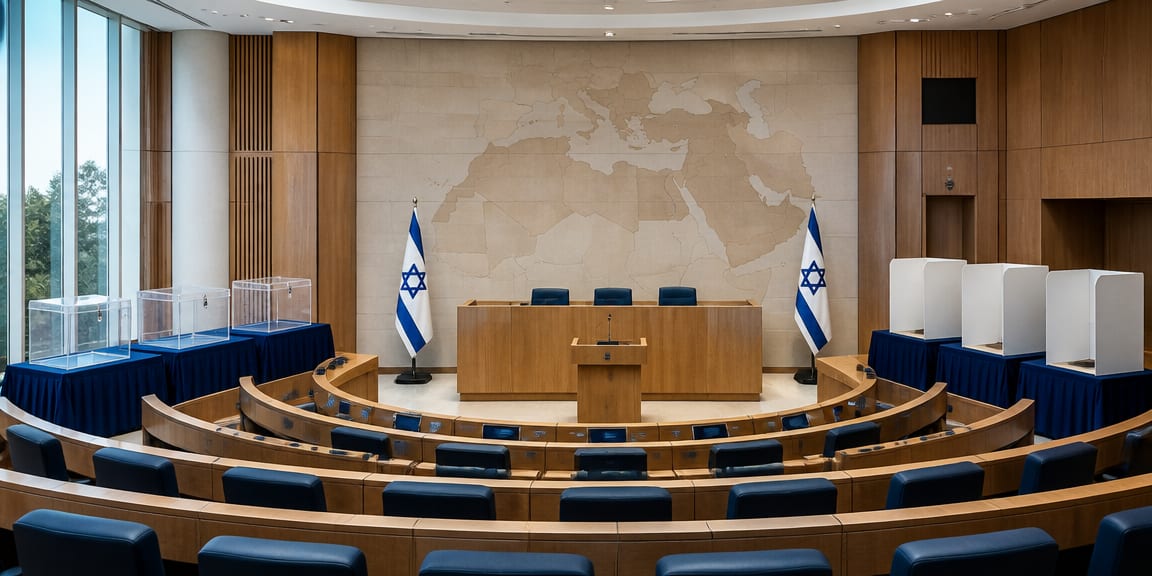
Israelis are voting in a closely matched parliamentary election on October 27, the first since the Hamas-led October 7, 2023 attack and the subsequent war in Gaza, as reported by Le Monde, France24, Haaretz, and others. The race pits Prime Minister Benjamin Netanyahu’s Likud-led bloc against a centrist challenge headed by former military chief Gadi Eisenkot, whom French and Israeli outlets describe as the leading opposition figure. Haaretz puts eligible voters at over 7.3 million and lists 38 parties on the ballot; Folha de S.Paulo tallies 36 party lists and says surveys suggest only about 11 will likely enter the Knesset. Multiple outlets, including The Guardian and The Hindu, note that neither bloc is assured of a 61-seat majority. The Times of Israel highlights that undecided voters—estimated at around 25%—could swing the race. France24 reports thousands of expats flying home because Israel does not allow overseas voting.
Why It Matters
The result will determine whether Israel sustains or revises the governing coalition that has steered the country through nearly three years of multi-front conflict, with implications for war management in Gaza and regional deterrence, including policy toward Iran as invoked by both La Repubblica and France24. Coalition fragmentation, emphasized by The Guardian, The Hindu, and Folha de S.Paulo, would shape institutional capacity to legislate and to manage security crises, judicial reforms, and economic issues Haaretz says are also shaping the ballot beyond October 7. Voter inclusion and legitimacy are salient: Middle East Eye anticipates heightened turnout among Palestinian citizens of Israel, while Haaretz details that most Palestinian Jerusalemites cannot vote in national races, underscoring enduring representational gaps. France24’s account of mobilized expat voting and a failed Likud petition to limit it underlines how procedural rules interact with electoral competitiveness. For external actors, France24’s note of Trump’s endorsement and La Repubblica’s account of U.S. resistance to escalatory timing signal that U.S.–Israel dynamics will remain consequential in the election’s aftermath.
Diverging Narratives
Outlets differ on which opposition figure anchors the alternative to Netanyahu. Le Monde and France24 consistently identify Gadi Eisenkot and his centrist bloc as the primary challenger, while Clarín refers to Benny Gantz leading in polls. The Hindu adds Naftali Bennett among challengers, further complicating the landscape presented to international readers. Media also vary in framing the security backdrop: The Guardian situates the vote after Israel’s destruction in Gaza and a war “with the US against Iran,” while France24 and La Repubblica focus on Iran through campaign rhetoric and reporting that Netanyahu sought escalatory moves allegedly checked by the United States. RT highlights wartime accountability with specific Gaza casualty figures attributed to the Gaza Health Ministry, a focus not mirrored in detail by Israeli outlets summarized here.
Domestic emphasis also diverges. Haaretz foregrounds non-security issues shaping voter choices after prolonged conflict, while The Times of Israel concentrates on electoral mechanics and pathways by which Netanyahu could remain in power absent a clear plurality. Middle East Eye centers the mobilization of Palestinian citizens against campaign messaging like a Likud billboard reading “the Right or Palestine,” whereas Al Jazeera English features juxtaposed Israeli and Palestinian voter sentiments under the banner “Enough is enough.” On participation rules, France24’s coverage of expats flying home is distinctive; Israeli outlets focus more on undecided voters and coalition math than on diaspora constraints.
What Happens Next
Three decision points emerge from the reporting. First is coalition formation: if neither bloc reaches 61 seats, The Times of Israel notes Netanyahu could still retain power through post-election deals, while La Repubblica flags discussion of a possible minority government for the opposition and warns allies fear fraud claims at Arab polling stations. Analysts should watch early cross-bloc outreach, statements on red lines, and whether any party signals openness to underpinning a minority cabinet.
Second is turnout composition. The Times of Israel’s estimate of roughly 25% late deciders, Middle East Eye’s expectation of elevated Palestinian citizen participation, and France24’s “Fly and Vote” mobilization together suggest that late-day precinct data in Arab-majority localities, expat-heavy districts, and swing urban centers will be leading indicators.
Third is the security frame’s spillover into post-vote positioning. France24 reports Netanyahu calling Eisenkot “soft” on Iran and touts Trump’s backing, while La Repubblica reports U.S. resistance to pre-election escalation. Post-election rhetoric toward Iran and Gaza, and any U.S.–Israel signaling, will indicate constraints on coalition options and governing agendas.