
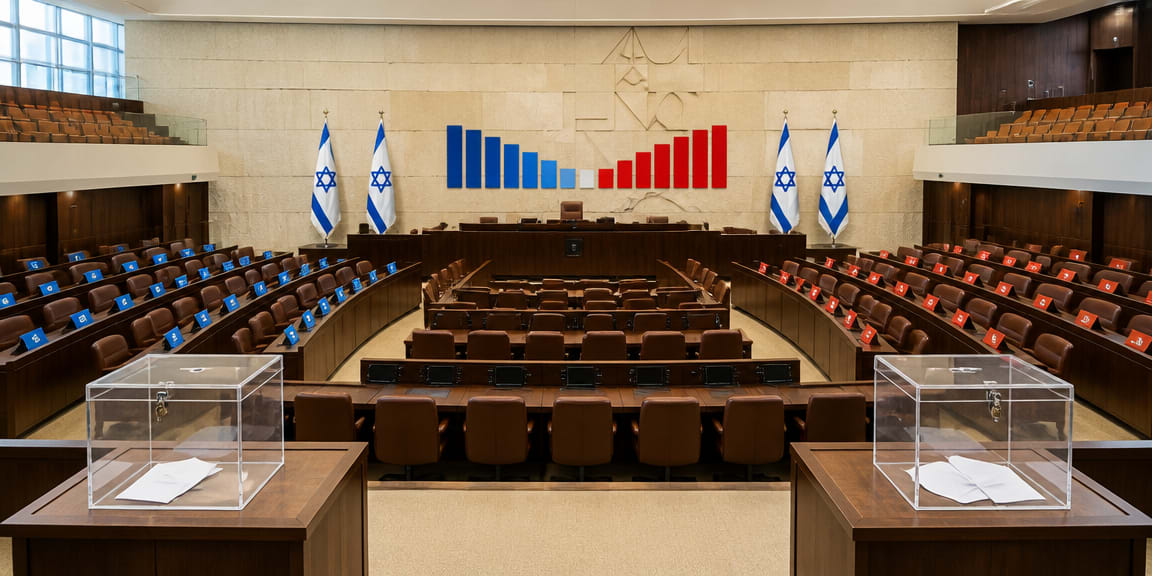
Record turnout in Israel’s first post–Oct. 7 election yields no majority as Arab parties surge
Narrative Snapshot
Across international and Israeli outlets, there is broad agreement on two facts: voter participation was the highest in more than two decades and no bloc emerged with a clear path to 61 seats. France24 and Italy’s ANSA reported turnout at 77.7%, echoed by Corriere della Sera and Le Monde, while The Times of Israel and RT highlighted unprecedented midday participation. Exit polls and early counts varied on which bloc led, but consistently projected Likud as the largest single party and both camps short of a governing majority, with Fox News and Deutsche Welle stressing Likud’s first-place finish and France24, The Guardian, and TASS noting a narrow edge for the opposition bloc.
Coverage also converges on the pivotal gains by Arab-majority parties. The BBC, France24, and The New York Times framed Arab lists as potential kingmakers; Al Jazeera reported exit polls suggesting up to 18 seats and record Arab turnout, and Haaretz and The Times of Israel described Joint List and Ra’am gains and contacts with both blocs. Israeli outlets emphasized the complication that key opposition figures had pledged not to form a coalition with Arab parties, a constraint The Times of Israel and Haaretz said could block an alternative government despite anti-Netanyahu majorities in exit polling.
A distinct line of reporting focuses on election conduct. The Times of Israel detailed fraud allegations by rival camps and the Central Elections Committee’s statement that it had no evidence of systematic fraud, alongside civil society preparations to protect voting in Arab communities. Al Jazeera and Middle East Eye highlighted Netanyahu’s rhetoric accusing Arab voters and “left-wing” activists of trying to steal the election, while Haaretz and The Times of Israel chronicled legal efforts to limit armed party activists at polling sites and warnings by far-right figures amid record Arab turnout.
What Happened
Israelis voted on October 27 in the first national election since the October 7, 2023 attacks, with exceptional turnout and no clear majority emerging. France24 and ANSA put participation at 77.7%, the highest since 1999, and The Times of Israel reported record half-day turnout. Exit polls consistently showed Likud as the largest party but projected both blocs below 61 seats: France24 cited 52 seats for Gadi Eisenkot’s bloc to 50 for Netanyahu’s, while Fox News reported 50 seats for Netanyahu’s bloc, 53 for the opposition, and 17 for Arab parties. Partial counts later showed fluctuating tallies, with Middle East Eye noting Netanyahu’s bloc at 57 seats with 42% counted, and Clarín reporting Likud at 55 seats with 53.7% counted—still shy of a majority. Arab parties registered historic gains, with projections ranging from 16 to 19 seats (Haaretz, The Times of Israel, Al Jazeera, France24). The Times of Israel reported mutual accusations of foul play; the Central Elections Committee said it had no evidence of systematic fraud. NBC noted that families of October 7 victims urged Israelis to vote as polls opened.
Why It Matters
The results intensify Israel’s coalition arithmetic and foreground whether Jewish-majority parties will accept parliamentary support from Arab-majority lists. Haaretz recalled the 1992 Rabin precedent of relying on Arab parties, while The Times of Israel underscored that opposition figures pledged not to do so this cycle, creating a structural barrier despite projected anti-Netanyahu seat totals. The spike in Arab turnout and representation documented by Haaretz, The Times of Israel, France24, and the BBC signals a potential rebalancing of parliamentary leverage that could reshape legislative priorities and cabinet formation norms.
Internationally, a fragmented Knesset complicates decision-making amid ongoing conflicts and security pressures highlighted by the South China Morning Post and CGTN. RT framed the vote as a referendum on leadership under war and scandal, adding that Eisenkot would be unlikely to shift core security policies. Sustained allegations about election integrity reported by Israeli and regional outlets test institutional resilience—from the Central Elections Committee’s oversight to High Court engagement flagged by The Times of Israel—and bear on partners’ assessments of Israel’s political stability.
Diverging Narratives
Outlets diverge on the immediate scoreboard while converging on the absence of a majority. France24, The Guardian, and TASS highlighted an opposition-bloc edge in exit polls; Fox News and Al Jazeera emphasized Likud’s status as the largest party, with Al Jazeera’s postvote takeaway suggesting Netanyahu’s bloc edged the opposition even as other sources kept the race essentially even. As counting progressed, Middle East Eye and Clarín cited partial tallies nudging Netanyahu’s camp upward yet still below 61, contributing to a fluid picture rather than a settled lead.
The meaning and framing of Arab-party gains vary sharply. The BBC and France24 presented Arab lists as potential kingmakers. The New York Times reported a strong Arab turnout opposing Netanyahu’s government. Israeli outlets added constraints: The Times of Israel and Haaretz stressed opposition pledges not to partner with Arab parties, complicating their path. In parallel, Al Jazeera and Middle East Eye highlighted Netanyahu’s statements casting Arab participation as a threat or “disgrace,” while Haaretz reported far-right warnings against Arab celebrations and The Times of Israel linked Arab mobilization to backlash against Itamar Ben Gvir and failures to curb violent crime.
Outlets also differ in framing the conflict context. The South China Morning Post and BBC emphasized security and democratic stakes. Telesur labeled Gaza a “genocide” and cited a UN commission accusing Israel of war crimes, a characterization absent from most Israeli and Western coverage. RT cast the contest as a referendum on corruption and war management and argued Eisenkot would not soften military policy, a point not taken up elsewhere. Israeli reporting focused more on procedural integrity, legal safeguards, and coalition mechanics than on foreign policy repositioning.
What Happens Next
Coalition negotiations will test red lines publicly stated in the campaign. Netanyahu has ruled out reliance on Arab parties as “a shame and a disgrace,” according to Al Jazeera and Middle East Eye, narrowing his options to retaining his current partners or peeling defectors. Eisenkot’s bloc leads or ties in several projections but, as Haaretz and The Times of Israel note, would need either to reverse pledges against Arab-party cooperation or secure support from right-wing figures to form a government. Statements from Ra’am leader Mansour Abbas that he is speaking to both blocs, reported by The Times of Israel and Haaretz, create space for external-support models short of formal coalition.
Analysts should watch final certified seat totals from the Central Elections Committee; any legal challenges following fraud claims, which the Committee has thus far discounted; explicit shifts by opposition leaders on Arab-party support; signals from ultra-Orthodox and nationalist partners on their coalition terms; and whether far-right rhetoric escalates or moderates amid record Arab turnout. These indicators will determine whether Israel faces protracted bargaining, a minority government reliant on outside votes, or a return to the polls.