
Spain high-speed train collision near Toledo kills at least 68, spurring mourning and safety scrutiny
Narrative Snapshot
Across outlets, there is consensus that two high-speed passenger trains collided south of Madrid, near Urda in Toledo province, on the Madrid–Seville corridor, with a rapidly rising death toll and extensive injuries. International reporting converges on the scale and gravity of the disaster, foregrounding harrowing survivor testimony and the intensity of rescue efforts, while noting the government’s declaration of national mourning. Visual and on-the-ground accounts reinforce the violence of the impact and the disarray at the scene.
The largest divergence is numerical, reflecting the timeline of reporting. Early dispatches put fatalities at “at least 10” (South China Morning Post and CBC), then 30 (Bangkok Post), before rising to 64 (Deutsche Welle and TASS) and, in multiple outlets, 68 with more than 100 injured (France24, New York Times, Al Jazeera, Tehran Times, and SCMP’s day-two update). Several reports explicitly cautioned that the toll was likely to increase.
Causal framing also varies. Spain’s transport minister cited an “error” and “inexplicable circumstances” (France24; SCMP, day two), while ANSA reported a working “hypothesis of human error.” By contrast, CGTN relayed specific claims that the LZB train protection system suffered a communication failure shortly before the collision, affecting a long section of the line, and detailed that a Renfe-operated AVE struck the rear of a stationary Iryo service. That split highlights differing emphases between human and systems explanations as authorities probe what went wrong.
National lenses shape ancillary angles. Italian outlets prioritize consular updates, noting three Italian women missing and several nationals in stable condition (ANSA). RT spotlights street protest and calls for resignations outside the Transport Ministry in Madrid following the crash. European and Asian outlets situate the event within a longer arc for rail safety, repeatedly noting it is Spain’s second serious rail disaster this year on the same line and one of Europe’s deadliest in the past decade.
What Happened
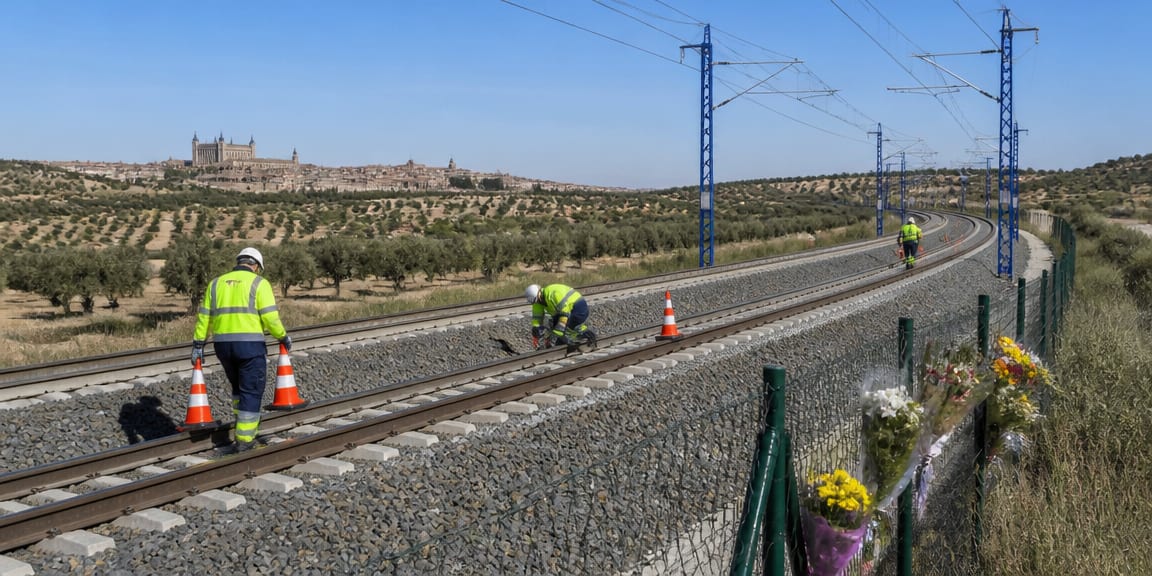
Two high-speed trains collided on Wednesday morning south of Madrid, between Los Yébenes and Urda in Toledo province. Multiple outlets report that a Renfe-operated AVE traveling toward Seville struck the rear of a stationary Iryo service on the same route near Urda at about 8:54 a.m. local time. Authorities and several international outlets report at least 68 fatalities and more than 100 injuries, with earlier counts lower and officials warning the toll could rise. Rescue and recovery operations continued through the day. Spain declared three days of national mourning. Survivors described a “twisted tangle of metal” and improvised stretchers from wreckage to move the wounded. Spain’s rail operator ADIF suspended service on parts of the Madrid–Ciudad Real–Andalusia corridor following the crash. Reports note it is the second serious rail accident this year on the Madrid–Seville line.
Why It Matters
The collision concentrates scrutiny on Spain’s high-speed rail safety regime after a second deadly crash on the Madrid–Seville corridor within a year. France24 and SCMP explicitly frame the incident as raising fresh questions about network safeguards, while the transport minister’s references to an “error” and “inexplicable circumstances” signal institutional review. CGTN’s reporting of an LZB system communication failure foregrounds the resilience of legacy train protection technologies and their integration across public and private operators, with Renfe and Iryo both implicated operationally in this event. Several outlets stress the European dimension: the scale ranks among the continent’s deadliest rail disasters since 2013, elevating the case for cross-border learning on interoperable safety systems and incident investigation standards. Immediate service suspensions on a core national artery underscore infrastructure and mobility stakes. Consular reports on missing and injured foreign nationals point to diplomatic and emergency-coordination demands beyond Spain’s borders.
Diverging Narratives
Fatality and injury figures diverge across reports in ways that align with their publication timing: initial counts of at least 10 deaths rose to 30, then 64, and then 68 with more than 100 injured. Several outlets emphasize that numbers were provisional and likely to increase, while others locked in on a figure by late day. A second axis of divergence is causal characterization. France24 and SCMP cite the transport minister’s language of “error” and “inexplicable circumstances,” and ANSA reports a working “hypothesis of human error.” CGTN, by contrast, details a claimed LZB system failure that affected a 63-kilometer section shortly before the crash, and, along with Telesur, specifies that a moving Renfe AVE rear-ended a stopped Iryo train. Coverage also differs in how the broader context is framed: Japan Times places the disaster as Europe’s deadliest since 2013, while other outlets describe it as among the deadliest this century. RT centers political fallout and far-right-led protests in Madrid demanding resignations, an angle largely absent from mainstream international reports focused on casualties, survivor accounts, and rescue operations. Italian wires focus on missing nationals and medical updates.
What Happens Next
The core decision point is the technical and operational attribution of cause. Watch for the Transport Ministry and infrastructure manager ADIF to confirm or refine whether the proximate trigger was human error, a protection-system failure, or both; CGTN’s account of an LZB communication fault provides a concrete claim against which official findings can be tested. A second pivot concerns operator accountability and corridor operations: Renfe and Iryo face scrutiny over procedures for trains stopped on high-speed lines and rear-end collision safeguards, while ADIF decisions on service restoration between Madrid, Ciudad Real, and Andalusia will signal the risk posture authorities adopt. A third track is political and societal response: the declared mourning period is in effect, and RT reports protests at the Transport Ministry; further mobilization or calls for resignations would indicate escalating pressure. Identification of victims and consular notifications, including the status of missing Italian nationals reported by ANSA, will also shape the immediate diplomatic and humanitarian response.