
As US midterms near, international outlets spotlight backlash to food aid cuts, harder border, and cost-of-living pressures
Narrative Snapshot
Across foreign and US outlets, there is notable convergence on economic strain and social policy retrenchment as proximate triggers of voter discontent in key states such as Arizona. France24 reports that slashed food stamps have “significant consequences for the poorest,” while the Bangkok Post details retirees depending on charity distributions after federal assistance cuts. Clarin adds that inflation and higher living costs are sharpening electoral mobilization among those affected, positioning purchasing power as a central issue in contests there.
Coverage diverges on political trajectory and coalition stability. Telesur cites Decision Desk estimates that favor Democrats to retake the House and possibly the Senate, while Fox News emphasizes Donald Trump’s intensive campaign travel and defiant posture despite headwinds that include inflation, high gas prices tied to an unpopular war with Iran, and negative approval ratings. La Repubblica highlights a marked erosion of support among Hispanic voters—contrasted with sustained backing from Italian Americans—while Clarin and the Bangkok Post trace how a tightened US border and deportations have both quieted crossings and intensified dissatisfaction, even pushing some migrants to set down roots in Mexico.
What Happened
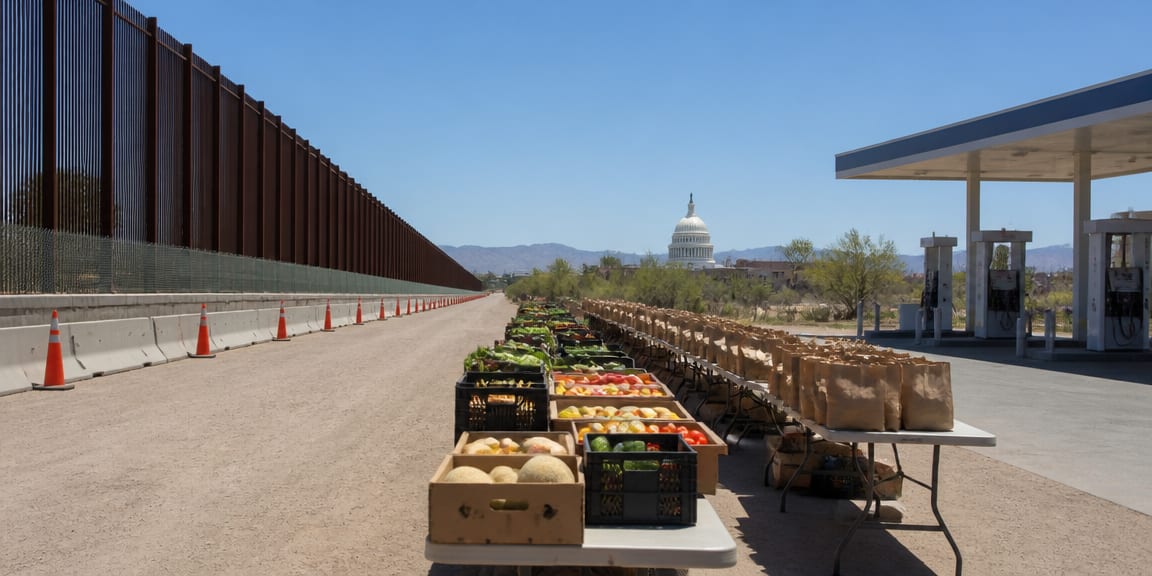
In the final week before US midterm elections, multiple outlets report sustained voter anger in Arizona at Trump administration cuts to food assistance, with France24 and the Bangkok Post documenting increased reliance on charity distributions. Clarin links those cuts—and broader inflation and cost-of-living increases—to mobilization against the president’s party, noting some candidates distancing themselves from unpopular policies and affected residents calling for a protest vote. On the campaign, Fox News describes Trump “barnstorming” across battlegrounds while acknowledging adverse fundamentals: persistent inflation, high gas prices tied to an unpopular war with Iran, and weakening approval. Telesur cites Decision Desk polling averages that give Democrats a 79% chance to win the House and 57% for the Senate. Immigration policy is a parallel flashpoint: La Repubblica reports Hispanic voters turning away from Trump; Clarin details deportations and confrontations; and another Clarin piece describes migrants now settling in Mexico after the closure of a migratory mechanism. The Bangkok Post portrays a quieter border under Trump but lingering dissatisfaction.
Why It Matters
The reporting underscores how domestic policy retrenchment can produce rapid political feedback: reductions to food support are reverberating through household budgets and local charity systems, with electoral consequences in swing states. Control of Congress will determine whether these cuts persist or are revisited through appropriations and oversight, shaping the safety net and administrative latitude on social programs. Immigration enforcement is also feeding cross-border realignments. Clarin’s account of migrants establishing roots in Mexico after US pathway closures points to a de facto redistribution of integration burdens onto Mexican localities and service providers. For international actors, the cost-of-living channel remains salient: Fox News and Telesur link higher fuel prices and inflation to the war with Iran, tying global energy dynamics to US electoral incentives. Outcomes here affect legislative bandwidth for foreign policy, border cooperation with Mexico, and the trajectory of federal support to NGOs and local governments managing poverty and migration.
Diverging Narratives
Two axes of divergence run through the coverage. On electoral direction, Telesur leans on polling that positions Democrats to capitalize on discontent, while Fox News centers Trump’s energetic travel schedule and resolve to “defy” unfavorable history, even as it acknowledges inflation, gas prices tied to an unpopular war with Iran, and declining approval as headwinds. On constituency behavior, La Repubblica reports that only 24% of Hispanic voters approve of Trump, with seven in ten saying they have been harmed and Democrats holding a 27-point advantage, yet it also notes that Italian Americans appear to be sticking with the president, reflecting uneven shifts across ethnic blocs.
Immigration coverage similarly contrasts frames. The Bangkok Post depicts a border that is “quiet” under Trump yet leaves “few people…happy,” pointing to dissatisfaction despite reduced crossings. Clarin’s reporting emphasizes the political backlash to deportations and confrontations, and describes a structural outcome: migrants stranded by policy closures are now settling in Mexico. Together, these accounts show agreement on the salience of economic and migration policies but differ on whether late-stage campaigning or structural discontent is more determinative.
What Happens Next
Three decision points emerge. First, congressional control: Telesur’s Decision Desk probabilities suggest Democrats could capture at least the House, while Fox News describes Trump intensifying rallies to blunt those odds. Analysts should watch late polling in battlegrounds and turnout among voters directly affected by food aid cuts, which Clarin and France24 identify as especially mobilized. Second, policy recalibration: Clarin notes some candidates are distancing from unpopular measures; if Democrats gain leverage, appropriations and oversight could revisit food assistance, whereas Republican retention would likely preserve current trajectories. Third, immigration management: the Bangkok Post’s “quiet but unhappy” border and Clarin’s accounts of migrants rooting in Mexico set up choices on enforcement intensity and legal pathways. Indicators include whether Republican messaging further fractures on immigration, as Clarin reports, and whether Mexican authorities and communities expand integration responses to a population no longer transiting to the US.