
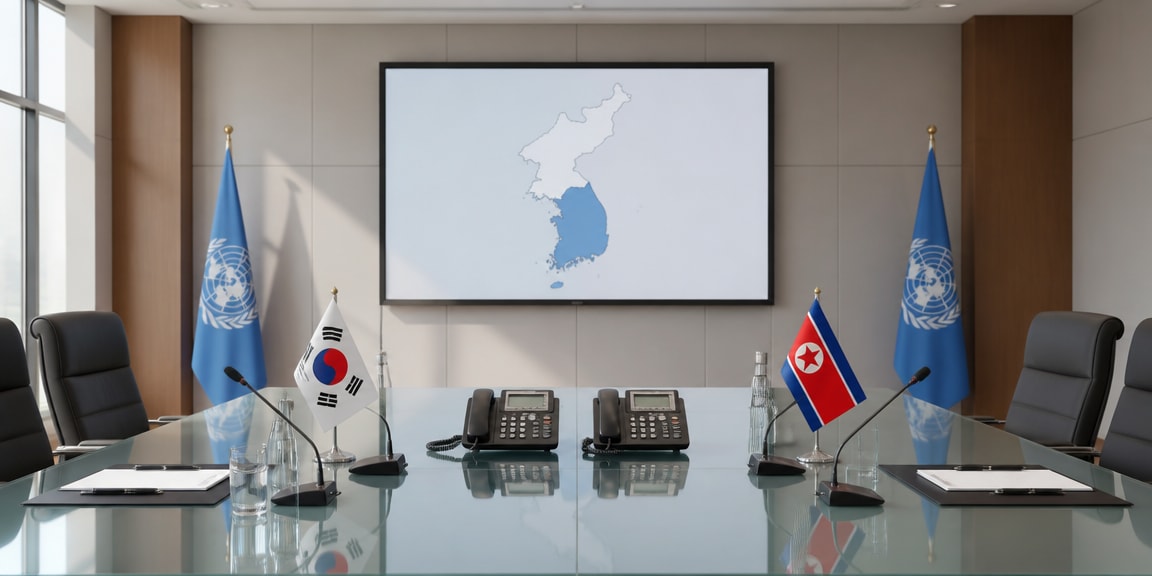
North Korea fires short-range ballistic missiles off east coast amid landmine dispute with South Korea
Narrative Snapshot
Across outlets, there is clear convergence that North Korea launched short-range ballistic missiles off its east coast, with reporting rooted in announcements from South Korea’s defence ministry. Several accounts refrain from quantifying the salvo, while France24 cites “around a dozen,” underscoring early-stage information asymmetries around scale and intent. Geographic terminology also varies by outlet, with Sky News referring to the Sea of Japan and the Bangkok Post using East Sea, a familiar divergence in regional nomenclature rather than substance.
Where coverage diverges is in the framing of context and stakes. The Hindu and Al Jazeera foreground the contested landmine incident, noting Seoul’s accusation, Pyongyang’s denial, and a North Korean warning of retaliation if provoked. France24 and the Bangkok Post stress timing against diplomacy, emphasizing that the launches followed South Korea’s proposal for military talks and, per France24, came amid stepped-up North Korean weapons testing. Sky News places the launches within a broader arc of rising tensions without elaborating on the landmine dispute or talks.
What Happened
South Korea’s defence ministry reported that North Korea fired short-range ballistic missiles off the country’s east coast on Thursday. France24 put the number at “around a dozen,” while other outlets did not specify. The launches occurred as a row intensified over a September 21 landmine explosion that injured three South Korean soldiers. Seoul accuses Pyongyang of planting mines south of the Military Demarcation Line; North Korea denies responsibility and has warned of retaliation if provoked, according to The Hindu and Al Jazeera. The tests also followed South Korea’s recent offer of military talks, highlighted by France24 and the Bangkok Post, with France24 noting North Korea has stepped up weapons tests in recent weeks. Sky News described the missiles as entering the Sea of Japan, while the Bangkok Post referred to the East Sea.
Why It Matters
The episode tests whether crisis management mechanisms between the Koreas can function when deterrence signaling intensifies. South Korea’s proposal for military talks is a conventional channel to de-escalate incidents along and around the Military Demarcation Line, yet France24 reports the testing tempo has increased, and the launches occurred despite the outreach, per France24 and the Bangkok Post. That juxtaposition raises questions about the immediate viability of dialogue and the risk that tactical incidents, such as the September landmine explosion, can entrench adversarial narratives before verification or talks proceed. For decision-makers, the interaction between rapid military signaling and limited, contested facts complicates rules of engagement, incident attribution, and the sequencing of diplomacy. The North’s warning of retaliation if provoked, reported by The Hindu, further sharpens the need for calibrated messaging and disciplined force posture to avoid inadvertent escalation.
Diverging Narratives
A core dispute runs through all accounts: attribution for the September 21 landmine blast. Seoul alleges North Korean responsibility, while Pyongyang denies involvement and warns of retaliation if provoked, as reported by The Hindu and Al Jazeera. That unresolved question shapes how the launches are interpreted—either as pressure amid an ongoing border confrontation or as part of a separate testing pattern.
Outlets differ on emphasis. France24 and the Bangkok Post frame the launches against Seoul’s recent offer of military talks, implying a stress test for inter-Korean dialogue. France24 alone quantifies “around a dozen” missiles and adds that weapons testing has recently intensified, providing context on pace and volume that other reports do not. Sky News focuses on the fact of the launches within rising tensions, without the landmine dispute or talks. Terminology also diverges on geography—Sea of Japan in Sky News versus East Sea in the Bangkok Post—reflecting regional naming conventions rather than differing assessments of the event itself.
What Happens Next
Two decision points emerge from the coverage. First is whether North Korea engages with South Korea’s proposal for military talks, reported by France24 and the Bangkok Post. Uptake would signal space for de-escalation around the border dispute; continued testing or silence would indicate the primacy of military signaling over dialogue. Second is how the landmine incident is handled. The Hindu and Al Jazeera note North Korea’s denial and warning of retaliation if provoked, setting a high bar for public acknowledgment or joint inquiry. Movement toward any fact-finding or mutually acceptable framing would ease pressure; entrenched positions would sustain friction.
Analysts should watch for official statements on talks, the tempo of additional launches given France24’s note on stepped-up testing, and any shift in rhetoric around “provocation” thresholds referenced by The Hindu. Changes on these fronts will define whether channels for risk reduction can open.