
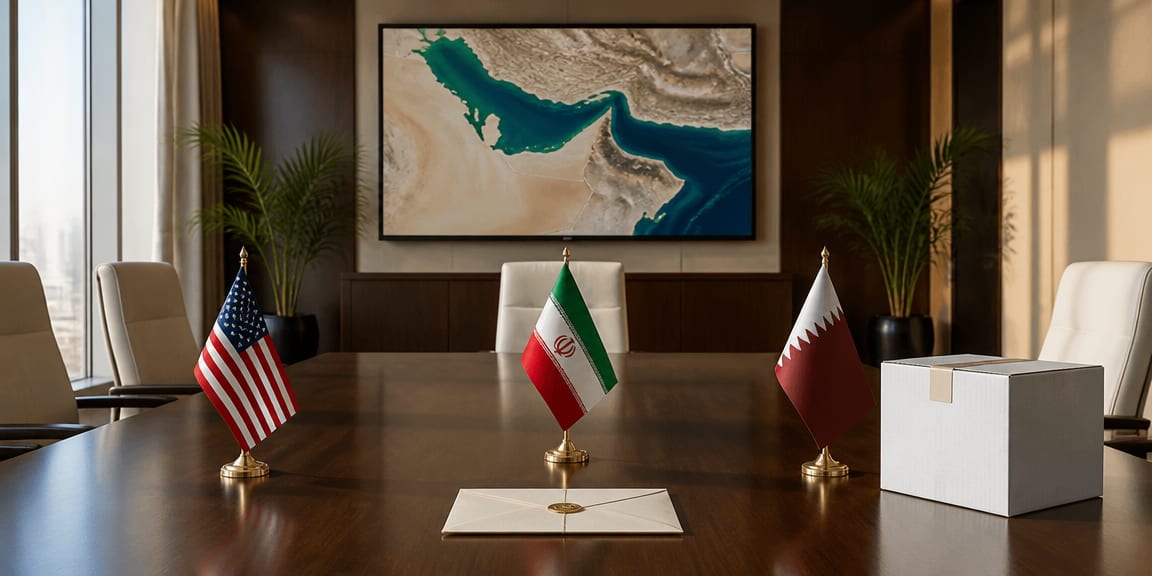
Reports of Vance letter to Iran seek restart of talks; Tehran acknowledges receipt but no reply
Narrative Snapshot
Across outlets, there is broad acknowledgment that US Vice President JD Vance sent a letter to Iran’s Supreme National Security Council secretary, Mohsen Rezaei, and that Tehran has received it but not yet replied. Iranian state-linked reporting underscores this procedural point while disputing media portrayals of the letter’s content. In contrast, a cluster of international outlets emphasize that the outreach sought to quickly restart diplomacy, including on nuclear issues, and that Vance would lead a US delegation if talks resume.
The sharpest divergence lies in how the outreach is framed. Haaretz attributes the initiative to Donald Trump and links it to averting a potential US attack in the coming weeks, while CGTN reports Trump denied directing Vance and cast the contact as focused on medical supplies. Iranian coverage highlights Tehran’s insistence on its own conditions and rejects disruptive positions. The Guardian goes further than others by detailing terms tied to nuclear commitments, sanctions relief, and reopening the Strait of Hormuz, while Middle East Eye places Vance’s remarks within a broader pledge to avoid a “forever war.”
What Happened
Multiple outlets report that Vice President JD Vance sent a letter to Mohsen Rezaei, secretary of Iran’s Supreme National Security Council. The Guardian says it followed predominantly Qatari mediation and was sent on Sunday, offering to restart diplomacy on the basis that Tehran make early commitments on its nuclear program as part of a process leading to the opening of the Strait of Hormuz within seven days in exchange for US sanctions relief. Al Jazeera English reports the letter pushed for a swift return to peace talks with Vance slated to lead the US delegation. Clarin adds that the outreach proposed immediately resuming global conversations, including on Iran’s nuclear program. Haaretz links the effort to averting a possible US attack and reports it was at Trump’s behest. CGTN, citing Trump, reports he denied directing Vance and said the outreach concerned medical supplies. IRNA and TASS, referencing Tasnim, say Iran has received the letter, has not responded, and considers media speculation about its content inaccurate.
Why It Matters
The reported letter implicates several structural files at once: nuclear commitments at the outset of renewed talks, the sequencing of sanctions relief, and the operational status of the Strait of Hormuz, which The Guardian reports is explicitly tied to the proposed timetable. It also suggests active third-party facilitation, with The Guardian citing predominantly Qatari mediation. For decision-makers, the episode highlights the degree to which US-Iran engagement is being routed through ad hoc channels and tight timelines while Iranian officials publicly assert that any steps must conform to Tehran’s defined framework, as reported via Tasnim and IRNA.
The competing US narratives—Haaretz’s reporting that the move was at Trump’s direction and linked to averting a near-term strike, versus CGTN’s account of Trump denying he ordered it and framing it around medical supplies—signal potential constraints on publicly owning a diplomatic track. Vance’s assurance, reported by Middle East Eye, that Trump will not allow a “forever war” shapes expectations about the duration and scope of any confrontation even as outlets describe a compressed decision window.
Diverging Narratives
Outlets differ on authorship, intent, and substance. Haaretz reports Vance acted at Trump’s behest to revive talks and avert a US attack in the coming weeks, aligning with CGTN’s citation of Wall Street Journal reporting that Vance was probing whether enough common ground exists to dissuade Trump from ordering a “short, intense attack.” Trump, however, told reporters he did not direct Vance and said the contact concerned medical supplies, according to CGTN. Al Jazeera English and Clarin emphasize a push for immediate peace talks, with Al Jazeera adding that Vance would head the US delegation and Clarin noting nuclear issues are central.
On content specifics, The Guardian supplies the most detailed terms: early nuclear commitments by Tehran, a seven-day process to reopen the Strait of Hormuz, and US sanctions relief. Iranian official and semi-official outlets push back on such portrayals: IRNA quotes a senior security source saying Iran has not responded and that media claims about contents are inaccurate; Tasnim, cited by CGTN and TASS, confirms receipt, says Tehran awaits US movement to meet its conditions, and rejects any position that disrupts Iran’s definitive framework. Tehran Times characterizes the Iranian reaction as calm and conditional amid contradictory narratives in Washington, while Middle East Eye’s focus on avoiding a “forever war” reflects a US political framing distinct from the operational details highlighted elsewhere.
What Happens Next
The immediate decision point is Tehran’s reply. If Iran accepts the structure reported by The Guardian—initial nuclear commitments linked to reopening the Strait of Hormuz within seven days in return for sanctions relief—talks could move quickly with Vance leading a US delegation as Al Jazeera reports. If, as Tasnim indicates, Tehran insists Washington first meet Iran’s conditions and rejects disruptive positions, prospects for rapid de-escalation narrow and the diplomatic track lengthens or stalls.
A second hinge is the US policy line. Should the White House maintain Trump’s framing to CGTN of a medical-supplies outreach and denial of directing Vance, public space for overt negotiations may remain constrained. Conversely, movement toward the peace-talks frame reported by Haaretz, Al Jazeera, and Clarin would signal readiness to operationalize the channel.
Finally, the risk window identified by Haaretz and in CGTN’s summary of Wall Street Journal reporting—an attack “in the coming weeks”—makes official statements from both capitals, and any confirmation of Qatari facilitation noted by The Guardian, key indicators of whether a diplomatic or military path is gaining traction.