
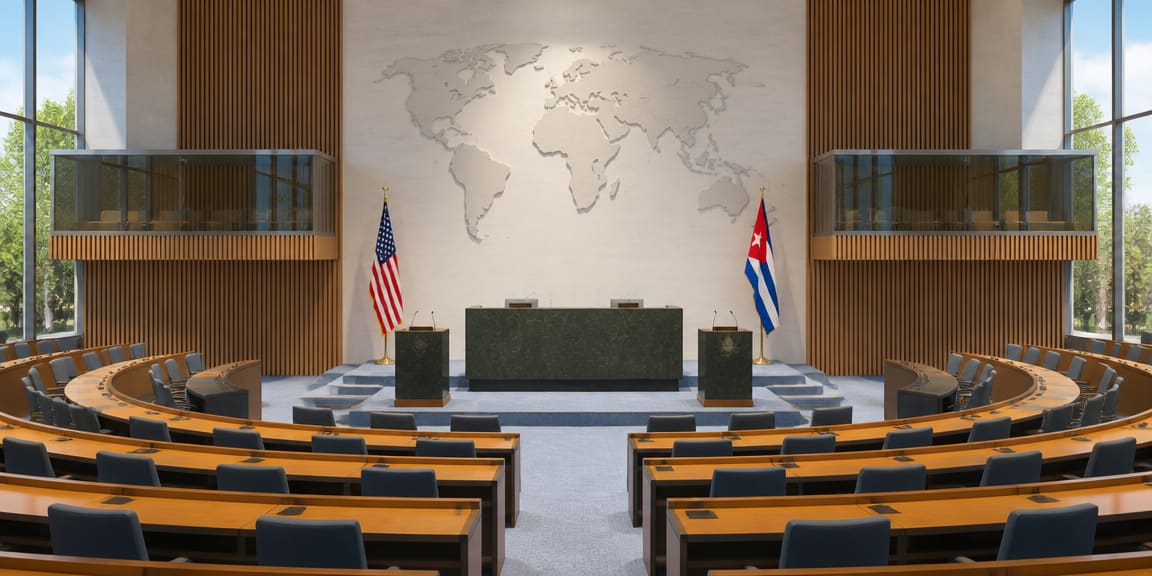
UN General Assembly Again Urges End to U.S. Embargo on Cuba, Backing Falls to 130–17–25
Narrative Snapshot
Across outlets, there is consensus on the outcome and its durability, but emphasis diverges on what the slimmer margin signifies and why it occurred. Chinese and Global South–leaning coverage underscores the measure’s legal framing and broad continuity: CGTN details the resolution’s language censuring the extraterritorial reach of U.S. laws such as Helms-Burton and calling for their repeal, and spotlights Beijing’s call to immediately end the embargo as a violation of sovereign equality (CGTN, Oct 28, 29). Telesur amplifies Havana’s message of “victory” against “unprecedented” U.S. pressure and centers humanitarian and sectoral impacts Cuba attributes to sanctions, including oncology shortfalls and a tourism collapse (Telesur English, Oct 27, 28, 30).
Several outlets focus on the shift in vote dynamics. The Bangkok Post describes the outcome as Cuba’s weakest UN backing in three decades, while the South China Morning Post links the increased abstentions and no-votes to a U.S. campaign to influence delegations, noting support fell from “more than 160” last year to 130 (Bangkok Post, Oct 28; SCMP, Oct 28). Regional papers document national positions: Folha de S.Paulo records Brazil’s affirmative vote; The Hindu confirms India’s; AllAfrica highlights Nigeria in favor (Folha de S.Paulo, Oct 28; The Hindu, Oct 29; AllAfrica, Oct 29). Clarin and SCMP both foreground reported U.S. pressure around the vote (Clarin, Oct 26; SCMP, Oct 28).
U.S.-Cuba relations form the subtext. The New York Times frames Washington’s approach as the most intense pressure campaign in decades and reports a post-debate expulsion of a Cuban diplomat after a UN confrontation, situating the vote in a broader escalation (NYT, Oct 29; NYT, Oct 29). Tehran Times places the embargo within a wider critique of unilateral sanctions at the UN, with Iran’s envoy calling them “economic terrorism” and urging an end to Washington’s Cuba policy (Tehran Times, Oct 28).
What Happened
The UN General Assembly adopted, for the 34th consecutive year, a nonbinding resolution calling for an end to the U.S. economic, commercial, and financial embargo on Cuba, with 130 votes in favor, 17 against, and 25 abstentions (Folha de S.Paulo, Oct 28; CGTN, Oct 29). The text cites concern over the extraterritorial effects of U.S. laws, including the 1996 Helms-Burton Act, and urges states applying such measures to repeal or invalidate them (CGTN, Oct 29). Support declined from “more than 160” votes last year, with increased abstentions, which SCMP links to a U.S. effort to sway delegations (SCMP, Oct 28). India and Nigeria voted in favor; the United States and Israel opposed (The Hindu, Oct 29; AllAfrica, Oct 29). Telesur reported that several Latin American governments joined Washington in voting no (Telesur English, Oct 28). Cuba publicly thanked supportive states and denounced U.S. pressure (CGTN, Oct 29; Telesur English, Oct 30). The NYT reported heightened bilateral tensions, including a U.S. expulsion of a Cuban diplomat after a UN altercation (NYT, Oct 29).
Why It Matters
The vote tests the resilience of a long-standing UN norm opposing unilateral coercive measures and extraterritorial sanctions. By explicitly condemning the cross-border reach of statutes like Helms-Burton and urging their repeal, the resolution reasserts principles of sovereign equality and freedom of trade and navigation that many states invoke to contest secondary sanctions and judicial measures beyond national jurisdiction (CGTN, Oct 29; CGTN, Oct 28). Yet the reduced margin—framed as the weakest in decades—signals how targeted diplomatic campaigns can narrow consensus in the General Assembly, even on recurring agenda items (Bangkok Post, Oct 28; SCMP, Oct 28).
For decision-makers, the outcome spotlights competing sanction norms, the space for U.S. leverage in multilateral forums, and the capacity of small and middle powers to calibrate positions through abstention. It also keeps on the record claims of humanitarian and macroeconomic harm that Cuba and its supporters will continue to marshal in other UN venues and bilateral dialogues (Telesur English, Oct 27, 30; Clarin, Oct 28).
Diverging Narratives
Legal and humanitarian framings run in parallel but with different weight across sources. China’s UN envoy casts the embargo and broader unilateral sanctions as illegal and contrary to sovereign equality, calling for an immediate end to U.S. pressure (CGTN, Oct 28). CGTN also highlights the resolution’s censure of extraterritoriality, seeking to universalize the issue beyond the Cuba–U.S. dyad (CGTN, Oct 29). Telesur elevates claims of concrete harm, reporting a collapse in pediatric leukemia survival rates below 50% due to difficulties sourcing medicines and diagnostics, and citing national statistics indicating a 65.1% drop in international arrivals amid an “energy blockade” and suspended routes (Telesur English, Oct 27, 30).
Coverage tied to U.S. policy stresses the coercive context rather than legal argument. The New York Times characterizes current U.S. measures as the most intense pressure campaign in decades and reports an expulsion of a Cuban diplomat after a UN clash, illustrating hardening bilateral moves (NYT, Oct 29; NYT, Oct 29). SCMP emphasizes reported U.S. lobbying that coincided with more abstentions and no-votes; Bangkok Post focuses on the historical weakness of the pro-Cuba tally (SCMP, Oct 28; Bangkok Post, Oct 28). Clarin amplifies Havana’s economic-loss figure—daily damages exceeding $22.9 million—while also noting U.S. pressure around the vote (Clarin, Oct 28; Clarin, Oct 26). Iran’s state-linked coverage folds the embargo into a broader denunciation of unilateral sanctions as “economic terrorism” (Tehran Times, Oct 28).
What Happens Next
Three decision points emerge from the record. First, whether Washington sustains or escalates its diplomatic and economic pressure: SCMP reports pre-vote lobbying, and the NYT documents a post-debate expulsion of a Cuban diplomat, both indicators to watch for continued or intensified actions at the UN and bilaterally (SCMP, Oct 28; NYT, Oct 29). Second, whether member states adjust future UNGA votes or positions under competing pressures: the shift from “more than 160” affirmative votes last year to 130 suggests abstentions are a key barometer of state hedging; analysts should track which capitals move between “yes,” “abstain,” and “no” (SCMP, Oct 28; Bangkok Post, Oct 28).
Third, whether states respond to the resolution’s call to refrain from and repeal extraterritorial measures: any legislative, judicial, or policy steps announced in capitals invoking that language would signal downstream effects of the vote (CGTN, Oct 29). Advocacy networks are active—former CARICOM leaders publicly pressed governments to back the resolution ahead of the vote—so observers can assess if such appeals map onto subsequent state behavior in multilateral and regional forums (Telesur English, Oct 25).