
U.S. clears proposed $2.1 billion sale of 500 Patriot interceptors to Ukraine as Kyiv presses for faster delivery
Narrative Snapshot
Across outlets, there is broad agreement on the scale and form of the decision: a U.S. State Department approval for a proposed $2.1 billion foreign military sale of 500 Patriot PAC-3 interceptors to Ukraine, with Congressional review still pending. European and Ukrainian reporting centers on timing. Le Monde underscores that Congress must ratify the deal and highlights President Volodymyr Zelensky’s warning that deliveries would occur only “in a few years,” a concern echoed by ANSA’s focus on Kyiv’s need for protection “this winter.” The Times of Israel goes further, citing expectations that deliveries would slip into the 2030s and noting Kyiv’s push for the Pentagon to draw from existing U.S. stocks and backfill later.
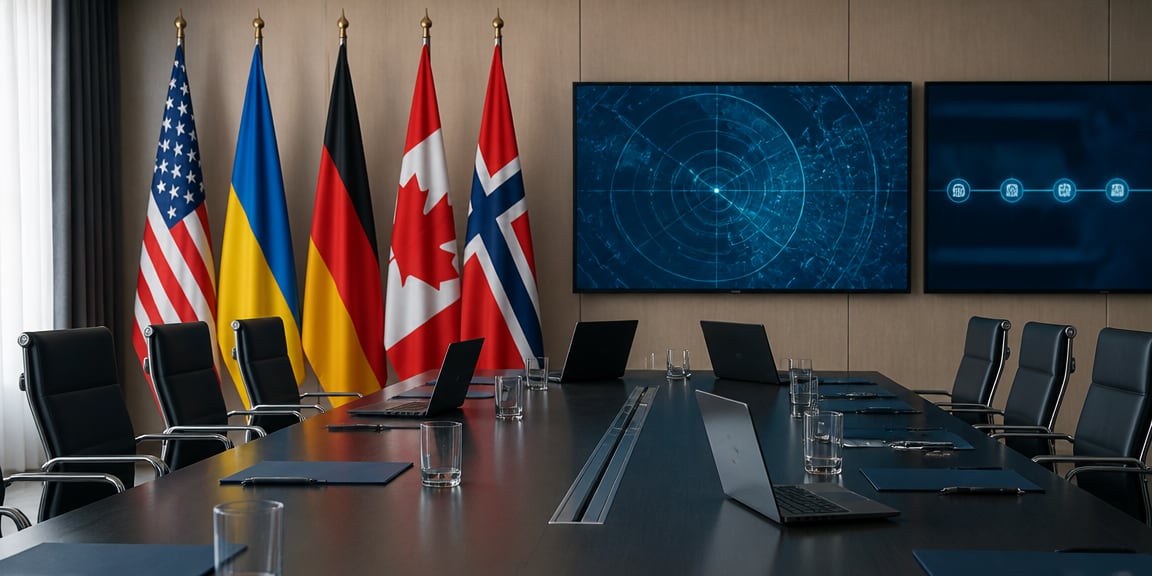
Coverage also differs on financing and political framing. RT and Telesur emphasize that Germany, Canada, and Norway will finance the purchase, quoting the U.S. assertion that “no U.S. funds are involved” and that the sale will not adversely affect U.S. defense readiness. By contrast, NBC News presents a straightforward account of the approval, while Folha de S.Paulo frames it as one of the most significant defensive measures of the Trump administration. RFE/RL, The Hindu, and The Japan Times situate the approval against weeks of Ukrainian complaints about dwindling interceptor supplies and intensified Russian aerial attacks. The Toronto Star (AP) adds Kyiv’s accusation of a Pentagon holdup, while the Kyiv Independent stresses the procedural step—an approval toward a possible sale—with a 30-day Congressional review and multi-year manufacturing timelines.
What Happened
The U.S. State Department approved a proposed foreign military sale to Ukraine of 500 Patriot PAC-3 (including PAC-3 MSE, per Ukrainian reporting) air-defense interceptors valued at roughly $2.1 billion, according to multiple outlets. The decision, taken by the Trump administration, advances the package to Congress for review, which generally runs 30 days for Ukraine, the Kyiv Independent notes. Le Monde reports that the deal requires Congressional ratification. Zelensky publicly thanked Washington but warned that deliveries would occur only in “a few years,” and ANSA quotes his appeal for an “immediate solution” for the coming winter. The Times of Israel reports missiles may not arrive until the 2030s and that Kyiv is urging provision from existing U.S. stocks with later backfill. RT and Telesur say Germany, Canada, and Norway will finance the package, with the State Department stating no U.S. funds are involved and no adverse impact on U.S. readiness; Lockheed Martin is identified as the principal contractor.
Why It Matters
The approval highlights a recurring gap between battlefield urgency and the timelines of U.S. foreign military sales and defense-industrial production. The Kyiv Independent’s reminder that complex systems can take years to manufacture, combined with Zelensky’s warnings carried by Le Monde and ANSA, underline a structural lag that shapes Ukraine’s air-defense planning under increased Russian aerial attacks, as described by RFE/RL. The financing profile—Germany, Canada, and Norway covering costs, as emphasized by RT and Telesur—points to evolving burden-sharing arrangements in which European partners fund U.S.-made capabilities for Ukraine.
Procedurally, Congressional review remains a key gate in U.S. arms transfers, reinforcing institutional checks even when executive-branch approvals are in place. Substantively, Kyiv’s pursuit of queue swaps with partners (Ukrinform) and backfill arrangements with the Pentagon (The Times of Israel) illustrates allied coordination mechanisms that can re-sequence deliveries within existing industrial constraints. Telesur’s reference to tensions over U.S. sanctions policy toward Russia places the sale within a broader policy setting where military assistance interacts with sanctions diplomacy.
Diverging Narratives
Timelines are the sharpest point of divergence. Zelensky’s message, amplified by Le Monde and ANSA, is that deliveries would occur only “in a few years,” while the Times of Israel reports expectations of arrivals slipping into the 2030s. The Kyiv Independent avoids specific dates but underscores that manufacturing and delivery “can take years,” anchoring the uncertainty in process rather than prediction. That uncertainty feeds into competing depictions of urgency. RFE/RL frames the sale as “critically needed” amid increasing Russian strikes, while The Japan Times and The Hindu note weeks of Ukrainian complaints about dwindling interceptor stocks; RT cites a CNN report that Kyiv had exhausted its U.S.-made interceptor stockpile.
Financing and domestic impact are presented through different lenses. RT and Telesur foreground statements that no U.S. funds are involved and that U.S. readiness will not be adversely affected, information not highlighted in U.S. mainstream coverage like NBC News. Political process also varies by outlet: the Toronto Star (AP) references Kyiv’s accusation of a Pentagon holdup, suggesting bureaucratic friction, whereas Folha de S.Paulo characterizes the move as a significant defensive step within the Trump administration, and the Kyiv Independent stresses the proposal’s preliminary status and Congressional oversight.
What Happens Next
Three decision points emerge from the reporting. First, U.S. Congressional review—generally 30 days for Ukraine, per the Kyiv Independent—will determine whether the proposed sale advances or encounters conditions or delay, as flagged by Le Monde’s emphasis on ratification. Second, the Pentagon’s response to Kyiv’s request to draw interceptors from existing U.S. stocks and backfill later, reported by the Times of Israel, will shape any near-term mitigation of Ukraine’s air-defense gap. Third, allied coordination on financing and delivery sequencing bears watching: RT and Telesur report that Germany, Canada, and Norway will fund the purchase, while Ukrinform says Kyiv will seek to “swap places” in the delivery queue with partners to accelerate arrival. Analysts should track signs of a backfill arrangement, any partner-agreed queue adjustments, and whether U.S. officials signal an accelerated schedule versus the multi-year timelines referenced across outlets.