
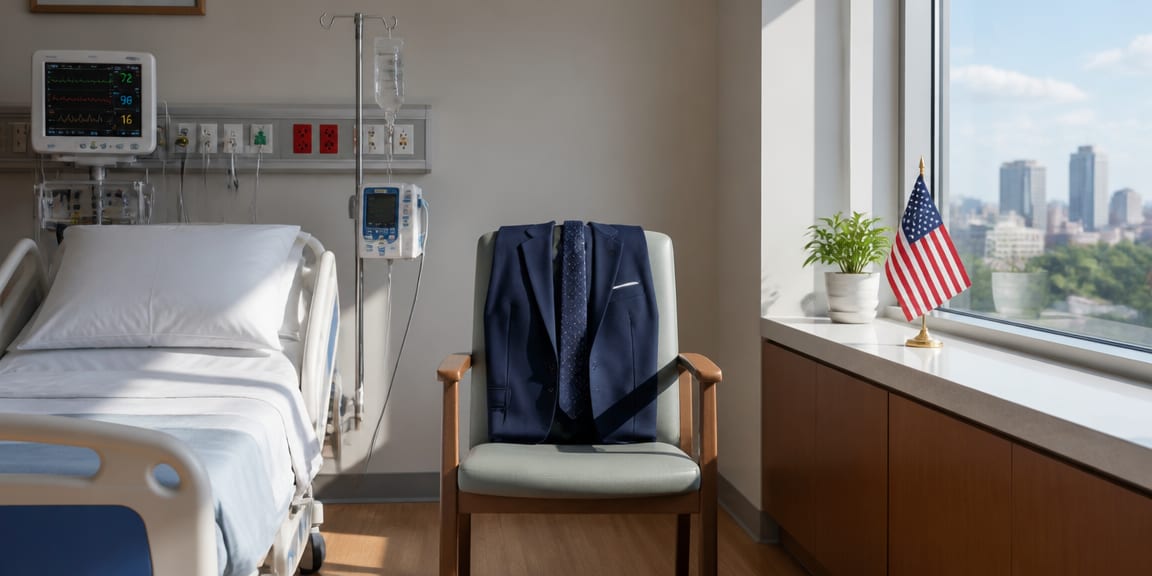
Connecticut Senator Chris Murphy hospitalized after stroke; office says he is awake and alert
Narrative Snapshot
Across outlets, the reporting converges on a narrow set of confirmed facts attributed to Murphy’s chief of staff: a stroke on Saturday, initial symptoms of arm numbness at his son’s hockey game, hospitalization and transfer to Johns Hopkins for monitoring, and an “awake and alert” status with optimism for recovery. U.S. domestic outlets largely foreground his condition and immediate care, while international coverage situates the episode in the electoral calendar and his longer-term political profile.
Two emphases recur with slight regional variation. U.S. pieces note his recent activity stumping for Democrats even though he is not on the ballot; the New York Times and Clarin additionally flag that he has been viewed as a potential 2028 presidential contender. Folha de S.Paulo highlights the timing “a few days before the midterm elections,” accenting operational implications for campaign surrogacy. Al Jazeera frames his prominence as a “high-ranking” Democrat and “fierce Trump critic,” a characterization absent from the U.S. and Canadian copy.
What Happened
Murphy, 53, experienced numbness in his arm while attending his son’s hockey game on Saturday and was taken to a local hospital, according to his chief of staff, Allison Herwitt. He was subsequently transferred to Johns Hopkins for further monitoring and treatment. Multiple outlets, citing Herwitt’s statement, report that he suffered a stroke, is “awake and alert,” is responding well to treatment, and that doctors are optimistic about his recovery (Fox News; Toronto Star/AP; The Guardian). The New York Times notes he has been campaigning for fellow Democrats and is viewed by some as a potential presidential candidate in 2028. Coverage underscores that he is not up for re-election in the midterms (Al Jazeera), though he had been active on the trail (Clarin; New York Times). No outlet reports a cause, detailed prognosis, or discharge timeline.
Why It Matters
The incident touches several structural dynamics at once. First, it intersects with the final sprint to U.S. midterm elections, where parties rely on high-profile surrogates to mobilize voters; multiple outlets report Murphy had been campaigning for Democrats despite not being on the ballot (New York Times; Clarin). Second, the New York Times and Clarin note his positioning as a potential 2028 presidential contender, underscoring how health of prominent figures can influence perceptions of a party’s future bench. Third, Al Jazeera’s framing of Murphy as a “high-ranking” Democrat and “fierce Trump critic” signals his role in partisan narrative contests, which shape fundraising, media attention, and surrogate deployment in the near term. While the reporting emphasizes medical stability and optimism, the immediate operational question for party strategists is redeploying surrogate capacity in the final campaign days, particularly highlighted by Folha de S.Paulo’s emphasis on the proximity to Election Day.
Diverging Narratives
Differences across coverage center on framing rather than substance. U.S. outlets emphasize medical status and logistics: Fox News carries the most operational detail, including the initial symptom, local hospital admission, transfer to Johns Hopkins, and direct quotations from Allison Herwitt indicating optimism and progress. The Guardian mirrors the core facts with a succinct focus on the hospitalization and symptom onset. The Toronto Star, via the Associated Press, offers a brief health update without broader political context.
By contrast, international outlets accentuate timing and stature. Folha de S.Paulo anchors the episode in the midterm calendar, emphasizing that the stroke occurred just days before voting. Clarin and the New York Times add that Murphy is seen as a potential 2028 presidential candidate, drawing a line to longer-term party dynamics. Al Jazeera characterizes him as “high-ranking” and a “fierce Trump critic,” underscoring partisan positioning. Across all outlets, unanswered questions remain about the stroke’s cause, extent, recovery timeline, and whether he will resume immediate campaign activity; no source provides specifics beyond the office’s optimistic statement.
What Happens Next
Near-term decisions revolve around medical clearance and public scheduling. Outlets report that Murphy remains hospitalized for monitoring at Johns Hopkins and is responding well to treatment; his office, via Chief of Staff Allison Herwitt, is the primary source of updates (Fox News; Toronto Star/AP). Analysts should watch for formal statements on discharge, any temporary curtailment or resumption of campaign appearances in the midterm run-up (Folha de S.Paulo’s timing context), and indications of when he returns to regular duties.
Medium-term attention, raised by the New York Times and Clarin, concerns whether and how he re-engages in national political activity associated with figures viewed as potential 2028 contenders. Observable indicators include the pace of his return to public events and whether his office provides guidance on future travel and engagements. All outlets stress optimism but offer no timetable, making authoritative medical and office communications the key signals to track.