
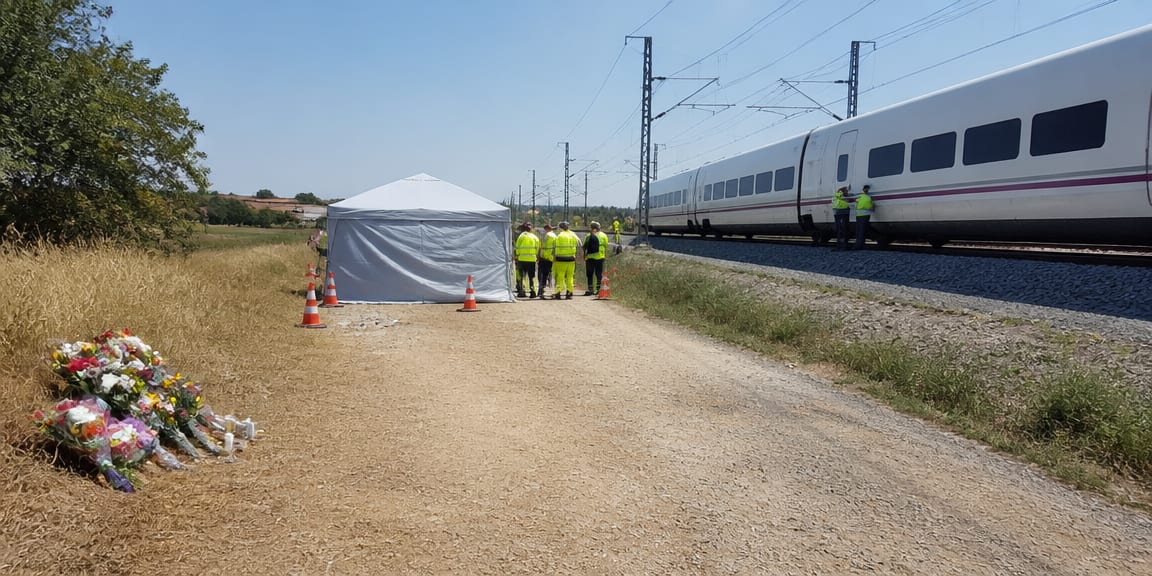
Spain high-speed train collision near Toledo kills 69; identification advances as international victims named and political fallout mounts
Narrative Snapshot
Across outlets, the through-line is the scale of loss and the painstaking identification effort, but emphases diverge. UK coverage centers on named victims and community impact, with Sky News and the BBC highlighting University of Cambridge scientist Marta Shahbazi and tributes from her laboratory. The Guardian widens the aperture to the cross-border dimension, reporting that the dead include 54 Spaniards and citizens from the US, Canada, Japan, Argentina, Mexico, Tunisia and the Czech Republic, while underscoring the slow, forensic process of identifying remains.
Latin American and Chinese outlets frame systemic and political stakes more explicitly. Clarin reads the crash as a blow to Pedro Sánchez’s electoral positioning, arguing it undercuts his competence narrative. CGTN depicts a crisis of confidence in Spain’s high-speed rail, quoting passengers who liken travel to “Russian roulette” and describing street protests, calls for resignations, and a forceful police response. Italian agency ANSA and Japan Times keep a narrow operational focus: ANSA tracks identification and hospitalizations; Japan Times confirms one Japanese fatality and notes another person believed to be among the unidentified. Folha de S.Paulo reports at least 12 foreign dead, a tally that, alongside The Guardian’s breakdown, signals that nationality counts remain fluid as identifications continue.
What Happened
A collision between high-speed trains near Urda, in the province of Toledo, on Wednesday 28 October left 69 people dead, according to multiple outlets. By 1 November, ANSA reported that 56 of the 69 victims had been identified, with 34 people still hospitalized, including 15 in intensive care. The Guardian describes the disaster as one of Europe’s deadliest rail incidents this century and lists foreign victims among the dead: four US citizens and one each from Canada, Japan, Argentina, Mexico, Tunisia and the Czech Republic, alongside 54 Spaniards. Folha de S.Paulo similarly reports at least 12 foreigners among the fatalities. UK outlets name University of Cambridge scientist Marta Shahbazi among those killed, with tributes cited by the BBC. Japan Times confirms one Japanese fatality and says another Japanese citizen is believed to be among the unidentified. CGTN reports protests in Madrid, police dispersals, and a two-hour press conference by Transport Minister Óscar Puente; neither he nor Prime Minister Pedro Sánchez has resigned.
Why It Matters
Coverage points to three layers of significance. First is public trust and system safety: CGTN says this is the second multiple-fatality high-speed rail accident in Spain in less than ten months and reports commuters questioning whether rail remains the safest option, a notable shift for a network long treated as a national success. Second is state capacity under stress: ANSA and The Guardian detail a resource-intensive identification process and prolonged hospitalizations, while CGTN’s account of protests and police response underscores the demands on crisis communication and public order. Third is political exposure: Clarin argues the crash complicates Sánchez’s campaign agenda and raises questions of governmental competence, while calls for ministerial resignations reflect immediate accountability pressures reported by CGTN. The international casualty profile documented by The Guardian, Folha de S.Paulo, Japan Times, Sky News and the BBC extends the stakes to consular coordination and foreign scrutiny of Spain’s response.
Diverging Narratives
Outlets concur on the death toll but differ in what they foreground and how granular the cross-national accounting is. The Guardian enumerates 54 Spaniards and named foreign nationalities among the dead, while Folha de S.Paulo reports at least 12 foreigners; Japan Times adds that one Japanese victim is confirmed and another is believed to be among those not yet identified. These variances, alongside ANSA’s note that identifications are still in progress, suggest a moving baseline rather than contradiction. The interpretive frame also splits. UK reporting emphasizes individual loss, notably the death of Cambridge scientist Marta Shahbazi and community tributes, whereas CGTN casts the event as part of a pattern, quoting passengers who describe riding as “Russian roulette” and detailing street anger, demands for resignations, and a robust police response. Clarin situates the crash within Spain’s electoral contest, arguing it damages Sánchez’s standing. ANSA stays strictly procedural, updating identification and medical figures without political framing.
What Happens Next
Two tracks will shape the near term. On casualty accounting, authorities are still identifying victims, per ANSA and The Guardian; nationality tallies differ across outlets and Japan Times reports a possible second Japanese victim among the unidentified. Analysts should watch for updated official lists from Spanish authorities and confirmations from foreign ministries, which will clarify the international dimension. On governance and accountability, CGTN reports that neither the transport minister nor the prime minister has resigned despite protests demanding both step down, and that the minister has already held a lengthy press conference. Signals to watch include further ministerial briefings, any parliamentary scrutiny, and whether protests persist or expand. Public confidence is a linked indicator: CGTN’s commuter testimonies highlight shaken trust, so observe whether the Transport Ministry issues additional safety assurances or operational measures. Hospitalization figures reported by ANSA will also indicate the evolving human impact.