
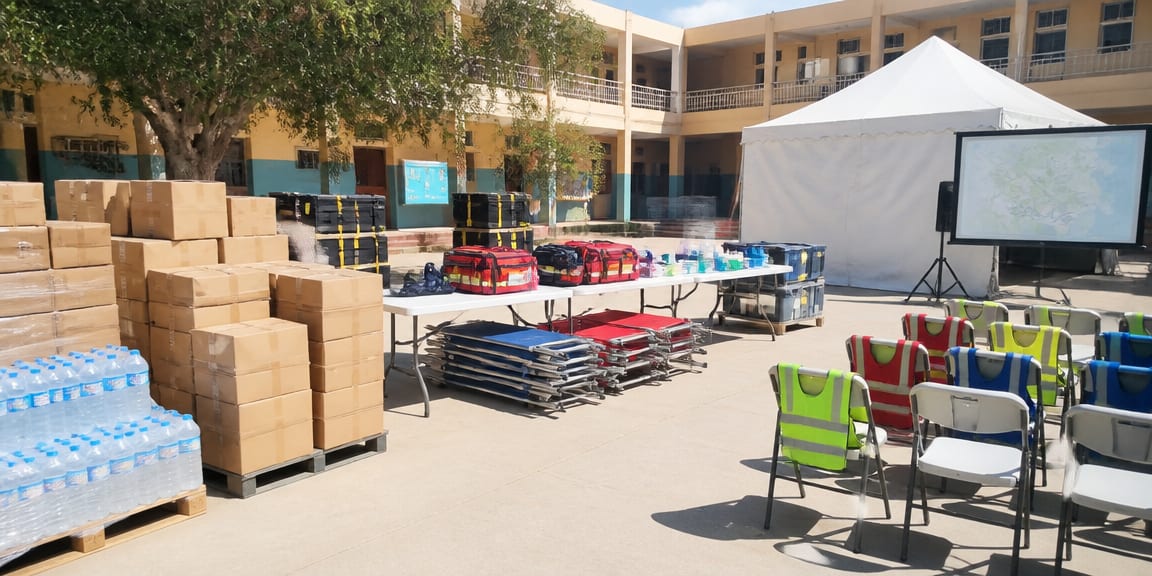
Reported Russian strikes hit aid centre and shelter in Komyshuvakha, Zaporizhzhia, with dozens killed
Narrative Snapshot
Across outlets, the core throughline is consistent: a school functioning as a humanitarian aid hub in Komyshuvakha, Zaporizhzhia, was struck, followed by further bombing of a nearby shelter where people had sought refuge. Coverage converges on Ukrainian official accounts—amplified by President Volodymyr Zelensky’s posts and video—from which most details are drawn. Several outlets highlight the scale and sequencing of the attack, while others focus on the profile of victims and the operational challenges that followed.
Differences turn on casualty figures, technical emphasis, and framing. Reported death tolls range from 18 to at least 26; some reports stress the use of heavy aerial munitions and the number of missing persons; others underline that emergency responders were among the dead. A few outlets add context—such as alleged cyber interference with emergency platforms or timing near a local truce—while most keep a tight focus on the immediate humanitarian impact and the Ukrainian leadership’s denunciations.
What Happened
Ukrainian officials said a Russian airstrike hit a school used to distribute humanitarian aid in Komyshuvakha, Zaporizhzhia, and that additional bombs targeted a shelter where people had taken cover. Zelensky described the incident and its sequencing—an initial strike followed by a second volley of nine bombs—on social media, with Italian and French outlets citing his posts and wording. Reported death tolls vary: 18 (Le Monde; BBC), 24 (Kyiv Independent; ANSA; South China Morning Post), and at least 26 (Deutsche Welle; The Guardian; Al Jazeera). BBC highlighted claims that at least nine 3,000 kg aerial bombs hit the village, and local officials reported 27 missing. The Guardian reported that two rescue workers and four police officers were among the dead, and five people were hospitalized. Corriere della Sera noted Zelensky circulated video of the aftermath.
Why It Matters
The strike, as reported, underscores the vulnerability of aid distribution points and shelters in active war zones and the risks to emergency personnel; The Guardian’s account that first responders and police were among the dead, alongside SCMP and Guardian reporting of hospitalizations, points to operational strain on local civil defense. ANSA’s reference to hacking attempts against emergency apps highlights an additional layer of disruption to crisis response. The political signaling is also notable: Zelensky called the attack “vile” and evidence that Russia does not want to de-escalate, according to The Guardian, a framing that can harden positions around ceasefire or de-escalation initiatives. In the same region in late October, Zelensky demanded new sanctions after a deadly strike at a railway platform, Le Monde reported, indicating Kyiv’s pattern of linking high-casualty attacks on civilian sites to calls for additional international measures.
Diverging Narratives
Casualty reporting is the clearest divergence: Le Monde and BBC cite 18 deaths; Kyiv Independent, ANSA, and SCMP report 24; Deutsche Welle, The Guardian, and Al Jazeera say at least 26. BBC adds a missing persons figure of 27, which other outlets do not reference. On the conduct of the attack, multiple outlets attribute to Zelensky that a second volley of nine bombs hit a shelter after the initial strike (Le Monde; Kyiv Independent; SCMP). BBC separately emphasizes the scale by citing at least nine 3,000 kg aerial bombs that hit the village, leaving the total number and sequencing partly ambiguous across reports.
Differences in emphasis also shape interpretation. The Guardian highlights that two rescue workers and four police officers were among the dead, sharpening the picture of risk to emergency services. Corriere della Sera points to Zelensky’s dissemination of video on X, illustrating the role of visual evidence in shaping public understanding. ANSA uniquely notes hacking attempts against emergency apps, introducing a cyber dimension absent elsewhere. La Repubblica links the timing to the impending end of an “Oleshky truce” and quotes Zelensky’s “So peace is impossible,” a contextual layer not echoed by other outlets.
What Happens Next
Two immediate trajectories hinge on official updates and operational recovery. First, casualty accounting is likely to evolve as emergency services and local officials reconcile death, injury, and missing figures; BBC’s report of 27 missing and The Guardian’s hospitalizations suggest further updates are probable. Second, the resilience of emergency response will be tested; The Guardian’s reporting that responders were among the dead and ANSA’s note of hacks against emergency apps point to decisions on force protection for aid sites and hardening of public-safety communications.
On the political track, Zelensky’s recent practice of tying mass-casualty incidents to sanctions advocacy, as reported by Le Monde after the late-October rail-platform strike, sets a reference point for whether Kyiv seeks additional measures now. If La Repubblica’s timing link to a local “Oleshky truce” holds, watch for whether local ceasefire understandings are renewed or erode, and how leaders’ de-escalation rhetoric, cited by The Guardian, figures into subsequent diplomatic messaging.