
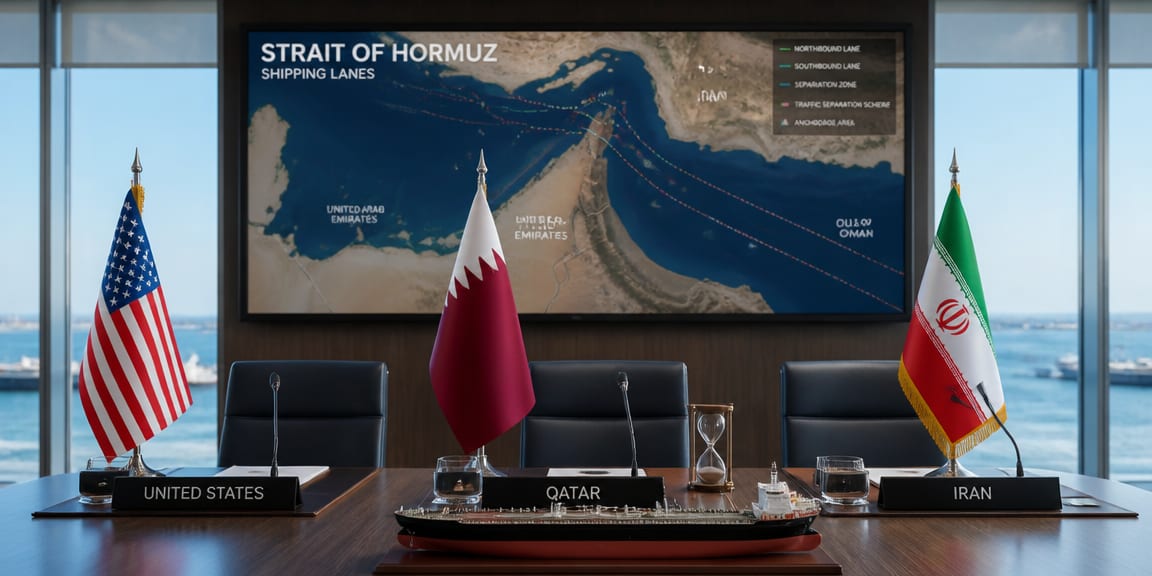
Iran offers two-day Hormuz reopening contingent on U.S. concessions as mediated contacts continue
Narrative Snapshot
Across outlets, reporting converges on Tehran’s signal that it could reopen the Strait of Hormuz within two days if Washington meets stated conditions, with multiple sources emphasizing that earlier timelines envisaged a seven-day implementation. Coverage also aligns on the centrality of third-party mediation—primarily by Qatar, with Pakistan playing a supporting role—and on the stakes for global energy markets, given Hormuz’s share of world oil flows.
Where accounts diverge is in what each side highlights as nonnegotiable and how they frame leverage. Iranian and regional outlets stress the end of a U.S. naval blockade, sanctions relief, and regional de-escalation as prerequisites, while Iran’s press underscores red lines on the nuclear file. U.S. and Israeli outlets give substantial weight to the prospect of renewed strikes and to pre–midterm election calculations in Washington, while some European and Canadian reporting foregrounds mediation mechanics and asset-release ideas. Russian coverage characterizes the U.S. posture as an “illegal” blockade, while U.S. reporting also features allegations that Iranian tankers are evading those very restrictions—raising questions about enforcement and efficacy.
The policy stakes cut across energy security, escalation control, and the nuclear track. Several outlets describe steps toward a structured package—assets release and sanctions relief tied to reopening the strait and follow-on nuclear talks—while others register blunt counter-signals from Tehran about “no intention” to negotiate and the possibility of revisiting its nuclear-weapons ban if hostilities resume. Israel’s stated intent to “finish the job” adds a spoiler risk that mediators themselves acknowledge.
What Happened
Iran publicly offered to reopen the Strait of Hormuz within two days if the United States accepts its conditions, after months of Qatari-facilitated contacts. Outlets list those demands as ending a U.S. naval blockade, lifting sanctions and oil restrictions, releasing frozen assets, reducing U.S. forces in the region, and achieving a regional ceasefire. Tehran also rejected transferring enriched uranium abroad. The offer shortened a previously discussed seven-day plan. Vice President JD Vance had earlier proposed restarting comprehensive talks, including on Iran’s nuclear program, via a letter conveyed through mediators. Indirect talks in Doha ran into a third day before Iranian negotiators departed, with both sides indicating exchanges continue through intermediaries and a draft proposal in circulation. Israel’s prime minister said he wanted to “finish the job,” while U.S. media and RT reported limited American strikes amid drone incidents. Oil prices fell after reports that Iran’s leadership authorized the government to negotiate.
Why It Matters
The Strait of Hormuz is a systemic choke point; reopening terms will shape energy flows and maritime risk premiums. Conditioning transit on sanctions relief and an end to interdictions links freedom of navigation to coercive economic measures, testing prevailing norms and enforcement utility. Competing narratives—Russia calling the blockade illegal and U.S. sources alleging Iranian “ghost fleet” evasion—expose legal and practical stress points in maritime sanctions regimes.
The episode also re-bundles the regional military file with the nuclear track. Tehran’s refusal to export enriched uranium and hints it could revisit its nuclear-weapons ban if war resumes raise nonproliferation concerns, even as some outlets report U.S. interest in sequencing Hormuz reopening with follow-on nuclear talks and asset releases. Mediation capacity is in play: Qatar coordinates message exchanges, Pakistan claims cautious optimism but, as analysis notes, lacks enforcement leverage. Israeli signaling of continued strikes complicates de-escalatory bargains, while U.S. domestic timing around midterms influences decision bandwidth and risk tolerance.
Diverging Narratives
Iran casts its two-day plan as evidence of “good faith,” grounded in a seven-step proposal to end the blockade and reopen Hormuz; it demands sanctions relief, asset releases, oil waivers, reduced U.S. forces, and an end to hostilities. Tehran’s press emphasizes sovereignty over the nuclear file, explicitly rejecting uranium transfers abroad. Yet Iranian messaging is not uniform: a parliamentary leader said there is “no intention” to negotiate, while the foreign ministry confirmed exchanges continue via mediators and that a faster implementation is possible under a deal.
U.S. and Israeli reporting presents parallel tracks: outreach from Vice President Vance and a U.S. diplomat’s optimism that a package could swiftly reopen Hormuz for sanctions relief and subsequent nuclear talks, alongside threats of further strikes and reports—via RT citing U.S. outlets—of limited American operations. Israel’s prime minister’s desire to “finish the job,” and claims by Iran’s IRGC Navy about tanker explosions, underscore escalation risks. European and Gulf-focused outlets detail Qatar’s effort to unlock at least $6 billion in Iranian assets as part of a package, while Russia’s TASS labels the blockade illegal. Enforcement narratives split as well: Fox News reports Iranian tankers skirting the blockade, while The Diplomat argues Pakistan can broker but cannot compel compliance, highlighting the fragility of any maritime arrangement.
What Happens Next
Three decision points emerge. First, whether Washington accepts elements of Iran’s preconditions—ending or easing the naval blockade, targeted sanctions relief, asset releases, and force posture adjustments—against a rapid Hormuz reopening. Indicators include movement on Qatar-facilitated asset unfreezing, restoration of oil waivers, and any U.S. statements aligning with the reported package sequencing.
Second, whether Tehran operationalizes a two-day reopening. Watch for formal authorization signals—such as follow-through on leadership delegations of negotiating authority—and practical steps by the foreign and defense ministries that would instruct the IRGC Navy to stand down closures.
Third, whether military escalation outpaces diplomacy. Signals include additional U.S. strikes reported by media, Iranian responses to drone incidents, Israeli statements about continuing operations, and maritime anomalies such as tanker explosions or further “ghost fleet” episodes. The nuclear track remains contingent: any resumption of talks that preserves Tehran’s refusal to ship uranium abroad, or renewed hints about revisiting its weapons ban if fighting resumes, will shape the durability and scope of an eventual package.