
Southwest U.S. floods expose El Niño’s widening footprint and preparedness gaps
Narrative Snapshot
U.S. and U.K. reporting concentrates on immediate impacts and public safety operations. The Guardian details mandatory evacuations in Arizona and New Mexico and warns of potentially “catastrophic” flooding in Pagosa Springs, Colorado, with the San Juan River forecast to crest above 20 feet. The New York Times underscores the anomaly of the rainfall, noting towns in the Four Corners took in more precipitation in a single day than in an average November. Corriere della Sera offers a localized lens from Arizona, describing rain in Flagstaff as nearly uninterrupted and, by headline, highlighting flooded roads, evacuations, and highway closures.
Latin American coverage foregrounds attribution and duration. Clarín repeatedly links the Southwest deluges to a more intense El Niño that is increasing humidity and strengthening storms, warns that effects could last for months, and reports two deaths alongside extensive infrastructure and housing damage in Colorado, Utah, and Arizona. It also stresses that flood risk persists even after the destructive storms have passed, extending the timeline of consequence beyond the immediate downpours.
Other international outlets widen the frame from a regional disaster to a hemispheric climate episode. Le Monde characterizes the current “super El Niño” as unprecedented in scale with cascading risks and notes that Bolivia has declared a state of emergency; CBC likewise anticipates pronounced winter effects across Canada, while the New York Times and Clarín document concurrent coastal flooding and record-setting high tides. Policy coverage diverges: CGTN centers California’s pre-emptive executive orders to expedite flood-prevention work and safeguard the Highway 1 corridor, whereas a separate Guardian investigation attributes U.S. vulnerability to cuts at NOAA, arguing this has eroded forecasting and response capacity.
What Happened
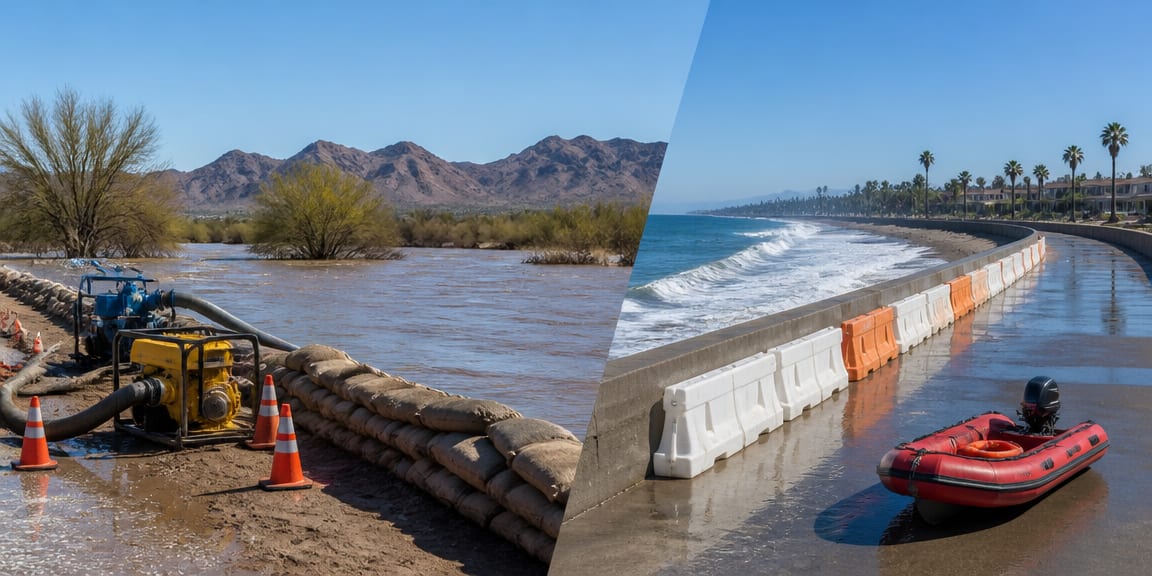
Heavy rains and flash floods struck the U.S. Southwest in late October and early November, triggering evacuations across Arizona, New Mexico, Colorado and Utah. In Colorado’s Pagosa Springs, officials warned of potentially catastrophic flooding as the San Juan River was forecast to crest above 20 feet, while the New York Times reported that some towns in the Four Corners region received more rain in a day than they typically get in all of November. Corriere della Sera noted nearly uninterrupted rainfall in Flagstaff, with flooding and closures referenced in its headline. Clarín reports two deaths, widespread rescues, and significant damage to homes and infrastructure, adding that flood risks persist. In parallel, coastal impacts intensified: the New York Times documented record high tides in California, Clarín described “marea real” flooding on both U.S. coasts, and CGTN cited National Weather Service coastal flooding warnings in Southern California.
Why It Matters
The events test U.S. hazard management under a strengthening El Niño that multiple outlets say has not yet peaked. Le Monde and CBC frame this as a major, months-long climate driver with cascading risks, implying sustained pressure on emergency services and infrastructure well beyond the initial storms. Policy choices are coming into sharper relief. CGTN reports that California is accelerating flood-prevention work through executive orders that temporarily ease certain state environmental requirements and establish a Highway 1 Task Force to protect a repeatedly disrupted coastal corridor, illustrating a willingness to trade procedural speed for risk reduction under defined safeguards. By contrast, The Guardian reports that federal climate capacity has been weakened by staffing and program cuts at NOAA, raising concerns about the quality and timeliness of forecasting and response. Parallel coastal flooding and record tides flagged by the New York Times and Clarín show that inland flood response will compete with coastal resilience needs through the El Niño winter.
Diverging Narratives
Attribution is treated with different levels of confidence. Clarín explicitly connects the Southwest deluges to an unusually intense El Niño that is amplifying humidity and storms and suggests impacts will endure for months, while Le Monde situates the events within a “super El Niño” whose peak has not yet arrived and emphasizes cascading risks without tying specific local outcomes to singular causes. U.S. and U.K. dispatches from The Guardian and the New York Times focus on operational impacts—evacuations, river crests, extreme daily rainfall—without making strong causal claims, highlighting immediate risk management rather than climatic attribution.
Policy framing also diverges. CGTN emphasizes pre-emptive state executive action in California, including targeted regulatory flexibilities for flood work and a coordinated task force on Highway 1, presenting an administrative preparedness approach. The Guardian’s separate piece centers on institutional vulnerability, arguing that federal capacity at NOAA has been eroded, which could hamper forecasting and response during a potentially historic El Niño. Geographic emphasis varies as well: the Four Corners’ inland flooding dominates Anglo-American coverage, whereas the New York Times and Clarín also stress concurrent coastal flooding and record tides, broadening the hazard profile facing authorities this season.
What Happens Next
Several decision points will shape the trajectory of risk. In the Four Corners, local authorities will calibrate evacuation orders and river management as crest forecasts evolve; The Guardian’s reporting on Pagosa Springs’ projected 20-foot crest and the New York Times’ rainfall anomalies signal that subsequent advisories will be consequential. California’s executive orders described by CGTN now move to implementation: which flood-prevention projects gain eligibility under eased requirements, and what the Highway 1 Task Force prioritizes in its risk review, will indicate near-term resilience choices along a repeatedly disrupted corridor. Forecasting and warning performance will remain pivotal; The Guardian’s account of NOAA staffing cuts, alongside CGTN’s note of active coastal flood warnings, points analysts to operational advisories as barometers of capacity. Finally, with Le Monde and CBC noting El Niño has not peaked and will shape the winter, official updates on El Niño strength and duration will inform how long elevated inland and coastal flood risks persist.