
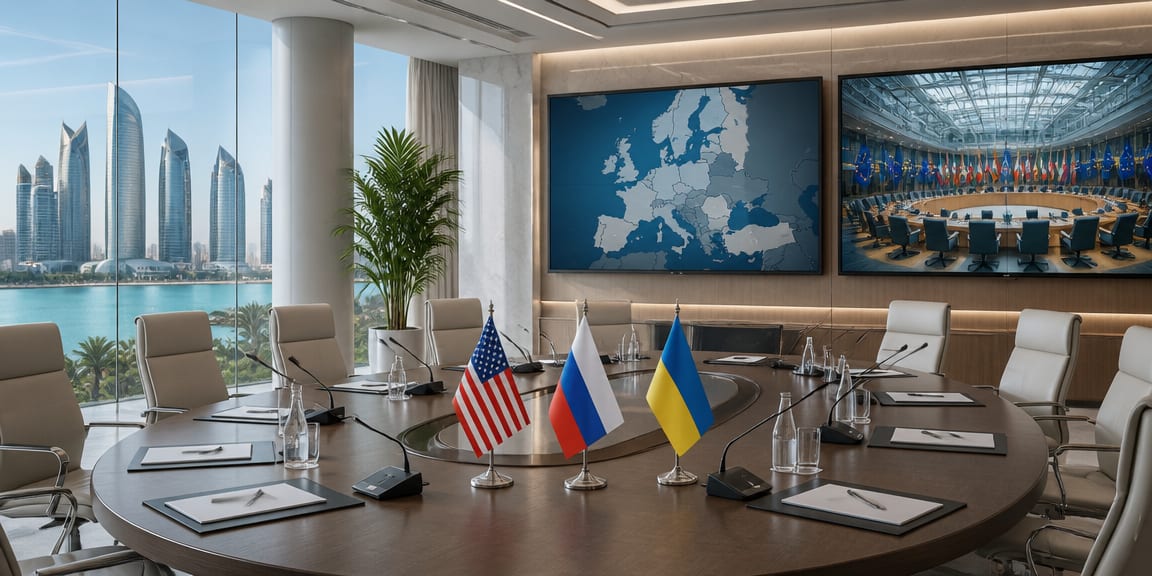
US to mediate Russia–Ukraine working-level talks in Abu Dhabi on November 10–11
Narrative Snapshot
Across outlets, there is broad alignment on timing, venue, and agenda: talks are slated for November 10–11 in Abu Dhabi with the United States mediating, and with a stated focus on post-war security, de-escalation, humanitarian steps, and “next steps toward peace” (TASS, Fox News, Le Monde). Coverage diverges on framing. U.S. outlets emphasize Washington’s central role and link the effort to the White House’s mission and “lasting security for generations to come” (Fox News), while Russian state and pro-government outlets stress the technical, working-level nature of the format and signal anticipated U.S. delegation leads (TASS, RT).
European and Latin American reporting embeds the talks within a continuing battlefield reality. Le Monde and Clarín pair the diplomatic agenda with fresh casualty figures from Russian strikes, underscoring that negotiations are advancing without a pause in hostilities (Le Monde, Clarín). Earlier remarks from Moscow and Kyiv highlight a contested question of who sits at the table: Kremlin aide Yury Ushakov said Europeans would not join the trilateral even if they meet separately with U.S. or Ukrainian officials, while President Volodymyr Zelensky favored European involvement (CGTN, Oct. 31). U.S. readouts point to Brussels consultations with EU and NATO representatives ahead of Abu Dhabi, implicitly bridging that gap without changing the trilateral format (Fox News, ANSA, La Repubblica, TASS).
What Happened
Plans for U.S.-mediated trilateral talks between Russia and Ukraine in Abu Dhabi crystallized over the past week. Zelensky signaled preparations for a November trilateral with the U.S. and Moscow (La Repubblica, Oct. 31), and Kremlin aide Yury Ushakov called the prospective meeting of “decisive significance” while noting Europeans would not join the trilateral itself (CGTN, Oct. 31). U.S. Special Envoy Steve Witkoff announced that working-level negotiations would take place November 10–11, with some initial reporting listing November 10 (Kyiv Independent; La Repubblica, Nov. 2; TASS; Fox News; Le Monde). Witkoff said the agenda includes post-war security arrangements, de-escalation, humanitarian efforts, and next steps toward peace, and that U.S. negotiators will meet in Brussels with France, Germany, the UK, the EU, and NATO on security guarantees and Europe’s security architecture (Fox News; ANSA; La Repubblica, Nov. 2; TASS). RT and TASS, citing U.S. officials and Reuters, reported Jared Kushner is expected to join Witkoff in the U.S. delegation (RT; TASS). Reporting also notes ongoing Russian strikes causing civilian casualties (Le Monde; Clarín).
Why It Matters
The format and agenda target core questions that have eluded resolution since 2022: Ukraine’s security guarantees, a European security framework acceptable to Kyiv and Moscow, and immediate humanitarian risk reduction. Multiple outlets note Washington’s central mediating role and parallel consultations with EU and NATO representatives, signaling potential recalibration of Europe’s voice—coordinated but outside the trilateral room—as the U.S. seeks traction at the working level (Fox News; ANSA; La Repubblica, Nov. 2; TASS). Moscow’s stance that talks imply no limitations on military operations, and media accounts linking the negotiations to ongoing lethal strikes, underscore the persistence of conflict dynamics even as channels open (CGTN, Oct. 31; Le Monde; Clarín). For decision-makers, the talks test whether a U.S.-led process can surface actionable steps on de-escalation and humanitarian relief while sketching credible, longer-term security arrangements that could eventually be multilateralized with European buy-in.
Diverging Narratives
Disagreement centers less on the fact of talks than on purpose, scope, and optics. U.S. framing highlights ambition and presidential ownership—“advancing President Trump’s mission to end the war” and delivering “lasting security for generations” (Fox News)—while Russian outlets emphasize that they are working-level or technical discussions with discrete agenda items, not a political settlement (TASS; ANSA). CGTN cites the Kremlin’s line that preparations do not imply a ceasefire, a constraint echoed indirectly by European and Latin American reporting that pairs the diplomatic track with continued Russian bombardment and casualties (CGTN, Oct. 31; Le Monde; Clarín).
There is also a representational tension: Ushakov said Europeans would not take part in the trilateral, contrasting with Kyiv’s preference for European involvement; U.S. plans for Brussels consultations appear to accommodate European stakeholders without altering the format (CGTN, Oct. 31; La Repubblica, Nov. 2; Fox News; ANSA; TASS). Personnel coverage varies: RT cites Axios in reporting that Jared Kushner will co-lead the U.S. team, and TASS references Reuters saying he is expected to represent the U.S.; other outlets focus on Witkoff’s role without naming additional delegates (RT; TASS; Fox News; Le Monde).
What Happens Next
Two immediate decision points will shape outcomes. First is format durability: if Brussels consultations remain separate, the trilateral will proceed without European seats at the table, consistent with Ushakov’s position; any shift toward formal European inclusion would signal a rebalanced architecture and should be visible in delegation announcements or agenda updates (CGTN, Oct. 31; Fox News; ANSA; TASS). Second is deliverables scope: Moscow’s rejection of any implied ceasefire limits prospects for operational pauses, steering near-term outcomes toward humanitarian measures or de-escalatory signaling; watch for joint statements or concrete steps on civilian protection consistent with the stated agenda (CGTN, Oct. 31; TASS; Le Monde).
Additional indicators include confirmation of U.S. delegation composition, given reports that Kushner may join Witkoff (RT; TASS), and whether the talks anchor follow-on meetings referenced as building on prior rounds in Kyiv, Oslo, and St. Petersburg, as reported by RT (RT).