
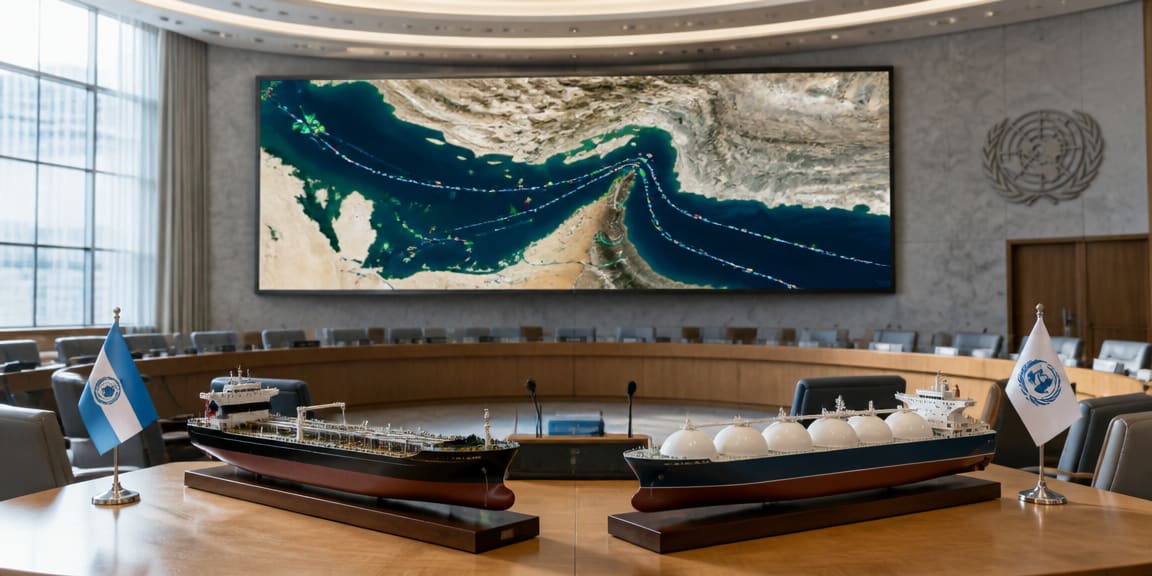
Iran’s IRGC says four oil tankers ablaze after hitting mines in the Strait of Hormuz
Narrative Snapshot
Across outlets, the most consistent throughline is Iran’s assertion that multiple oil tankers were damaged after striking mines while attempting to traverse “unauthorised” or “prohibited” routes, coupled with claims that other vessels were intercepted. Iranian state and aligned media frame these incidents as enforcement of a closure and a demonstration of control over a strategic chokepoint, while tying any reopening to US concessions. Tehran Times and IRNA emphasize Iranian agency and responsibility claims against the United States and Israel, and elevate the Strait’s role in Iran’s leverage. Middle East Eye carries the IRGC’s language about “rogue” tankers and records vessel interceptions.
Other reporting stresses impacts and risks rather than enforcement. The UKMTO assessment cited by Middle East Eye points to a steep reduction in transits and ongoing security hazards, situating the incidents within a broader, months-long contraction in maritime activity. Regional outlets highlight both security and energy implications: Qatar and Saudi Arabia condemned strikes on a Qatari LNG carrier without assigning blame, underscoring the vulnerability of Gulf energy logistics. Environmental consequences surface in coverage of oil slicks reaching UAE shores, attributed by the Financial Times (via Middle East Eye) to previous attacks on tankers.
On diplomacy, US–Iran channels are depicted as active yet stalled. The Guardian and CGTN report on a letter from US Vice President JD Vance to Iran’s security chief to restart talks, while RT and Middle East Eye describe an impasse, with Tehran publicly conditioning the strait’s reopening on meeting seven demands, including an end to what Iran calls a US naval blockade. US official messaging, as relayed by Middle East Eye, stresses that talks continue and rejects framing the confrontation as a “typical war,” contrasting with CGTN and RT descriptions of an ongoing US–Israel campaign that began in February.
What Happened
Iran’s IRGC announced that multiple oil tankers exploded and caught fire after hitting naval mines while using routes it described as unauthorised in the Strait of Hormuz; counts varied across Iranian and international outlets, with three reported by Tehran Times and four reported by IRNA, Clarin, and Middle East Eye. IRNA added that two other “violating vessels” were halted and said the IRGC shot down its “56th MQ-9 drone.” Days earlier, Oman said it evacuated 25 crew from the Panamanian-flagged tanker Riti after it was “targeted,” while US CENTCOM stated it had cleared the strait’s primary transit routes of Iranian sea mines. UKMTO data reported by Middle East Eye showed Hormuz traffic about 70 percent below pre-conflict levels. Qatar said a company vessel was hit by “unidentified objects,” and Saudi Arabia condemned the strike on the Qatari LNG carrier. Negotiations reported by The Guardian, CGTN, RT, and Middle East Eye have not yielded a deal; Iranian officials publicly linked reopening the strait to US steps meeting Tehran’s stated conditions.
Why It Matters
The Strait of Hormuz is a linchpin of global energy flows, with the US Naval Cooperation and Guidance for Shipping estimating that roughly 80 percent of transits involve energy carriers, and UKMTO recording sustained traffic reductions. The incidents and asserted closures therefore compound an already significant contraction in commercial confidence and throughput. Regional responses from Qatar and Saudi Arabia frame attacks on tankers as threats to maritime safety and global energy security, signaling potential for coordinated Gulf positions on navigational protection even amid wider geopolitical divides.
Diplomatically, the episode intersects with efforts to reopen talks under Qatari mediation. Reporting on the Vance letter and Tehran’s seven-step framework highlights a direct linkage between maritime access, sanctions relief, and nuclear positioning, while Iran’s rejection of transferring enriched uranium abroad underscores hardened bargaining lines. Institutionally, competing claims about mine clearance and navigational control stress-test deconfliction mechanisms and challenge norms on freedom of navigation. For multilateral bodies and maritime insurers, persistent ambiguity over responsibility and access elevates risk premiums and complicates crisis management.
Diverging Narratives
Accounts diverge on fundamentals: how many tankers were affected, who bears responsibility, and whether mines remain a credible hazard. Iranian outlets and Middle East Eye cite the IRGC’s claim that four “rogue” tankers were destroyed by mines on prohibited routes, with Tehran Times initially reporting three. In parallel, Oman reported a targeted tanker evacuation, while US CENTCOM said it had cleared internationally recognized primary transit routes of Iranian sea mines, implicitly challenging the IRGC’s mine narrative.
Attribution and framing also split. Tehran Times places responsibility for maritime disruption on the United States and Israel, and senior Iranian officials depict control of Hormuz as a lever reshaping global power balances, with reopening conditioned on meeting seven demands, including ending what Iran calls a US naval blockade. By contrast, Middle East Eye’s reporting on oil spills cites the Financial Times’ attribution of earlier tanker attacks to Iran, and Qatar and Saudi statements condemn strikes on a Qatari vessel without attributing blame but emphasize global energy risks. On the state of conflict, Middle East Eye quotes the US president saying Washington is not in a “typical war,” while CGTN and RT describe a US–Israel campaign against Iran that began months earlier; RT adds that talks in Doha ended without a deal but could continue.
What Happens Next
Key decision points hinge on whether Washington addresses Tehran’s stated conditions for reopening Hormuz. Middle East Eye reports Iran’s Mohsen Rezaei saying the US response was not convincing and that the strait will reopen only if seven conditions are fully met; RT describes those as lifting a naval blockade, easing oil restrictions, and releasing frozen assets in exchange for reopening and continued talks. If progress occurs along those lines, signals would include announcements from Doha on a framework agreement and observable increases in UKMTO-tracked transits. If not, Iran’s public position, echoed by Haaretz and Tehran Times, indicates continued closure claims and enforcement actions.
Operationally, watch for further IRGC statements on vessel interceptions and drone shoot-downs (per IRNA), US CENTCOM updates on mine countermeasures, and regional responses following strikes on Qatari shipping. Environmental indicators—additional spills along UAE coasts as tracked by satellite imagery cited by Middle East Eye—will shape regional pressure for maritime security measures, while Gulf condemnations and calls to uphold international law will signal potential collective moves to safeguard energy routes.