
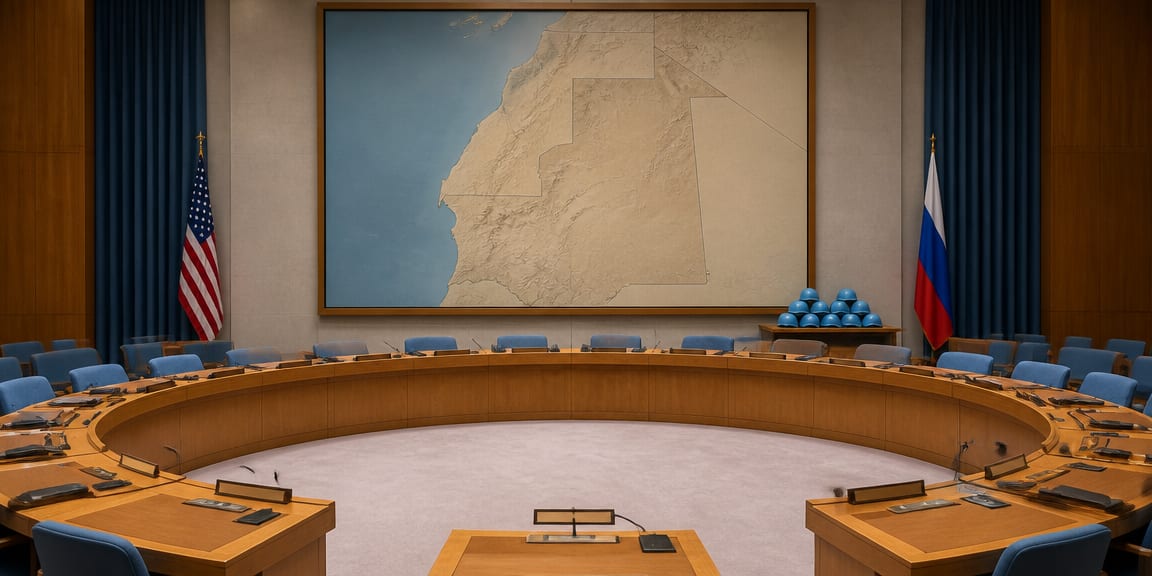
US–Russia veto standoff ends MINURSO mandate and accelerates UN exit from Western Sahara
Narrative Snapshot
Across outlets there is agreement that a rare double veto at the UN Security Council abruptly ended the long‑running mandate of MINURSO and set an orderly wind‑down in motion. Al Jazeera English and Middle East Eye foreground Washington’s push to anchor Morocco’s autonomy plan as the basis for diplomacy, describing an “unusual” great‑power confrontation over what had been a routine renewal. AllAfrica/RFI and Telesur report UN confirmation that the drawdown has begun, with the Secretariat managing the departure.
Coverage diverges most over framing the political stakes. Middle East Eye details the US draft’s bid to make autonomy the sole negotiating basis and narrow MINURSO’s military role, while Telesur highlights Algeria’s denunciation of what it called “excessive bias” toward Rabat, including a reported move to remove “referendum” from the mission’s name. Le Monde and the South China Morning Post emphasize uncertainty and the risks for civilians and refugees as ceasefire monitoring ends. The BBC’s framing that Morocco is “celebrating” marks a contrasting political read from Rabat’s vantage point. In a different theater, RT reports a separate UN peacekeeping wind‑down in Lebanon, offering context for broader questions about UN operations even as that case rests on different drivers.
What Happened
The UN Security Council failed to renew the mandate of its Western Sahara mission after the United States and Russia vetoed each other’s draft resolutions, ending three and a half decades of annual rollovers, according to Al Jazeera English and Middle East Eye. Middle East Eye reports the US draft would have established Morocco’s autonomy plan as the sole basis for negotiations, reduced MINURSO’s military component, and extended the mission for a year. Telesur, citing Algeria’s foreign ministry, adds that the US text consolidated autonomy as “the sole basis” and proposed eliminating the reference to a referendum from the mission’s name. With no extension, Le Monde notes the mission ceased to exist as of November 1. Telesur and AllAfrica/RFI report UN spokesperson Stéphane Dujarric confirmed the start of MINURSO’s dismantling, with a reduced team overseeing departure. Secretary‑General António Guterres urged maximum restraint and said Special Envoy Staffan de Mistura’s diplomatic efforts will continue.
Why It Matters
MINURSO was created to facilitate and monitor a settlement plan that envisaged a referendum; the US bid to elevate Morocco’s autonomy proposal—and, per Algeria’s account reported by Telesur, to excise “referendum” from the mission’s name—signals a contested reframing of the political parameters. The double veto demonstrates how major‑power contention can now disrupt even historically “routine” Security Council business, as Middle East Eye notes, eroding the Council’s capacity to maintain legacy missions. For governments and multilateral actors, the loss of on‑the‑ground monitoring raises the risk of miscalculation along a sensitive ceasefire line, a concern flagged by Le Monde and underscored by Guterres’s call for restraint reported by Telesur. The UN’s confirmation of a wind‑down, reported by AllAfrica/RFI, shifts conflict management from a peacekeeping footprint to envoy‑led diplomacy. In a separate context, RT’s report of a planned UNIFIL exit in Lebanon points to mounting pressures on UN peace operations, though the drivers differ by theater.
Diverging Narratives
Outlets converge on the procedural facts but part ways on interpretation and emphasis. Middle East Eye and Al Jazeera English center the US effort to codify Morocco’s autonomy plan and trim MINURSO’s military role, presenting the veto clash as an atypical rupture of Council practice. Telesur amplifies Algeria’s characterization that the US text was “excessively and flagrantly tilted” toward Morocco and reports that it would have removed “referendum” from MINURSO’s name, undercutting the mission’s original purpose as understood since 1991. By contrast, the BBC’s headline suggests Rabat views the outcome favorably, framing it as grounds for celebration, while Le Monde highlights fears of renewed hostilities as the monitoring mission disappears. The South China Morning Post brings forward the refugee perspective from camps in southern Algeria, underscoring humanitarian stakes as the mission ends. Notably, while sources agree that Russia counter‑vetoed, they do not detail the content of Moscow’s alternative draft. Early descriptions of the mission in “limbo” give way in later reports to UN‑confirmed dismantlement, clarifying that the Secretariat is executing a wind‑down absent a new mandate.
What Happens Next
Operationally, the UN will manage an orderly drawdown, with a reduced team overseeing personnel and asset repatriation as reported by Telesur and confirmed by AllAfrica/RFI; the pace and scope of this process will indicate how completely the field presence is being unwound. Diplomatically, Special Envoy Staffan de Mistura continues engagement per Telesur, but the basis for talks remains contested: analysts should watch whether future communiqués or convenings echo language privileging Morocco’s autonomy plan, as described by Middle East Eye, or reaffirm references to a referendum, the omission of which Algeria criticized in Telesur’s account. Security conditions along the ceasefire lines are a key indicator; Le Monde’s concern about hostilities and Guterres’s call for restraint signal the need to monitor incidents in the absence of UN monitors. At the Council, no source reports a scheduled re‑vote; any move to revisit a mandate or authorize an alternative presence would be a material shift from the UN‑confirmed wind‑down trajectory.