
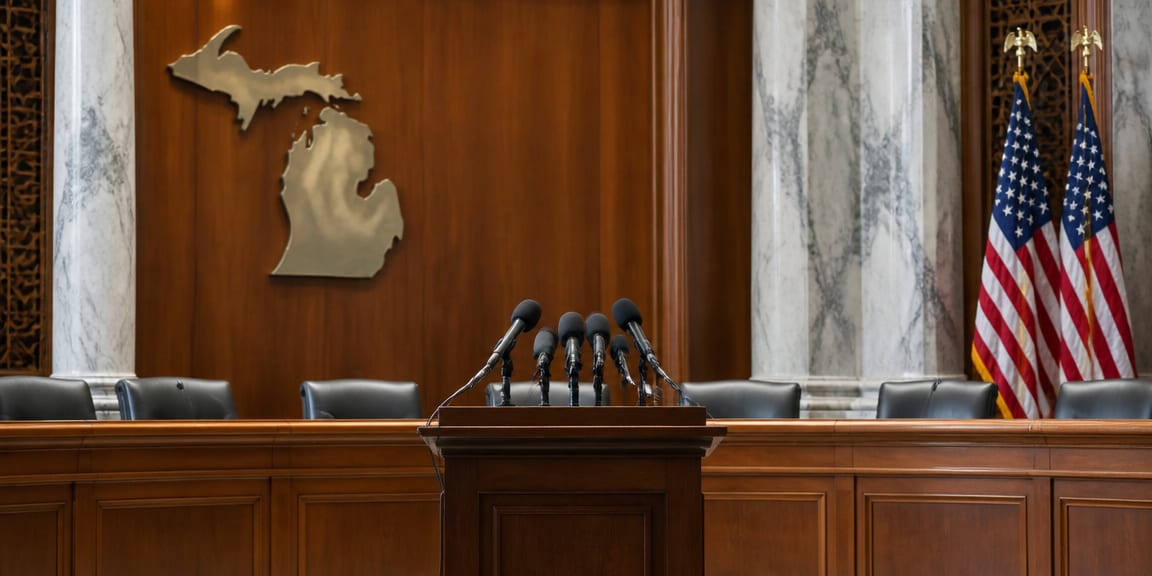
Abdul El-Sayed wins Michigan Senate race, making history as first Muslim US senator
Narrative Snapshot
Across international and US outlets, the throughline is historic firsts and ideological stakes. The Guardian, BBC, France 24, Le Monde, Al Jazeera English, ANSA, Corriere della Sera, La Repubblica, The Hindu and Clarin converge on two elements: Abdul El-Sayed’s barrier‑breaking ascent as the first Muslim elected to the US Senate and his positioning on the Democratic Party’s left flank, after a campaign punctuated by Islamophobic attacks from Donald Trump and Vice President JD Vance. France 24 underscores the tone of “humour and hope” El‑Sayed deployed to rebut racist attacks, while Italian and Qatari coverage highlights rhetorical moments such as “If you can’t pronounce my name, call me senator” and his jab at “JD habibi.”
Fox News emphasizes the partisan consequence and tenor of the win: a major setback to Republicans’ effort to pick up Michigan, and a combative victory speech lampooning Trump, Vance and Mike Rogers. It singles out El‑Sayed’s remarks about AIPAC’s heavy spending against him and his use of the Arabic phrase “alhamdulillah,” framing him as a progressive “boogeyman” for GOP messaging.
Several outlets add an intra‑Democratic wrinkle. The Hindu and Middle East Eye detail the late‑breaking endorsement of Rogers by Democratic congresswoman Haley Stevens—after she had previously indicated support for El‑Sayed—which Fox News touted as helpful to the GOP. France 24 and Le Monde situate the race within a broader realignment: a left‑wing breakthrough in a pivotal swing state, holding a seat flagged as threatened. The Guardian and Middle East Eye go further, tying the result to Democrats’ broader gains in Congress and a decisive Senate majority.
What Happened
Democrat Abdul El‑Sayed defeated Republican Mike Rogers in Michigan’s open US Senate race. Middle East Eye reported that with 80 percent of votes counted, El‑Sayed led 51.8 percent to 46.2 percent and declared victory; at that point the Associated Press had not yet called the race, though Fox News and other outlets had. He will succeed retiring Democratic Senator Gary Peters, according to Middle East Eye. Coverage across BBC News, The Guardian and France 24 identifies El‑Sayed as the first Muslim elected to the US Senate. The contest was marked by Islamophobic attacks from Trump and Vice President JD Vance, as reported by The Guardian, Middle East Eye, ANSA and Al Jazeera English. In a victory speech covered by Fox News, El‑Sayed mocked his opponents, invoked “alhamdulillah,” and referenced AIPAC’s significant spend against him; France 24 highlighted his use of humor to counter racist attacks. The Hindu and Middle East Eye also noted a last‑minute complication when Democratic congresswoman Haley Stevens endorsed Rogers.
Why It Matters
Multiple outlets frame the result as structurally significant for party power and ideological direction. The Guardian and Middle East Eye report Democrats wrested control of the Senate, with El‑Sayed’s win contributing to a decisive majority. France 24 and Le Monde characterize the outcome as a breakthrough for the Democratic left in a major swing state, suggesting greater caucus space for progressive priorities. Clarin highlights El‑Sayed’s policy profile—health as a human right within a regulatory‑capitalist vision—while Middle East Eye reports that in his victory speech he condemned the use of US tax dollars to support what he called Israeli “apartheid and genocidal war.” Fox News reports he taunted AIPAC despite its heavy spending against him. For decision‑makers, this intersects with questions of interest‑group influence, future debates over Middle East policy, and the internal balance of the Democratic caucus at a moment when, per multiple outlets, control of the Senate has shifted.
Diverging Narratives
Outlets differ on emphasis, timing, and the lens through which they interpret the campaign. Fox News casts El‑Sayed as a national foil to Republican messaging, highlights his gloating tone, and elevates his digs at Trump, Vance and AIPAC; it also portrays the race as a missed GOP opportunity to expand what it called a “thin majority” before Democrats’ broader gains were apparent. European and international outlets center representation, resilience, and ideological consolidation: The Guardian links the Michigan result to Democrats’ reclaimed Senate majority, France 24 calls it a left‑wing milestone in a swing state, and Le Monde underscores that a threatened, left‑leaning seat was held by a progressive standard‑bearer. Middle East Eye adds granular detail on vote share when AP had not yet called the race and surfaces El‑Sayed’s sharp criticism of US support for Israel. The Hindu and earlier Middle East Eye reporting isolate the late endorsement by Democrat Haley Stevens as a notable intra‑party rupture. Clarin reports that El‑Sayed avoided committing to support Chuck Schumer as Senate leader, hinting at procedural leverage from the left; most other outlets do not address this leadership angle.
What Happens Next
Two decision points emerge from the reporting. First, Senate leadership and caucus alignment: Clarin notes El‑Sayed did not commit to backing Chuck Schumer, raising the prospect of negotiations over leadership and rules within a Democratic‑controlled chamber, as described by The Guardian and Middle East Eye. Analysts should watch for El‑Sayed’s public position on leadership votes and any stated conditions from progressive senators. Second, foreign policy and interest‑group dynamics: Middle East Eye reports El‑Sayed condemned US funding for Israel in his victory speech, while Fox News highlights his confrontation with AIPAC. Indicators to monitor include how he approaches votes on Israel‑related appropriations, committee assignments relevant to foreign aid, and interactions with pro‑Israel and Arab‑American advocacy in Michigan. The Hindu and Middle East Eye’s focus on Haley Stevens’ cross‑party endorsement also points to intra‑Democratic management in Michigan; watch for any formal party responses or alignment signals from Michigan’s delegation.