
Bomb alerts disrupt European flights for a third day, prompting diversions, escorts, and military-base landings
Narrative Snapshot
Across outlets, there is broad agreement that a wave of bomb alerts affected multiple commercial flights in Europe this week, with disruptions peaking on Thursday and no explosives found where reported. Counts vary by outlet and cutoff: France24 reported at least 27 affected flights this week, the Guardian cited at least 15 on Thursday, Bangkok Post wrote of at least 14, TASS tallied 13 emergency landings, Fox News reported at least 11, Folha de S.Paulo cited at least 14, The Times of Israel described over a dozen, and RT aggregated 28 for the week with 19 on Thursday. Coverage converges on the operational picture: diversions, emergency landings at civilian and military fields, fighter-jet escorts, and security sweeps that yielded negative results.
Where outlets diverge is in emphasis and framing. European and North American wires and broadcasters largely focus on immediate operational responses and passenger safety, treating the alerts as hoaxes pending attribution and stressing the absence of hazardous materials (Toronto Star/AP; TASS; The Times of Israel; Bangkok Post; France24). A subset of coverage raises broader security questions without asserting causation, noting earlier hoax alerts and discussing concerns about disruption across multiple countries (Guardian; Fox News). Italian and French outlets add granular detail on air-traffic control decisions and civil–military procedures, including a French judicial inquiry into cockpit decision-making in one high-profile diversion (Corriere della Sera; La Repubblica; ANSA; SCMP).
What Happened
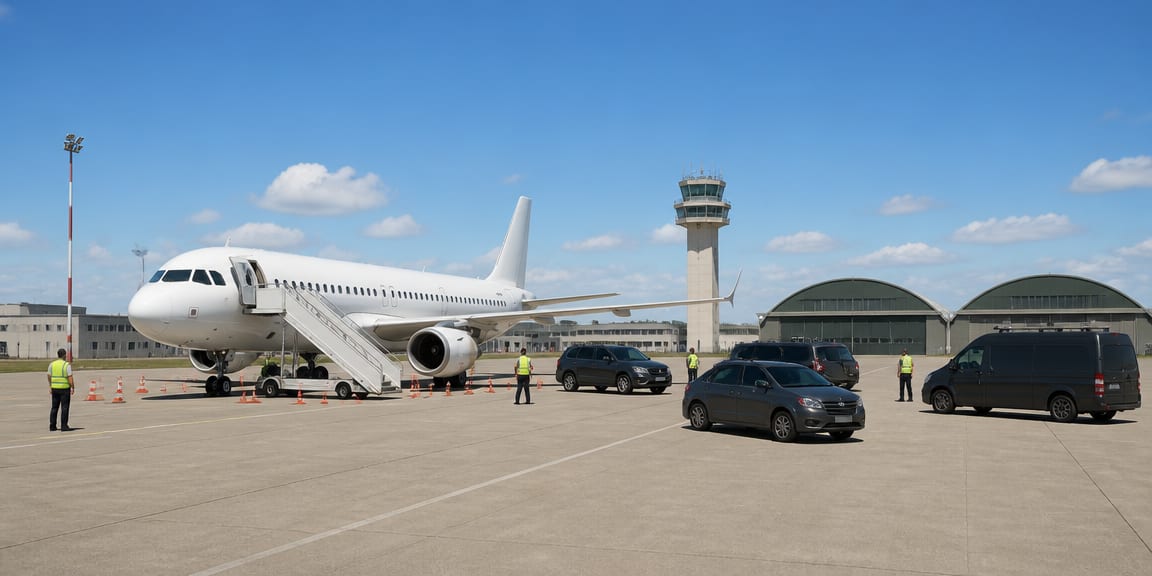
On Thursday, multiple European flights received bomb alerts that triggered diversions, emergency landings, and fighter-jet escorts. France24 reported at least 27 affected flights over the week; RT counted 28 for the week and 19 on Thursday; the Guardian cited at least 15 on Thursday; Bangkok Post and Folha de S.Paulo put the figure at at least 14; TASS reported 13 emergency landings; Fox News cited at least 11. National authorities and airlines said inspections did not find hazardous or suspicious materials (Toronto Star/AP; TASS; The Times of Israel; Fox News; Bangkok Post). Incidents spanned routes among Italy, Ireland, the UK, Spain, Bulgaria, Romania, Poland, Finland, Austria, Denmark, Belgium, Portugal, Greece, and Czechia (Guardian; Bangkok Post; Fox News). Specific cases included an Aer Lingus Dublin–Rome flight diverted to the French air force base at Évreux (DW; France24; NBC News; ANSA; SCMP), a Finnair Helsinki–Rome flight escorted by Italian Air Force jets (La Repubblica), and bomb threats to Finnair Helsinki–Vienna and Wizz Air Milan–Warsaw flights, with a redirection to Vienna reported (Le Monde).
Why It Matters
The alerts stress-test cross-border aviation security and civil–military coordination. National air forces in France, Italy, and Bulgaria scrambled in response to live alerts (Bangkok Post), while France’s prime minister’s office monitored at least one diversion in real time and deployed bomb-disposal teams on landing (SCMP). These responses draw on established procedures for temporary segregation of suspect aircraft, priority routing, and, where necessary, use of military bases to manage risk to densely populated areas. The pattern raises practical questions for regulators and operators about harmonizing threat assessment thresholds, information-sharing across borders, and minimizing cascading disruption when multiple aircraft are flagged simultaneously. Legal accountability also enters view: French magistrates opened an investigation into cockpit decision-making in the Aer Lingus case after an initially contested diversion order, underscoring how command authority and compliance are scrutinized when military interception is involved (Corriere della Sera; La Repubblica; RT).
Diverging Narratives
Outlets differ on scale and framing because they count different cohorts and cutoffs. RT’s 28 cases for the week and 19 on Thursday, France24’s “at least 27” for the week, the Guardian’s “at least 15” on Thursday, Bangkok Post’s and Folha’s “at least 14,” TASS’s 13 emergency landings, and Fox’s “at least 11” reflect varied inclusion of diversions, inspected flights, and earlier incidents earlier in the week, including Tuesday’s hoax alerts to Prague-bound aircraft that Czech Police publicly assessed as low relevance with negative results (Fox News). Most outlets converge on outcomes: no explosives or hazardous materials found in inspected aircraft and safe landings where specified (Toronto Star/AP; TASS; The Times of Israel; France24; Fox News; Bangkok Post). Interpretive framing diverges more subtly. The Guardian notes renewed questions about a “possibly coordinated effort,” while several broadcasters and wires report the pattern without assigning cause or perpetrator (DW; France24; CBC News). On the Aer Lingus diversion, French and Italian outlets detail a judicial inquiry into the crew’s initial refusal to land at a military base and the subsequent interceptor escort (Corriere della Sera; La Repubblica), while RT attributes to the French prime minister’s office that the pilot “didn’t cooperate as expected.” Other outlets emphasize the safe landing and ongoing examinations without characterizing cockpit–authority exchanges (SCMP; NBC News; ANSA).
What Happens Next
Two tracks bear watching. First is attribution and threat typology: police and aviation-security inquiries will determine whether alerts share origins or methods. Outlets uniformly note the absence of explosives but leave the source unresolved; future statements from national authorities that narrow origins or patterns will shape airline and regulator responses (Toronto Star/AP; TASS; The Times of Israel; France24). Second is procedural review. France’s judicial probe into the Aer Lingus cockpit decisions could clarify expectations when civil flights are directed to military bases, with potential implications for pilot guidance and state interception protocols (Corriere della Sera; La Repubblica; RT). Airlines’ operational adjustments—such as routing, crew advisories, and coordination with air forces—and any changes in real-time governmental monitoring, as already described by France’s prime minister’s office, will signal how authorities calibrate response to simultaneous alerts while maintaining passenger throughput and safety (SCMP; DW; Bangkok Post).