
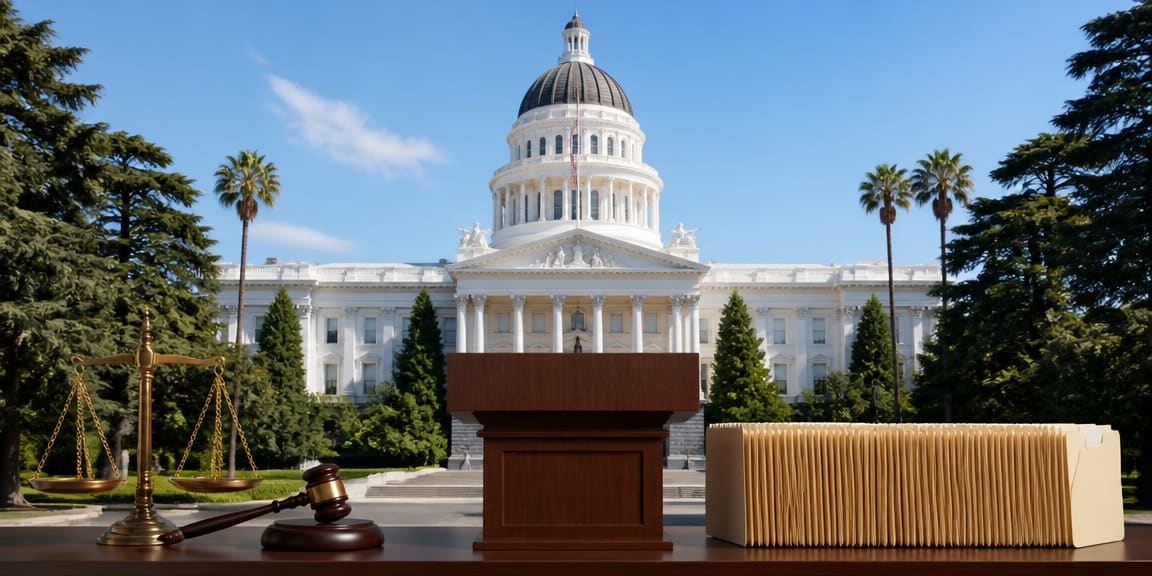
California Governor Commutes All 548 Death Sentences to Life Without Parole
Narrative Snapshot
Across outlets, coverage converges on the scale and finality of the action: 548 commutations converting every death sentence in California to life without the possibility of parole, described as the largest mass clemency in modern U.S. history and encompassing roughly a quarter of those on death row nationwide. The BBC emphasizes California’s historically outsized death row, while the South China Morning Post underscores that it was the largest in the Western Hemisphere. Folha de S.Paulo and the New York Times quantify the national share affected.
Several reports center the governor’s stated rationale, quoting his letter that denounces state-sanctioned killing as incompatible with California’s values and faults the system as error-prone. CBC, France24, and Fox News foreground those moral and systemic claims, with France24 lifting “inhumane punishment” into the headline. Others situate the move in electoral time: Deutsche Welle, the South China Morning Post, and Japan Times note expectations or rumors of a 2028 White House bid, while La Repubblica goes further, saying he should soon resign to run.
A subset of coverage links the decision to immediate national context: The Guardian and Fox News reference the botched attempt to execute Christa Pike in Tennessee and renewed conversations about capital punishment that followed. Most international outlets do not dwell on that episode, treating the California action itself as the primary inflection point.
There is also variation in how permanence is framed. The Guardian stresses that by converting sentences to life without parole, the step prevents executions of these individuals under future governors. Fox News notes it follows an earlier executive moratorium on executions, while Clarín highlights that California has not applied the death penalty in two decades—together casting the mass commutation as both decisive and the culmination of a long-running pause.
What Happened
California Governor Gavin Newsom announced on Thursday, November 5, 2026, that he commuted the sentences of all 548 people on the state’s death row to life imprisonment without the possibility of parole. In a letter to Californians, reported by Fox News and CBC, he called capital punishment morally incompatible with the state’s values and criticized an error-prone system. Multiple outlets, including The Guardian, Al Jazeera English, and Folha de S.Paulo, describe it as the largest mass clemency in U.S. history; Folha and the New York Times note the number represents about a quarter of those on death row nationwide. The Guardian specifies the change forecloses executions of these individuals under future administrations. France24 and the South China Morning Post place the move near the end of Newsom’s term, while several outlets mention expectations of a 2028 presidential run.
Why It Matters
By replacing all death sentences with life without parole, California removes the largest single cohort from the U.S. execution pipeline and does so in a way The Guardian says cannot be reversed by future governors for these individuals. With the BBC noting California’s historically largest death row and the South China Morning Post calling it the largest in the Western Hemisphere, the action materially reduces the national footprint of capital punishment. Outlets including Al Jazeera English and Folha de S.Paulo frame it as unprecedented in modern U.S. clemency practice, and France24 calls it a major step away from capital punishment. Fox News reports it follows an earlier moratorium, demonstrating that gubernatorial clemency can consolidate policy change beyond temporary suspensions. The decision lands amid renewed U.S. debate after the failed attempt to execute Christa Pike, referenced by Fox News and The Guardian, potentially shaping how other actors articulate positions within that conversation.
Diverging Narratives
Coverage diverges principally on motive, context, and consequence. CBC, Fox News, and France24 emphasize Newsom’s moral and institutional critique through direct quotations, presenting the commutations as a values-driven correction to systemic flaws. Deutsche Welle, the South China Morning Post, Japan Times, and La Repubblica foreground political horizon lines, linking the move to end-of-term timing and possible 2028 presidential ambitions; La Repubblica is the most definitive, asserting he should soon resign to run, while others describe him as expected or rumored to seek the nomination.
On consequence, The Guardian highlights the legally insulating effect for those commuted, contrasting with Clarín’s stress on California’s two-decade lapse in executions and Fox News’s note that it comes after a moratorium—framing the step as the culmination of a preexisting trajectory rather than a break with practice. The salience of national triggers also varies: Fox News and The Guardian situate the decision within a renewed debate after the botched Christa Pike execution in Tennessee, a linkage absent from most other reports, which focus on scale and finality. Finally, while Al Jazeera English, The Guardian, and Folha de S.Paulo describe the action as the largest mass clemency in U.S. history, the New York Times and Folha quantify its national weight by emphasizing that it covers roughly a quarter of the country’s death row population.
What Happens Next
Two decision tracks emerge from reporting. First, the commutations take immediate effect by converting sentences to life without parole; The Guardian underscores that future California administrations cannot reverse this outcome for the affected individuals. Analysts can watch for administrative follow-through consistent with Fox News’s description of the executive action and the permanence The Guardian describes.
Second, multiple outlets point to political signaling beyond California. Deutsche Welle, the South China Morning Post, and Japan Times note expectations or rumors of a 2028 presidential bid, while La Repubblica says he should soon resign to run. Observers should monitor for formal declarations or moves consistent with a national campaign and how this decision is positioned in that context.
More broadly, Fox News reports renewed national conversations after the botched Christa Pike execution, echoed by The Guardian’s reference. Analysts should watch whether governors or lawmakers in other states explicitly cite California’s action or the Pike case when recalibrating their own capital punishment policies and rhetoric.